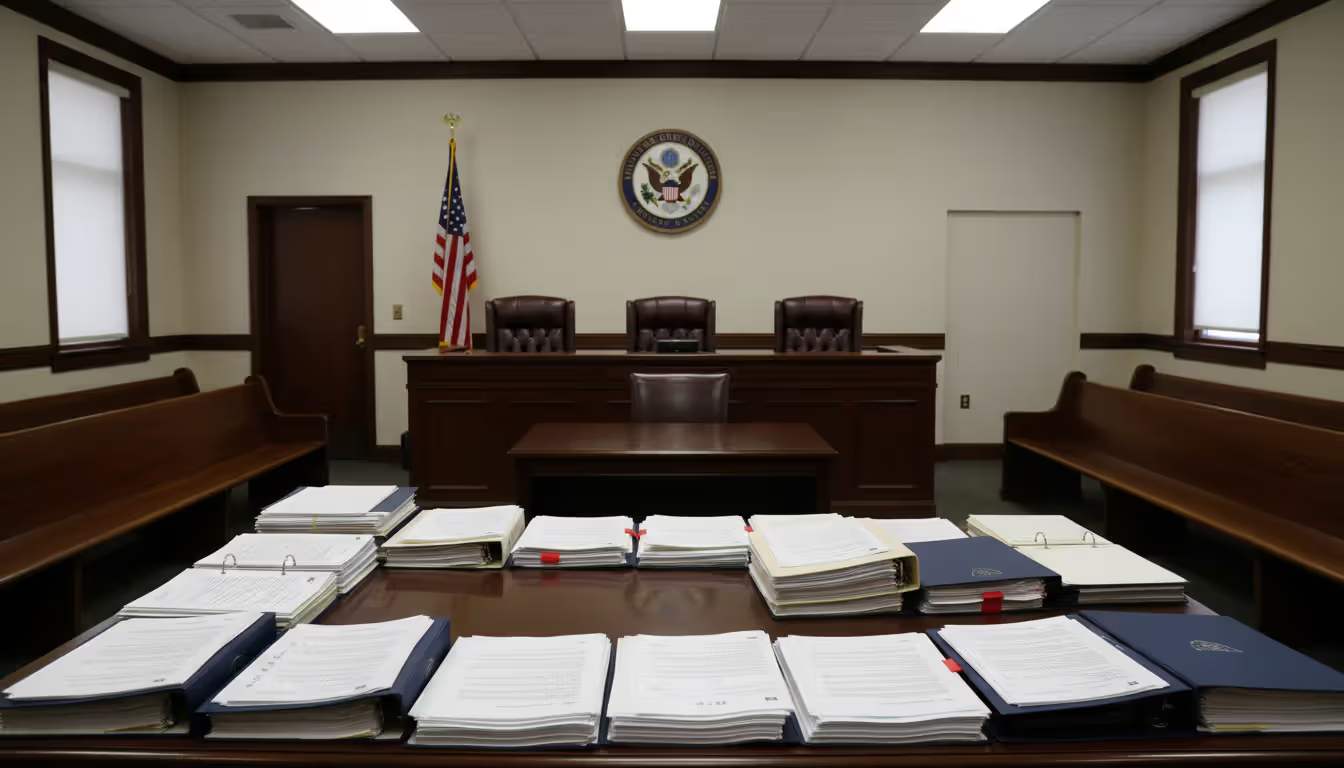
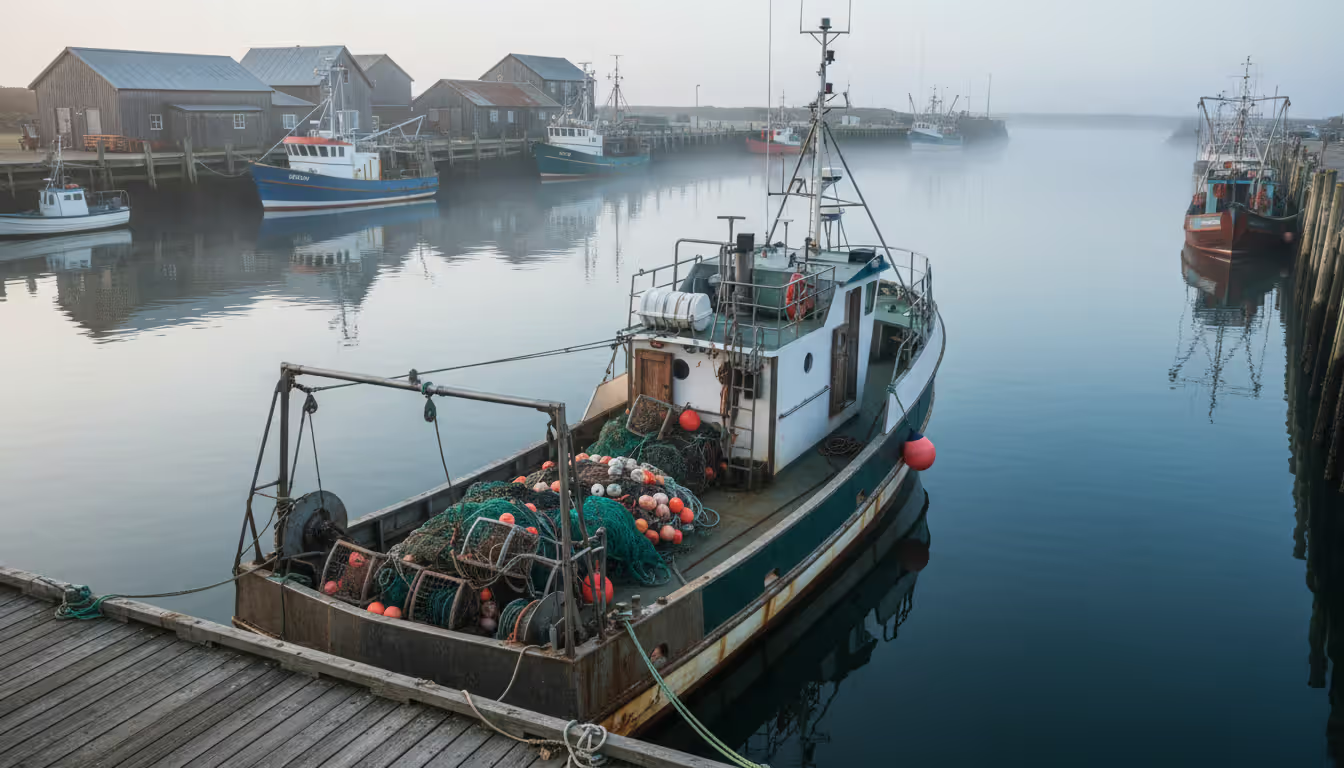
When agricultural commodity prices crash or fishing quotas suddenly drop, family-run farms and commercial fishing operations can find themselves drowning in debt despite years of profitable operation. A dairy farmer might owe $8 million on land and equipment purchased when milk prices were high, only to watch margins evaporate as wholesale prices fall below production costs. Traditional bankruptcy options either force complete liquidation or impose corporate-style reorganization requirements that cost more than most agricultural operations can afford.
That's where Chapter 12 comes in—a bankruptcy option Congress created specifically for the agricultural sector.
What Is Chapter 12 Bankruptcy?
Think of Chapter 12 as a debt reorganization tool built from the ground up for farming and fishing families. Congress added this chapter to the Bankruptcy Code in 1986, initially as a temporary fix during the farm crisis of the 1980s. After nearly two decades of temporary extensions, lawmakers made it permanent in 2005.
Here's what makes it different: this bankruptcy chapter exists solely for family farmers and commercial fishermen. You won't find corporations, wage earners, or small business owners using Chapter 12—it's reserved exclusively for agricultural and fishing operations that meet specific definitions.
The setup works as a reorganization rather than liquidation. A corn farmer filing Chapter 12 doesn't lose the farm. Instead, they submit a plan showing how they'll pay creditors over three to five years while continuing to plant, harvest, and sell crops. The bankruptcy laws overview surrounding this chapter acknowledges something crucial: farms and fishing boats aren't just business assets you can sell off—they're often the debtor's only way to generate income for repayment.
Agricultural debt creates unique problems. When a manufacturer goes bankrupt, selling the factory and equipment might cover most debts. But if you liquidate a family farm, you've eliminated the farmer's income source, making repayment impossible. Land, tractors, irrigation systems, and harvesting equipment are simultaneously the debt collateral and the income-generation tools. Chapter 12 family farmer bankruptcy provisions recognize this catch-22.
The structure allows debtors to propose repayment plans based on what they realistically expect to earn from future harvests or fishing seasons. A cranberry farmer in Massachusetts might project $180,000 annual net income and propose paying $3,500 monthly to creditors during the three-year plan. During this period, creditors can't foreclose on the bog, repossess equipment, or garnish accounts—as long as the farmer makes scheduled payments and meets other obligations.
Author: Ethan Calloway;
Source: dynamicrangemetering.com
Who Qualifies for Chapter 12 Bankruptcy?
Chapter 12 doesn't work like other personal bankruptcies types where nearly anyone with debt problems can file. Instead, you must satisfy several tests proving you're actually engaged in family farming or fishing.
The income test comes first. Did at least 50% of your gross income during the previous tax year come from farming or fishing? This percentage excludes capital gains, so selling off land or equipment doesn't count. A farm family running an agritourism operation might fail this test if guest lodging and corn maze tickets exceed crop sales.
Debt limits matter significantly. Family farmers can't owe more than $11,097,350 total (that's the 2026 inflation-adjusted figure). Family fishermen face a lower ceiling of $2,268,550. These caps include all debts—mortgages, equipment loans, credit cards, medical bills, everything. At least 50% of these debts must stem directly from farming or fishing operations, not unrelated business ventures or personal spending.
The "family" part isn't just marketing language. For individual filers, you or you and your spouse must operate the farm or fishing business. If you've incorporated, more than 50% of corporate stock must be owned by a single family and their relatives. Partnerships need similar family ownership of more than 50% of equity.
Corporate or partnership filers face additional hurdles. One family member must actually conduct the farming or fishing operation (no absentee ownership), and more than 80% of the corporate assets must relate to the farming or fishing business. A fishing company that also runs a seafood restaurant and retail market might fail this 80% test.
Consider a practical example: A Wisconsin dairy farm operated as an LLC by two brothers qualifies if dairy sales provided 55% of gross income last year, total debts equal $9.2 million (mostly from land purchases and herd expansion), and the brothers jointly own 100% of the LLC. They meet every test.
But a catfish farming corporation fails if the founding family now owns only 45% of shares after bringing in outside investors, even if all other requirements are satisfied.
How Chapter 12 Bankruptcy Works
The debtor kicks things off by filing a petition with the local bankruptcy court—always voluntarily (more on that shortly). Filing triggers what's called the automatic stay, which immediately stops creditors from continuing lawsuits, making collection calls, or proceeding with scheduled foreclosure auctions. That tractor repossession scheduled for next Tuesday? Canceled. The bank foreclosure sale set for next month? Postponed indefinitely.
You've got 90 days from filing to submit a repayment plan to the court. This document becomes the roadmap for the entire bankruptcy. It lists every creditor, categorizes debts by priority, and explains exactly how much each creditor will receive over the plan's duration—typically three to five years.
A trustee gets appointed to your case. This person doesn't take over the farm or fishing boat like in Chapter 7 liquidation. Instead, you keep running day-to-day operations while the trustee reviews your plan, collects your monthly payments, and distributes money to creditors according to the court-approved schedule. You remain "debtor in possession," meaning you don't need court approval to plant different crops, buy fuel, hire seasonal workers, or make routine business decisions.
The repayment plan must follow specific rules. Priority debts get paid in full—that includes recent tax obligations and employee wages you owe. Secured creditors must receive at least the value of their collateral. If the bank holds a $400,000 mortgage on land now worth $320,000, the plan must pay at least $320,000 to keep the land. The remaining $80,000 becomes unsecured debt.
Unsecured creditors usually receive pennies on the dollar. The plan proposes paying whatever disposable income remains after covering living expenses and secured debt payments. A farmer might pay unsecured creditors just 15% of what they're owed if that's all the projected income allows.
One powerful tool: secured debt modification. That $500,000 combine loan on equipment a dealer would sell for $280,000? You can "cram down" the secured portion to $280,000, treating the other $220,000 as unsecured debt eligible for reduced payment. There's one major exception—you can't modify the mortgage on your primary residence.
After making every scheduled payment for three to five years, you attend a final hearing where the judge grants a discharge. This wipes out remaining unpaid portions of most debts. Certain obligations survive—recent taxes, child support, student loans (usually), and debts from fraud—but most other unpaid balances disappear legally.
Author: Ethan Calloway;
Source: dynamicrangemetering.com
Voluntary vs. Involuntary Chapter 12 Filings
Only the farmer or fisherman can file Chapter 12. Period. Creditors can't force you into Chapter 12 bankruptcy no matter how much you owe them or how far behind you've fallen on payments.
This contrasts sharply with voluntary vs involuntary bankruptcy options in Chapters 7 and 11, where creditors meeting certain thresholds can file petitions forcing debtors into bankruptcy. Congress deliberately made Chapter 12 voluntary-only, recognizing that creditor-initiated bankruptcy during planting season or peak fishing periods could destroy operations rather than save them.
Why does this matter? Timing is everything in agriculture. A dairy farmer needs to decide whether bankruptcy makes sense before spring when replacement heifers are purchased, not when a creditor decides to force the issue mid-summer. A lobster boat captain might want to file immediately after the season ends, when income documentation is complete but before next season's expenses begin.
If creditors absolutely want to force bankruptcy, their only option is filing an involuntary Chapter 11 petition. But Chapter 11 requires meeting specific creditor-number and debt-amount thresholds, and the debtor can potentially convert that case to Chapter 12 after it's filed (if they meet eligibility requirements). The bankruptcy litigation overview for agricultural operations shows involuntary filings remain extremely rare.
Chapter 12 vs. Other Bankruptcy Types
The Bankruptcy Code offers multiple chapters because different financial situations need different solutions. Understanding different bankruptcies types clarifies when Chapter 12 makes sense versus alternatives.
Comparison of Chapter 12 vs. Chapters 7, 11, and 13 Bankruptcy
Bankruptcy Type
Who Qualifies
Debt Limits
Repayment Plan
Asset Liquidation
Typical Timeline
Chapter 12
Family farmers meeting 50% income test and fishermen with qualifying operations
$11,097,350 (farmers) / $2,268,550 (fishermen)
3-5 years with seasonal flexibility built in
Debtor keeps operating assets and continues business
3-5 years total
Chapter 7
Anyone passing means test (income limits)
No debt limits apply
No repayment—liquidation only
Yes, trustee sells non-exempt assets
4-6 months
Chapter 11
Businesses and high-income individuals
No debt ceiling (though small business subchapter has thresholds)
Flexible duration, typically 3-5 years
Generally no, debtor retains control
Often 1-3+ years to confirmation alone
Chapter 13
Individuals with regular wages only
$465,275 unsecured / $1,395,875 secured combined
3-5 years with fixed monthly payments
Debtor keeps assets meeting exemptions
3-5 years
People sometimes reference chapter 20 bankruptcy in online forums and discussions. Despite sounding official, no Chapter 20 exists in federal law. The nickname describes filing Chapter 7 immediately followed by Chapter 13—using Chapter 7 to eliminate unsecured debts, then Chapter 13 to reorganize remaining secured debts. For farmers qualifying for Chapter 12, this strategy offers zero advantages since Chapter 12 already handles both secured and unsecured agricultural debt more effectively in one proceeding.
You might also encounter mentions of chapter 8 bankruptcies while researching options. Here's the reality: Chapter 8 has never existed in U.S. bankruptcy law. The Bankruptcy Code includes Chapters 1, 3, and 5 (procedural provisions applying to all cases), then jumps to Chapters 7, 9 (municipalities only), 11, 12, 13, and 15 (international insolvency). No Chapter 8, never has been. If someone mentions Chapter 8, they're either confused or misinformed.
Corporate bankruptcy types primarily involve Chapter 7 (liquidation) and Chapter 11 (reorganization). Large agricultural corporations can use Chapter 11 if they exceed Chapter 12's debt limits. A major corporate farming operation with $50 million in debt doesn't qualify for Chapter 12 and must use Chapter 11's more complex procedures.
Why Chapter 12 Instead of Chapter 11 for Farmers?
Farmers and fishermen technically can file Chapter 11 even when they qualify for Chapter 12. So why doesn't anyone recommend that?
Start with filing fees. Chapter 12 costs $200-$300 to file. Chapter 11? Over $1,200. More importantly, Chapter 11 requires paying quarterly fees to the U.S. Trustee based on disbursements—fees that can add up to tens of thousands of dollars over the case duration. Chapter 12 charges no quarterly fees beyond the initial filing.
Attorney costs tell an even starker story. A straightforward Chapter 12 case typically generates $15,000-$40,000 in legal fees. The same farm filing Chapter 11 might spend $75,000-$200,000 or more on attorneys. For a struggling operation, this difference determines whether reorganization is even possible. Spending $150,000 on lawyers to save a farm barely generating $100,000 annual profit makes no economic sense.
Administrative burden multiplies in Chapter 11. Monthly operating reports must be filed showing every dollar in and out. Larger cases require forming creditor committees that must be consulted on major decisions. Want to sell a piece of equipment or take out seasonal operating loans? Better get court approval first in Chapter 11. Chapter 12 eliminates most of this red tape, letting farmers farm instead of attending hearings and preparing reports.
Timing matters enormously. Chapter 11 cases routinely take 18-36 months just to get a plan confirmed—before the repayment period even starts. Chapter 12 typically confirms plans within 6-12 months. Every month of uncertainty costs money and stresses operations. The business insolvency overview statistics show Chapter 12 cases resolve much faster.
Secured debt modification works similarly in both chapters legally, but Chapter 12's streamlined procedures make restructuring loans practically easier. Fewer procedural hoops mean faster results and lower legal costs to accomplish the same debt reduction.
Author: Ethan Calloway;
Source: dynamicrangemetering.com
Advantages and Disadvantages of Chapter 12
Chapter 12 provides real benefits for qualifying agricultural operations struggling with debt, but it's not a magic solution without costs or consequences.
Advantages:
The seasonal payment flexibility might be Chapter 12's biggest practical advantage. A wheat farmer in Kansas can structure the plan with minimal payments during winter when no income arrives, then larger payments immediately after harvest when grain sales bring cash in. Chapter 13 would require the same payment every month regardless of income timing—an impossible structure for seasonal businesses.
You keep complete operational control. Unlike Chapter 11 where major decisions need court approval, Chapter 12 lets you respond immediately to weather emergencies, market shifts, or equipment failures. If hail destroys the corn crop and you need to file an insurance claim and replant soybeans, you do it—no trustee approval required, no hearing scheduled.
Secured debt modification provides genuine leverage. Reducing that grain bin loan from $180,000 to the bin's current $95,000 auction value transforms an impossible payment into a manageable one. Over three years, that difference might determine success versus failure.
Lower costs compared to Chapter 11 make reorganization accessible to mid-sized family farms that couldn't possibly afford $100,000+ in legal and administrative fees. The business insolvency overview data for agricultural operations shows Chapter 12 dramatically improves successful reorganization rates precisely because costs don't consume all available cash.
The automatic stay provides immediate relief from collection pressure. No more certified letters threatening foreclosure, no equipment repossessions, no wage garnishments. You get breathing room to develop a realistic plan rather than constantly firefighting crises.
Disadvantages:
Strict eligibility requirements lock out many ag-related businesses. A farm that's diversified into value-added products, agritourism, and equipment rental might fail the 50% farming income test despite being clearly agricultural. A fishing operation with $3 million in debt exceeds the fisherman debt limit and can't use Chapter 12.
Public record status affects reputation and relationships. Your bankruptcy filing becomes accessible to anyone searching court records. Suppliers may demand cash on delivery rather than extending credit. Neighbors and community members will likely know about your financial troubles. For multi-generational family farms, the stigma can sting.
Credit damage lasts seven to ten years. Good luck getting conventional financing for farm expansion or equipment upgrades during this period. When loans are available, expect interest rates several percentage points higher than pre-bankruptcy rates. This makes recovering from temporary setbacks harder.
Certain debts survive discharge. Recent income taxes (typically within three years), child support obligations, student loans (usually), and debts from fraud or intentional injury don't disappear. A farmer might complete the full three-year plan and still owe $85,000 in tax liabilities that weren't dischargeable.
Time investment during an already stressful period shouldn't be underestimated. Preparing bankruptcy schedules requires gathering years of financial records. Trustee meetings, hearings, and compliance requirements demand attention when you'd rather focus on operations. For three to five years, you're living under bankruptcy court supervision.
Common Mistakes in Chapter 12 Bankruptcy Filings
Author: Ethan Calloway;
Source: dynamicrangemetering.com
Even with experienced legal help, farmers and fishermen frequently trip over preventable errors that damage or destroy their cases.
Income documentation failures sink more cases than any other mistake. Agricultural income often involves cash transactions, bartering with neighbors, roadside stand sales, and informal arrangements that never generate clean paper trails. Courts demand comprehensive documentation of every dollar earned. That farmer who sold $12,000 worth of produce at farmers markets for cash over the summer and never reported it? That's bankruptcy fraud if it doesn't appear on the schedules. Worse, it demonstrates bad faith that can get the entire case dismissed. Start gathering tax returns, bank statements, sales receipts, and trading records for at least three years before filing.
Unrealistic repayment plan projections doom cases during confirmation hearings. A farmer proposing $5,200 monthly payments when the three-year average net income equals $4,100 monthly creates obvious problems. Courts approve only feasible plans. Base projections on multi-year averages, not your single best year. Include contingencies for crop failures, equipment breakdowns, and market price drops. Better to propose conservative payments you can definitely make than aggressive payments that force plan modification or dismissal later.
Deadline failures trigger automatic consequences. You have exactly 90 days after filing to submit your repayment plan. Miss it, and the court typically dismisses your case immediately. Missing plan payment due dates similarly creates problems—multiple missed payments can result in case conversion to Chapter 7 liquidation or dismissal that lets foreclosure proceed immediately.
Wrong attorney selection creates cascading problems throughout the case. General bankruptcy attorneys who mostly handle consumer Chapter 7 and Chapter 13 cases often lack familiarity with agricultural debt restructuring nuances under Chapter 12. Seek attorneys who've successfully handled multiple Chapter 12 cases and actually understand farming or fishing economics. That specialized knowledge prevents costly mistakes and optimizes plan structure. Yes, specialists cost more per hour, but they work more efficiently and deliver better results.
Unauthorized post-filing debt violates bankruptcy rules and jeopardizes your case. A dairy farmer who finances a new milking system during bankruptcy without trustee authorization risks having that purchase rejected or deemed non-dischargeable. Need to take out operating loans or purchase major equipment? Get trustee approval first.
Insurance lapses on collateral breach your obligations to secured creditors. Let the crop insurance lapse or cancel the hull insurance on the fishing boat, and secured lenders can file relief-from-stay motions allowing them to foreclose or repossess despite the bankruptcy. Maintain comprehensive insurance on every piece of pledged collateral and provide annual proof of coverage to the trustee.
Incomplete asset disclosure invites criminal prosecution. The temptation to "forget" mentioning a small savings account or old tractor might seem harmless, but bankruptcy requires disclosing everything you own—every account, every vehicle, every piece of equipment, even items you believe are worthless or clearly exempt. Deliberate omissions constitute bankruptcy fraud, a federal crime carrying potential prison time. Courts and trustees have seen every concealment trick imaginable. Disclose everything completely and honestly.
Chapter 12 bankruptcy has saved thousands of family farms that hit temporary financial rough patches through no fault of the operators. Weather disasters, commodity price crashes, illness, or simple bad timing on major purchases can create overwhelming debt that Chapter 12 successfully reorganizes. But success requires brutally honest financial assessment, conservative income projections, and specialized legal guidance from attorneys who genuinely understand agricultural economics and bankruptcy law together. The farmers who succeed in Chapter 12 treat it as a financial recovery tool, not a magic wand—they work the plan seriously for the full three to five years
— Sarah J. Mitchell
Frequently Asked Questions About Chapter 12 Bankruptcy
How much does Chapter 12 bankruptcy cost?
Expect total costs between $15,000 and $45,000 from start to finish. Court filing fees run $200-$300. Attorney fees typically range from $12,000-$40,000 depending on case complexity—a straightforward single-farmer case with one primary creditor costs far less than a complicated family corporation with 30 creditors and multiple properties. Credit counseling courses (required before filing and before discharge) add another $50-$100. The trustee collects fees typically equaling 3-10% of all payments you make to creditors through the plan over its entire duration. These costs seem substantial but remain dramatically lower than Chapter 11, where attorney fees alone commonly exceed $75,000. Many attorneys allow fee payments through the repayment plan rather than demanding everything upfront, making Chapter 12 accessible even when you're cash-poor.
How long does Chapter 12 bankruptcy take?
From initial filing to final discharge typically takes three to five years. The automatic stay begins immediately when you file, providing instant relief from collection actions. Plan confirmation usually happens 6-12 months after filing once the trustee reviews everything and the court holds a confirmation hearing (complicated cases can take longer). After confirmation, the repayment period runs 3-5 years depending on your proposed plan structure and projected income. Following your final plan payment, discharge typically occurs within 60-90 days. Realistically, expect the complete timeline from filing to discharge to span 40-65 months. That seems long, but remember you're operating the farm or boat the entire time—not waiting in limbo.
Can I keep my farm or fishing business in Chapter 12?
Yes—keeping your operation running is the entire point of Chapter 12. Unlike Chapter 7 where the trustee liquidates assets to pay creditors, Chapter 12 lets you retain land, equipment, fishing vessels, permits, livestock, and everything else essential to operations. You continue running the business day-to-day while making scheduled plan payments. However, success depends on meeting ongoing obligations: maintain required insurance coverage on all collateral, make every plan payment on time, and operate profitably enough to fund the repayment plan. Fall behind significantly or operate at a loss, and the trustee or creditors can seek case conversion to Chapter 7 liquidation, where assets would be sold.
What debts can be discharged in Chapter 12?
Most unsecured debts receive discharge after you complete all plan payments—credit card balances, medical bills, personal loans, supplier invoices, and the unsecured portions of undersecured debts all qualify. However, several debt categories survive bankruptcy regardless of plan completion: income tax obligations from the most recent three years (older taxes may discharge), domestic support obligations including child support and spousal maintenance, student loans unless you prove extreme undue hardship (rare), debts from fraud or intentional injury, and criminal fines or restitution. Secured debts get restructured through the plan—you must pay at least the collateral's value to keep the property, but can discharge any deficiency amount.
Is Chapter 12 better than Chapter 13 for farmers?
For farmers and fishermen who meet eligibility requirements, Chapter 12 wins decisively. Chapter 12's debt limits accommodate real agricultural operations—the combined $1.4 million limit in Chapter 13 excludes most working farms carrying land mortgages and equipment loans totaling several million dollars. Chapter 12's seasonal payment flexibility aligns with agricultural income patterns that would violate Chapter 13's regular monthly payment requirements. Greater secured debt modification powers in Chapter 12 provide restructuring tools unavailable in Chapter 13. Faster confirmation timelines and lower costs improve feasibility. That said, Chapter 13 remains available if you don't satisfy Chapter 12's specific farmer or fisherman definitions—perhaps your farm income represents only 40% of total earnings because off-farm employment provides majority income.
What is Chapter 20 bankruptcy and how does it relate to Chapter 12?
"Chapter 20 bankruptcy" is slang describing a strategy where someone files Chapter 7 to discharge unsecured debts, then immediately files Chapter 13 to reorganize secured debts through a repayment plan. The name comes from adding 7 + 13 = 20. This approach attempts combining Chapter 7's elimination of unsecured debts with Chapter 13's secured debt restructuring. However, farmers and fishermen qualifying for Chapter 12 gain nothing from this strategy since Chapter 12 already provides superior tools for managing both secured and unsecured agricultural debt in a single, streamlined proceeding. Chapter 20 primarily benefits debtors ineligible for Chapter 12 who need secured debt reorganization after Chapter 7 discharge. For qualifying agricultural operations, attempting Chapter 20 instead of straightforward Chapter 12 would waste time and money without improving results.
Chapter 12 bankruptcy delivers specialized debt reorganization tools built specifically around the economic realities of family farming and commercial fishing operations. The combination of flexible seasonal repayment terms, reasonable costs, and powerful secured debt modification capabilities makes it uniquely effective for agricultural and fishing businesses facing financial challenges they can't resolve through conventional means.
Success requires satisfying strict eligibility requirements, developing realistic repayment plans grounded in conservative multi-year income projections, and maintaining meticulous financial records throughout the three-to-five-year process. Working with attorneys experienced specifically in Chapter 12 agricultural bankruptcies significantly improves outcomes and prevents expensive mistakes.
Bankruptcy carries real costs extending beyond filing fees—reputation damage in tight-knit agricultural communities, long-term credit impacts, and the emotional toll of financial failure affect farm families deeply. But Chapter 12 provides viable paths to financial recovery for operations worth preserving. For qualifying family farmers and fishermen, it represents a far superior alternative to Chapter 7 liquidation that destroys the operation or Chapter 11 reorganization with prohibitive costs that consume available cash.
Careful advance planning, completely honest financial disclosure, and serious commitment to the repayment plan can lead to successful discharge and a genuine fresh financial start—while keeping the family farm or fishing business operational for the next generation to inherit.
Chapter 7 bankruptcy allows individuals to discharge most unsecured debts by liquidating non-exempt assets. Understanding the means test, exemptions, and process helps you decide if this debt relief option fits your financial situation
Bankruptcy exemptions let you keep essential property when filing for bankruptcy. Understand federal vs. state exemption systems, which assets you can protect, how exemptions work in Chapter 7 and Chapter 13, and avoid common mistakes that could cost you valuable property
Filing for bankruptcy represents one of the most significant financial decisions you'll ever make. The process involves federal court proceedings designed to help individuals and businesses eliminate or repay debts under the protection of the bankruptcy court. Understanding the consequences is essential
Deciding whether to file for bankruptcy ranks among the most difficult financial choices anyone can face. This comprehensive guide examines the genuine benefits and real costs of bankruptcy, helping you understand when filing makes sense and when alternatives work better for your situation
The content on this website is provided for general informational and educational purposes only. It is intended to explain concepts related to bankruptcy, debt relief, credit rebuilding, and related legal processes.
All information on this website, including articles, guides, and examples, is presented for general educational purposes. Bankruptcy outcomes and procedures may vary depending on jurisdiction, personal circumstances, and applicable laws.
This website does not provide legal, financial, or credit advice, and the information presented should not be used as a substitute for consultation with qualified attorneys or financial advisors.
The website and its authors are not responsible for any errors or omissions, or for any outcomes resulting from decisions made based on the information provided on this website.