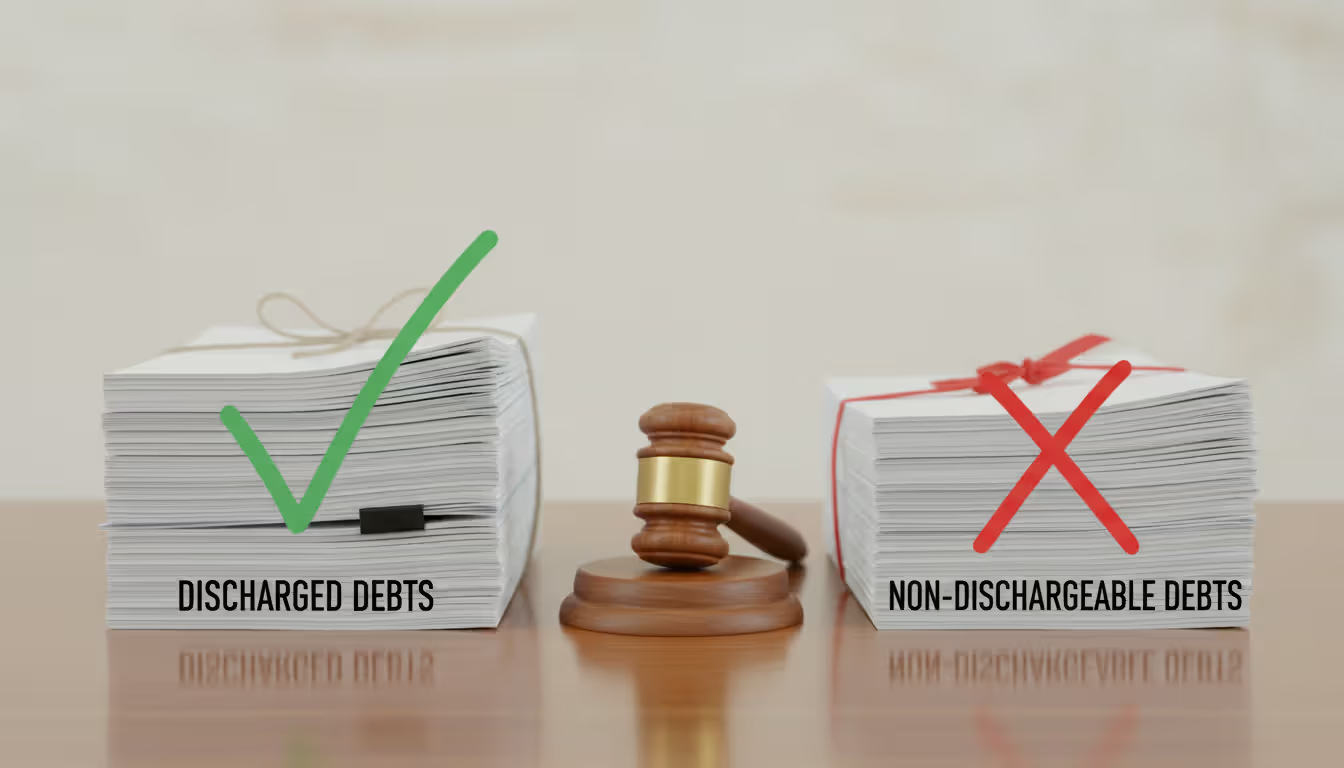
The collection calls start before breakfast. Another letter from the mortgage company arrived yesterday—the one with "FINAL NOTICE" printed across the envelope. Those medical bills from your emergency surgery? Still sitting unpaid on the kitchen counter. At some point, bankruptcy crosses your mind as the only exit.
But bankruptcy isn't just erasing what you owe. It reshapes your entire financial world, creating ripple effects that touch everything from your ability to rent an apartment to whether you'll qualify for that job promotion. Some changes hit instantly—literally the hour your paperwork gets filed. Other consequences develop slowly across months and years.
This guide breaks down the bankruptcy journey from start to finish. You'll discover which obligations actually disappear, what possessions stay in your hands, and exactly how the timeline unfolds from your first filing through rebuilding your credit score.
How Bankruptcy Works in the United States
Individual debt relief comes in two distinct flavors under federal law. The version you choose—Chapter 7 versus Chapter 13—completely determines how the next few months or years play out.
Chapter 7 liquidates assets to pay creditors. A court-appointed trustee reviews everything you own, searching for valuable property that isn't legally protected. Items lacking exemption protection get sold, with money distributed among your creditors. The reality? Most people walk away with every belonging intact because exemption laws shield standard household items, reasonable car equity, and all retirement savings. Start to finish, expect three to six months before the court permanently erases most of what you owe.
Getting Chapter 7 approval means passing income eligibility tests. The means test compares what you earn against the typical household income in your state for families your size. Earn less than that benchmark? You're in automatically. Earn more? You'll need to demonstrate that monthly living expenses consume everything, leaving nothing for creditor repayment.
Chapter 13 creates a structured repayment schedule rather than selling your belongings. You submit a proposed monthly payment spanning three to five years based on what you earn and spend. The court-appointed trustee collects this payment, then divides it among creditors following strict court-approved priorities. Everything you own stays yours during this arrangement. People watching foreclosure deadlines approach or facing vehicle repossession often choose Chapter 13 because it stops collection efforts while letting them catch up on secured debts.
The moment either chapter gets filed, an automatic stay activates. This federal court order forces creditors to immediately cease all collection activities. Lawsuits already in progress? Frozen mid-hearing. Foreclosure sales scheduled for next week? Canceled. Wage garnishments pulling money from your paycheck? Stopped. The harassment calls and threatening letters end completely. This protection continues throughout your entire case.
Here's what you absolutely must understand—filing requires complete financial honesty. Every asset gets disclosed. Every debt gets listed. Every bank account, every financial move you've made recently, everything. Courts don't joke about hiding assets or lying on forms. People go to federal prison for bankruptcy fraud.
Immediate Effects When You File for Bankruptcy
What happens when you apply for bankruptcy starts at the exact moment your attorney clicks "submit" on the electronic filing system. These immediate bankruptcy effects transform your situation within hours, not days.
The automatic stay doesn't wait for business hours or mail delivery—it becomes active the literal second your case enters the federal court database. Any creditor contacting you after that timestamp breaks federal law, whether they've received official paperwork yet or not. The collection phone calls stop. Lawsuits pause mid-argument. Foreclosure auctions get pulled from the schedule. Paycheck garnishments must be released.
Creditors receive court notification within roughly 48 business hours. The bankruptcy clerk sends formal documentation containing your case number, assigned trustee information, and meeting dates. This notice explicitly warns every creditor that continuing collection attempts violates the automatic stay and explains the penalties they'll face.
Author: Victor Langston;
Source: dynamicrangemetering.com
Author: Victor Langston;
Source: dynamicrangemetering.com
Banks occasionally freeze accounts on short notice, especially when you owe them money through their credit cards or loans. They're exercising "setoff rights"—basically grabbing money from your checking to cover that defaulted credit card with the same bank. Smart bankruptcy attorneys tell clients to open accounts at completely different banks before filing to sidestep this headache.
The three major credit bureaus learn about your filing automatically through court data systems they monitor. Expect all three agencies to add the bankruptcy entry to your credit history within several days. This public record shows up prominently whenever lenders pull your credit report, and it stays visible for years.
Utility providers cannot legally disconnect your electricity, water, or gas simply because you filed bankruptcy, even when you owe them money from before filing. Federal law specifically prohibits this discrimination. They might request security deposits for ongoing service, but cutting you off based purely on the bankruptcy? Illegal.
Landlords face similar restrictions. Filing bankruptcy alone doesn't give them grounds to evict you. That said, landlords keep all their normal rights—evictions for breaking lease terms, skipping current rent payments, or damaging property remain perfectly legal options. Bankruptcy only shields you from eviction based exclusively on pre-filing debt, not from consequences of breaking your lease today.
What Happens to Your Debts and Assets
If you file for bankruptcy what happens to specific debts depends entirely on the debt category. Bankruptcy law draws sharp distinctions, and treatment varies dramatically.
Debts That Get Discharged
Credit card debt disappears entirely. Medical bills from that hospital stay, the surgery, all those specialist visits? Gone. Personal loans—whether from banks, credit unions, or family members—get eliminated. Past-due utility bills from before you filed vanish.
Basically, most unsecured debts (obligations with no collateral backing them) qualify for discharge. Collection accounts get wiped out whether the original creditor still owns them or they've been sold to a collection agency. Collection lawsuits filed before bankruptcy? Dismissed.
Many civil lawsuit judgments qualify for discharge too. That breach-of-contract judgment from three years ago that's been accumulating interest? Bankruptcy eliminates it alongside other unsecured obligations.
Certain tax debts become eligible for discharge when they meet age thresholds. Income tax obligations older than three years might qualify, assuming you filed the required tax returns at least two years before bankruptcy and the IRS finished their assessment at least 240 days earlier. Tax liens complicate everything—even when the personal obligation gets discharged, a lien against your property remains enforceable.
Business debts from sole proprietorships flow straight through to your personal bankruptcy. Running a business without forming an LLC or corporation means those business debts are legally your personal debts, making them eligible for discharge.
Author: Victor Langston;
Source: dynamicrangemetering.com
Debts That Survive Bankruptcy
What happens if you file for bankruptcies won't make every obligation vanish. Certain debts remain 100% enforceable no matter which chapter you file or how desperate your situation.
Child support and alimony obligations survive completely unchanged. Family courts prioritize support payments above everything else. These amounts don't decrease even slightly through bankruptcy.
Student loan debt persists in virtually all circumstances. Getting educational loans discharged requires filing a separate lawsuit within your bankruptcy case where you prove "undue hardship." This standard demands showing that repaying prevents you from maintaining even minimal living standards, that your circumstances won't realistically improve, and that you genuinely tried repaying in good faith. Courts grant maybe 1% of these requests—you essentially need permanent total disability or similarly extreme circumstances.
Recent tax debts stay collectible. Fresh income taxes, payroll taxes you collected from employees but never forwarded to the IRS, and any fraud-related tax obligations survive discharge.
Criminal fines, court costs, and victim restitution remain your responsibility permanently. Money owed through criminal proceedings stays with you forever.
Debts you incurred through fraud, theft, or intentionally harming someone can't be discharged. When creditors prove you lied on credit applications or deliberately injured someone, those specific obligations survive your discharge.
Property You Keep vs. Property You Lose
State exemption laws combined with federal options determine which possessions you protect. These protections vary wildly—your location matters enormously.
Homestead exemptions protect primary residence equity, but the amounts swing from unlimited to minimal depending on your state. Texas and Florida offer unlimited homestead protection—someone could own a $3 million mansion outright and keep it. Meanwhile, other states cap protection between $25,000 and $100,000. When your equity exceeds available exemptions in Chapter 7, the trustee might sell your house, hand you a check for your exemption amount, and distribute remaining proceeds among creditors. Chapter 13 operates completely differently—your house stays yours regardless of equity levels, though high non-exempt equity increases what unsecured creditors must receive through your plan.
Vehicle exemptions typically range from $3,000 to $12,000 based on state. A paid-off car valued at $6,000 remains yours in most states. A vehicle valued at $30,000 might require either paying the trustee for the unprotected equity or surrendering the car.
Personal property exemptions cover furniture, clothing, electronics, and household items. Most people filing bankruptcy keep absolutely everything because used household goods have essentially no resale value. Trustees don't waste time selling worn sofas, old televisions, or kitchen appliances that would bring $50 at auction.
Retirement accounts enjoy powerful federal protection. Your 401(k), 403(b), and pension funds cannot be touched. Traditional and Roth IRAs receive protection up to roughly $1.5 million per person—an amount that covers 99% of filers.
Wildcard exemptions exist in certain states, offering flexibility. These protect any property type up to specified dollar amounts. California provides a wildcard around $30,000, which helps safeguard assets that don't fit neatly into other exemption categories.
Impact on Your Credit and Financial Future
Your credit score crashes hard when bankruptcy gets filed. Most people watch scores plummet 150 to 250 points, sometimes more based on starting position. Someone sitting at 780 might drop to 530. A person already at 580 could fall below 400.
Chapter 7 stays on your credit report ten full years from filing date. Chapter 13 disappears after seven years from when you filed. Every lender checking your credit during this window sees the bankruptcy notation displayed prominently.
Author: Victor Langston;
Source: dynamicrangemetering.com
Getting approved for new credit proves challenging immediately following discharge. Traditional lenders view recent bankruptcy filers as toxic risks. Secured credit cards become your primary rebuilding tool—you deposit $300 to $500 with the card issuer, who then gives you a credit card with matching limits. Six months of responsible use starts rebuilding your credit profile.
Mortgage companies impose mandatory waiting periods between bankruptcy and home loans. Conventional mortgages require four-year waits after Chapter 7 discharge and two years after finishing Chapter 13. FHA loans show more flexibility—wait two years post-Chapter 7 or one year post-Chapter 13, assuming you've demonstrated improved money management.
Car loans become accessible faster than mortgages. Within twelve to eighteen months following discharge, auto financing becomes available. The interest rates hurt—expect 14% to 20% compared to 5% to 7% for borrowers with excellent credit—but getting approved is definitely possible.
Credit card offers arrive surprisingly fast. Subprime card companies recognize that recent bankruptcy filers can't file Chapter 7 again for eight years, which actually makes them safer risks in a weird way. These cards charge annual fees of $75 to $125 plus interest rates exceeding 25%, but they provide opportunities to rebuild credit history.
Employment typically remains unaffected. Federal law prohibits government agencies from discriminating based on bankruptcy. Private employers rarely check credit unless you're applying for positions involving financial authority or access to sensitive information.
Rebuilding credit requires discipline, but results come faster than most people expect. Pay everything exactly on schedule. Keep credit card balances under 30% of available limits. Avoid applying for excessive credit. Many bankruptcy filers reach 700+ credit scores within three to four years following these basics.
When You Should Consider Filing for Bankruptcy
When to file bankruptcy isn't simply about how much you owe—it's about whether realistic repayment remains possible without destroying your financial future.
Consider bankruptcy seriously when total debt exceeds your annual income. Owing $75,000 while earning $50,000 yearly, with minimum payments consuming most of your paycheck? That's drowning, and bankruptcy might offer the only realistic lifeline.
Active creditor lawsuits or wage garnishments indicate informal solutions have already failed. These legal actions make the automatic stay extraordinarily valuable since it immediately halts all proceedings.
Buying groceries or paying utilities with credit cards because your income doesn't stretch far enough? This pattern screams unsustainable debt. It means debt service has completely devoured your budget.
Thinking about draining your 401(k) or IRA to pay creditors? Stop. Retirement accounts receive bankruptcy protection while credit card debt gets discharged. Spending protected money to satisfy dischargeable debts makes absolutely no financial sense.
Foreclosure sale scheduled? When should you file for bankruptcy becomes urgent. Chapter 13 stops foreclosure auctions immediately and provides up to five years to cure mortgage arrearages while keeping your home.
Before filing, explore alternatives that might realistically work. Debt consolidation loans combine multiple obligations into single payments, ideally at reduced interest rates. This only works when your credit qualifies you for reasonable loan terms—difficult when you're already behind.
Debt management programs through nonprofit credit counseling agencies involve negotiating with creditors for reduced interest and structured payments. These programs typically run three to five years and require steady income. Your credit takes damage but less severely than bankruptcy causes.
Debt settlement involves negotiating with creditors to accept partial payment, usually 40% to 60% of balances. Settlement companies charge substantial fees, your credit suffers significantly during negotiations, and forgiven debt creates tax consequences since the IRS treats forgiven amounts as taxable income.
Direct negotiation sometimes works when you contact creditors yourself explaining your hardship. Some creditors, particularly medical providers and utilities, offer payment arrangements or balance reductions to avoid collecting nothing through bankruptcy.
When to file for bankruptcy involves strategic timing beyond simple desperation. File before draining exempt assets like retirement accounts. File after receiving bonuses or tax refunds that might create complications in your asset schedules. File before creditors pursue family members who co-signed your loans.
Recent financial activity carries significant weight. Wait at least ninety days after making any single payment exceeding $600 to one creditor—the trustee can reverse these "preference payments" and redistribute that money equally to all creditors. Avoid cash advances or luxury purchases within seventy to ninety days before filing, since these create presumptions of fraud.
What to Expect During the Bankruptcy Process
What to expect when filing bankruptcy begins with mandatory credit counseling. You'll need to complete approved counseling during the 180 days before filing. Sessions run $10 to $50, last roughly sixty to ninety minutes, and are offered online, by phone, or face-to-face. The counselor analyzes your budget, explores bankruptcy alternatives, and provides a certificate required for filing.
After your attorney submits your petition, the court assigns a case number and schedules the 341 meeting of creditors. This meeting happens approximately thirty to forty days after filing. The name sounds terrifying, but creditors almost never show up. You'll meet your assigned trustee—usually in a conference room setting—who asks questions about your finances while you're under oath. "Did you list every asset you own? Are these bank statements accurate? Have you transferred property to anyone recently?" Simple cases wrap up in ten to fifteen minutes.
Trustee roles differ dramatically between chapters. Chapter 7 trustees hunt for non-exempt assets worth liquidating. They scrutinize your asset schedules hunting for valuable property exceeding exemption limits. Chapter 13 trustees evaluate your proposed repayment plan for legal compliance, then collect and distribute your monthly payments to creditors throughout your three-to-five-year plan.
Author: Victor Langston;
Source: dynamicrangemetering.com
Before receiving discharge, you'll complete debtor education—a second mandatory course covering budgeting, money management, and responsible credit habits. This course costs $10 to $50 and is available online. Skip this requirement, and the court refuses to discharge anything.
Chapter 7 typical progression:
Filing day: Petition submitted, automatic stay begins 30-40 days later: 341 meeting happens Around day 60: Creditor objection period closes 90-120 days after filing: Discharge order issued
Chapter 13 typical progression:
Filing day: Petition with proposed plan submitted Within 30 days: You begin making plan payments (before court even approves the plan) 30-40 days after filing: 341 meeting occurs 45-75 days after filing: Confirmation hearing where judge approves or rejects plan Months 1 through 36 or 60: Monthly payments continue After final payment clears: Discharge gets granted
Chapter 13 puts court supervision on your financial decisions. Want to buy a house, finance a vehicle, or borrow over $1,000? You need trustee approval first. This oversight continues through your entire payment plan.
Tax refunds during Chapter 13 often get surrendered to trustees, though practices vary significantly by jurisdiction. Some trustees automatically collect all refunds to boost creditor distributions. Others permit refunds under specific circumstances.
Common Mistakes to Avoid When Filing Bankruptcy
The pattern I see repeatedly is people waiting way too long before filing.They've already cashed out retirement accounts, borrowed from elderly parents, and maxed out every credit source trying to stay current. When they finally schedule consultations, they've demolished their retirement savings and still owe the identical debts they could have discharged twelve months earlier. Guilt surrounding bankruptcy drives people toward catastrophic financial decisions. My advice to every consultation client: if you're constantly juggling which bills to pay, if you're skipping medications to pay creditors, or if financial stress destroys your sleep, consult a bankruptcy attorney immediately—not after you've made your situation dramatically worse
— Robert Chen
Filing bankruptcy what you should know includes learning from common errors that destroy cases or create legal nightmares.
Transferring assets to friends or relatives before filing ranks as the most destructive mistake. Planning to "protect" property by signing it over to your sister? That's fraud. Trustees scrutinize transfers made within two to four years before you file. They possess legal authority to reverse fraudulent transfers, recover that property, and potentially deny your entire discharge. In egregious situations, criminal prosecution becomes possible.
Running up debts right before filing creates presumptions working against you. Luxury purchases exceeding $800 within ninety days before filing are legally presumed fraudulent—you must prove you genuinely intended repayment when making those charges. Cash advances over $1,100 within seventy days face identical presumptions. Creditors can object to discharging these specific debts, and they frequently win.
Providing incomplete or inaccurate information causes major complications. Forgot listing a creditor? That debt might survive discharge. "Overlooked" mentioning the jewelry collection or valuable workshop tools? That's potential fraud, risking discharge denial or facing criminal charges. Trustees have encountered every concealment tactic imaginable—they recognize when people hide assets.
Selecting the wrong bankruptcy chapter wastes time and money. Some people file Chapter 7 without verifying income eligibility through means testing, resulting in case dismissal or forced conversion to Chapter 13. Others file Chapter 13 when Chapter 7 would discharge identical debts in four months instead of five years, simply because they misunderstood the differences.
Filing without attorney representation in complex situations rarely succeeds. Very simple Chapter 7 cases with zero assets and straightforward finances might work representing yourself, but most situations benefit enormously from attorney expertise. Lawyers understand which exemptions apply, how to handle creditor objections, and what raises red flags with trustees.
Repaying preferred creditors before filing creates preference issues. Repaid your brother's $5,000 loan eight months before filing? The trustee can sue him to recover that payment and redistribute it equally among all creditors. Family member payments receive extra scrutiny—trustees can examine transfers made up to one year before filing compared to ninety days for regular creditors.
Ignoring obligations on secured debts results in asset loss. Bankruptcy wipes out your personal obligation to repay debts, but liens against property survive. Stop paying your car loan, and the lender repossesses your vehicle despite bankruptcy protection. Want to keep your house or car? Continue making payments, maintain required insurance coverage, and meet all obligations to secured creditors.
Letting property insurance lapse on secured assets breaks loan agreements. Using Chapter 13 to save your home requires maintaining homeowner's insurance and providing proof to your mortgage company. Insurance lapses, and the lender can purchase extremely expensive force-placed insurance or request court permission to lift the automatic stay and foreclose.
Chapter 7 vs Chapter 13 Bankruptcy Comparison
Factor
Chapter 7
Chapter 13
Who qualifies
Income below state median for household size, or demonstrated inability to repay through means test calculations
Steady income required; total secured and unsecured debts cannot exceed roughly $2.75 million combined
Treatment of assets
Trustee may sell non-exempt property; exemptions shield most household items and reasonable equity
All property stays with you; plan payment amounts reflect non-exempt asset values
Payment requirements
No repayment required—debts get discharged without paying creditors
Court-approved monthly payments required for 36-60 months
When discharge occurs
Typically 90-120 days following filing date
Only after completing every scheduled plan payment, usually 3-5 years
Duration on credit report
Visible for ten years measured from filing date
Removed after seven years from filing date
Ideal candidates
Lower-income individuals with mainly unsecured debt and minimal non-exempt assets
Income-earning individuals behind on house or vehicle payments who want to keep their property
Frequently Asked Questions
Will I lose my house if I file bankruptcy?
Houses don't automatically disappear through bankruptcy—outcome depends on your equity and which chapter you file. Homestead exemptions potentially protect all your equity. Consider owning a $280,000 home with a $255,000 mortgage, leaving $25,000 equity. Most states shield at least that amount, preventing Chapter 7 trustees from selling your property. However, substantial unprotected equity—say $150,000 in a state offering only $30,000 homestead exemption—might result in the trustee selling your home, paying you your exemption amount as cash, and distributing remaining proceeds among creditors. Chapter 13 operates differently: your home stays yours regardless of equity amounts, you continue regular mortgage payments, and your plan addresses any arrearages by spreading catch-up payments across three to five years.
Can I keep my car after filing bankruptcy?
Vehicle retention depends on equity and payment status. A completely paid vehicle worth $8,000 typically remains yours because state exemptions protect that equity level. When you're making payments and staying current, you can usually retain your car by continuing payments through a reaffirmation agreement in Chapter 7, or including payments in your Chapter 13 plan. Chapter 13 provides special advantages—for vehicles owned longer than 910 days that are worth less than outstanding loan balances, you might "cram down" the loan to actual market value, potentially saving thousands.
How long does bankruptcy stay on my credit report?
Chapter 7 remains visible on credit reports for ten complete years measured from filing date—not discharge date. Chapter 13 stays seven years from when you filed. Credit score impact diminishes substantially over time, though. Most people see scores beginning recovery within twelve months of discharge as they establish positive payment history with new accounts. Within two to four years of maintaining responsible credit habits, many bankruptcy filers achieve scores in the 700s despite the bankruptcy notation still appearing.
Can I file bankruptcy more than once?
Multiple bankruptcies are permitted with mandatory waiting periods between discharges. Eight years must pass between Chapter 7 discharges. After receiving Chapter 7 discharge, four years must elapse before filing Chapter 13. Between Chapter 13 discharges, only two years are required. Following Chapter 13 discharge, you'll wait six years before filing Chapter 7, though exceptions exist when you repaid 70% or more of unsecured claims in your Chapter 13 case. These waiting periods prevent system abuse.
Will my employer find out if I file bankruptcy?
Employers get no notification unless you list them as a creditor for money owed. However, when creditors were garnishing wages at filing time, the court sends notice to your payroll department directing garnishment cessation—obviously revealing your bankruptcy to payroll staff. Some Chapter 13 courts require wage orders where employers automatically deduct plan payments from paychecks and forward them to the trustee, making your bankruptcy known to your employer. Beyond these situations, bankruptcy filings become public records, but employers rarely search court databases for employees' bankruptcy filings.
What debts cannot be eliminated through bankruptcy?
Several debt categories survive discharge: child support and alimony obligations, most student loans (absent proving undue hardship through separate litigation), recent income tax debts (typically under three years old), payroll taxes, criminal fines and victim restitution, court costs from criminal proceedings, debts arising from fraud or intentional injury to others, HOA fees accruing after filing, and any debts omitted from your bankruptcy schedules. Secured debts like mortgages and auto loans deserve special mention—while your personal obligation to repay might be discharged, liens survive, meaning lenders can still foreclose or repossess when you stop making payments.
Bankruptcy produces both immediate and long-lasting consequences, but for people genuinely overwhelmed by unmanageable debt, these consequences often pale compared to the relief obtained. Collection harassment stops immediately. Most unsecured obligations get eliminated within months or years. You gain breathing room to rebuild without relentless creditor pressure.
Your credit definitely suffers substantial damage. You might lose certain assets in Chapter 7. Public records document your bankruptcy filing. These costs are real and shouldn't be minimized.
But consider the alternative: spending years struggling with minimum payments you can't afford, accumulating lawsuit judgments gaining 9% annual interest, enduring 25% wage garnishments, depleting retirement savings, experiencing stress affecting your health and relationships. For Americans buried under $60,000, $100,000, or $200,000 of dischargeable debt they'll never realistically repay, bankruptcy often provides the only workable solution.
Before filing, explore reasonable alternatives—debt management programs, settlement negotiations, consolidation if you qualify. Consult with a bankruptcy attorney who evaluates your specific circumstances and timing. Filing at the optimal moment versus the wrong one might mean keeping your home instead of losing it, or discharging an old tax obligation versus remaining liable.
When used appropriately and timed correctly, bankruptcy delivers on its promise: a genuine opportunity to reconstruct your financial life without impossible debt burdens destroying your future. The fresh start is real, not marketing language. What you build during that fresh start determines whether bankruptcy becomes your worst financial decision or the pivotal moment when everything finally improved.
Bankruptcy drops your credit score to 500-550 initially, but recovery is possible. Most filers reach 620-680 within 2-3 years through secured cards, perfect payments, and low utilization. Chapter 7 stays on reports 10 years, Chapter 13 for 7 years, but their impact fades as you build positive history
Filing for bankruptcy means declaring to federal court that you cannot repay debts under current terms. This legal process provides pathways to eliminate debts or restructure them into manageable plans, offering a fresh financial start under court supervision
Filing for Chapter 7 bankruptcy can provide a fresh financial start, but the process requires careful preparation. This comprehensive guide covers eligibility requirements, required documents, step-by-step filing procedures, costs, and what happens after you file—including whether you should hire an attorney or file yourself
Filing bankruptcy without legal representation can save thousands in attorney fees, but requires careful attention to complex paperwork and strict deadlines. This comprehensive guide walks through the entire pro se bankruptcy process, from gathering documents to receiving discharge
The content on this website is provided for general informational and educational purposes only. It is intended to explain concepts related to bankruptcy, debt relief, credit rebuilding, and related legal processes.
All information on this website, including articles, guides, and examples, is presented for general educational purposes. Bankruptcy outcomes and procedures may vary depending on jurisdiction, personal circumstances, and applicable laws.
This website does not provide legal, financial, or credit advice, and the information presented should not be used as a substitute for consultation with qualified attorneys or financial advisors.
The website and its authors are not responsible for any errors or omissions, or for any outcomes resulting from decisions made based on the information provided on this website.