Person in business attire holding a folder of legal documents standing in front of a U.S. federal courthouse with large columns and stone steps in morning light
Debt collectors won't stop calling. Your paycheck gets garnished before you even see it. The mortgage company scheduled a foreclosure auction for next month. When you're buried under financial obligations you can't meet, where do you turn? The U.S. legal system provides a powerful remedy that most people don't fully understand: bankruptcy protection. It's not about gaming the system—it's a constitutional safety net that stops the bleeding while you figure out your next move.
What Is Bankruptcy Protection?
When you file bankruptcy, you activate a set of federal legal shields that immediately change how creditors can interact with you. Think of it as flipping a switch—one moment, bill collectors are hounding you relentlessly, and the next, they must back off or face serious consequences from a federal judge.
This protection stems from Article I, Section 8 of the U.S. Constitution, giving Congress authority to create consistent bankruptcy rules nationwide. Today's framework lives in Title 11 of federal law, spelling out exactly what happens when someone seeks bankruptcy relief.
Here's what changes the day you file: lawsuits against you freeze in place. Wage garnishments stop. Scheduled foreclosure sales get canceled. Your car can't be repossessed. Creditors can't even pick up the phone to ask for money. A federal court now supervises your financial situation, replacing the chaos of everyone grabbing at once with an orderly legal process.
Author: Ethan Calloway;
Source: dynamicrangemetering.com
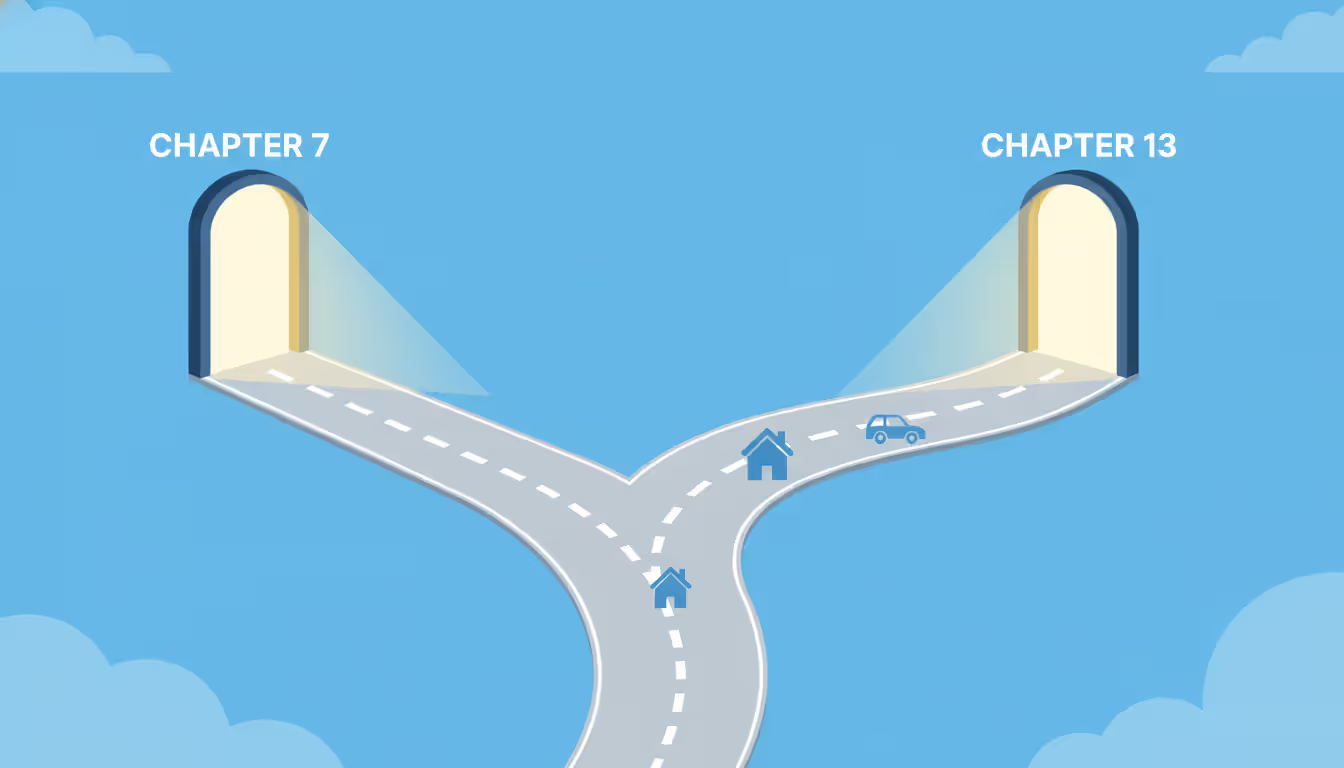
But protection doesn't mean debts vanish with no consequences. Chapter 7 might wipe out most unsecured debts completely. Chapter 13 creates a structured repayment plan you can actually afford, typically lasting three to five years. Either way, you get space to breathe without constant harassment while addressing what you owe.
The system balances your need for relief against creditors' rights to collect legitimate debts. You're not escaping obligations—you're using a legal process Congress created specifically for situations like yours.
How the Automatic Stay Protects You From Creditors
The automatic stay ranks as bankruptcy's most dramatic feature. "Automatic" isn't marketing language—it literally means no judge needs to approve it first. Your attorney files your petition electronically at 11 PM on Tuesday? The stay kicks in at 11 PM, no waiting required.
Federal law at 11 U.S.C. § 362 requires creditors to immediately cease virtually all collection efforts. Miss this deadline, and they face sanctions that can include paying your legal bills plus monetary penalties. Courts don't take violations lightly.
Once active, the stay halts:
Foreclosure proceedings, even sales scheduled within days
Eviction lawsuits, though some exceptions exist for cases with final judgments
Utility shutoffs (companies must provide service at least 20 days)
Paycheck garnishments (employers must stop withholding immediately upon notice)
Ongoing collection lawsuits (these cases freeze; new ones cannot start)
Harassing phone calls and threatening letters from collection agencies
The stay has boundaries, though. Criminal cases proceed normally. Child support and alimony collection continues—bankruptcy doesn't pause family obligations. Most tax agency actions can proceed. Actions to establish paternity or modify custody aren't affected.
Congress got wise to people abusing the system by filing repeatedly. If you've filed multiple cases within twelve months, your stay might last only 30 days, or you might get no stay at all. The court examines whether you're filing in good faith.
Secured creditors—those holding mortgages or car loans—can petition the judge to lift the stay. They need to demonstrate "cause," typically meaning their collateral is losing value or you're not maintaining payments. A lender might convince the court to allow foreclosure if you've stopped making mortgage payments entirely during bankruptcy. Judges balance your protection needs against the creditor's collateral rights.
Clients sometimes sob with relief when that first garnished paycheck comes back whole. The automatic stay isn't just legal machinery—it's the pressure valve that lets people think straight for the first time in months instead of panicking about which bill to ignore
— Jennifer Morris
Types of Bankruptcy Protection Available
The Bankruptcy Code isn't one-size-fits-all. Different chapters address different financial situations, each offering distinct protective features. Most consumers pick either Chapter 7 or Chapter 13, though specialized options exist for specific circumstances.
Chapter 7 Bankruptcy Protection
Chapter 7—sometimes called liquidation bankruptcy—moves fast. Four to six months typically separates filing from final discharge. The stay stops collection actions immediately, and most unsecured obligations (credit cards, medical bills, personal loans) disappear completely.
There's a catch involving property. A court-appointed trustee can sell non-exempt assets to distribute proceeds to creditors. In practice, though, most Chapter 7 filers keep everything because exemptions shield essential property. Federal exemptions (which some states allow) protect $27,900 in home equity per person, $4,450 in vehicle equity, plus additional categories. Many states provide alternative exemption systems, sometimes protecting even more.
Qualification requires passing the means test. If your household income exceeds your state's median and you have money left over after allowed expenses, you'll likely end up in Chapter 13 instead. This test prevents people with substantial income from wiping out debts they could reasonably repay.
Chapter 13 Bankruptcy Protection
Chapter 13 takes a completely different approach. Rather than liquidating assets, you present a repayment plan spanning three to five years, funded from your disposable income. The stay remains active throughout this entire period, giving long-term protection from creditors while you catch up on secured debts like your mortgage or car loan.
This chapter offers unique advantages Chapter 7 cannot match. The "co-debtor stay" shields co-signers on consumer debts from collection during your active case. You can "strip" junior liens from underwater homes, treating them as unsecured debt. You can cure mortgage arrears gradually without the lender foreclosing. You can cram down car loans—reducing the balance to actual vehicle value—if you bought the car over 910 days before filing.
Chapter 13 demands regular income to fund your plan. The court must approve your plan as realistic and legally compliant. You must complete all scheduled payments to receive your discharge, though this discharge covers certain debts that survive Chapter 7, including some divorce-related property settlements.
Author: Ethan Calloway;
Source: dynamicrangemetering.com
Chapter 11 and Other Forms
Chapter 11 primarily serves businesses and high-net-worth individuals whose debts exceed Chapter 13's caps ($465,275 unsecured or $1,395,875 secured as of 2026). It functions like Chapter 13 but with greater complexity and expense. Debtors typically maintain control of assets while operating as "debtor in possession" and proposing a reorganization plan that creditors vote to approve or reject.
Chapter 12 offers specialized protection for family farmers and fishermen, providing more flexibility than Chapter 13 with substantially higher debt limits. Chapter 9 exclusively addresses municipalities reorganizing their debts.
For typical individuals drowning in debt, the decision narrows to Chapter 7's swift discharge versus Chapter 13's extended protection and capacity to preserve secured assets from foreclosure or repossession.
How Bankruptcy Protection Applies to Your Assets
Knowing exactly how bankruptcy shields specific assets determines whether filing makes strategic sense. Protection varies dramatically based on which chapter you choose and your state's exemption laws.
Protecting Your Home and Home Equity
Your home gets protected through exemptions, not simply through the automatic stay. While the stay temporarily stops foreclosure, keeping your home long-term requires different strategies depending on your chosen chapter.
Under Chapter 7, the homestead exemption protects equity up to specified dollar amounts. If your equity—calculated as market value minus mortgage balance—stays below the exemption threshold, the trustee cannot sell your home. Federal exemptions shield $27,900 per person ($55,800 for married couples filing jointly). State exemptions swing wildly—Florida and Texas offer unlimited homestead protection, while New Jersey protects minimal amounts.
If you're current on mortgage payments and your equity falls within exemption limits, you keep your home in Chapter 7 by continuing payments. If you've fallen behind, Chapter 7 offers no mechanism to catch up—foreclosure proceeds after the stay expires unless you negotiate directly with your lender.
Chapter 13 provides far superior home protection when facing foreclosure. You can cure mortgage arrears gradually throughout your plan's duration while making current payments. The stay remains effective throughout your entire case, blocking foreclosure provided you comply with plan terms. If your home is underwater and you carry a second mortgage or HELOC, you might strip that lien completely, reclassifying it as unsecured debt.
Protecting Your Vehicle
Vehicle protection operates on similar principles. Exemptions cover specific equity amounts—$4,450 under federal exemptions, with state amounts ranging considerably. If your car's value minus outstanding loan balance is less than the exemption, your vehicle is fully protected.
Chapter 7 presents three options for secured debts like car loans: surrender the vehicle (discharging remaining debt), reaffirm the debt (essentially signing a new agreement to continue paying), or redeem the vehicle (paying its current market value in one lump sum). Redemption works brilliantly when you're upside-down on the loan but demands available cash.
Chapter 13 provides the cramdown option for older car loans. If you purchased the vehicle over 910 days before filing, you can reduce the loan balance to current vehicle value and potentially lower the interest rate. A car worth $8,000 with a $14,000 outstanding loan can be crammed down to $8,000, with the extra $6,000 treated as unsecured debt. This maneuver saves thousands while keeping transportation.
Other Exempt Property
Bankruptcy exemptions shield various property categories beyond homes and vehicles:
Retirement accounts receive robust protection—401(k)s completely, IRAs up to $1,512,350, pensions under federal law
Personal property including clothing, furniture, appliances up to category-specific values
Tools essential for your employment or trade
Public benefits like Social Security, unemployment compensation, veterans' benefits
Wildcard exemptions protecting any property up to specified amounts
State exemption schemes vary tremendously. California provides two alternative systems, letting filers select whichever works better. Some states permit "stacking" exemptions for married couples, effectively doubling protection. Others mandate individual caps regardless of filing status.
Asset Type
Chapter 7 Protection
Chapter 13 Protection
Notes
Primary residence
Protected up to exemption limits; payments must stay current
Protected up to exemption limits; arrears can be cured through plan payments
Exemptions vary dramatically by state; Florida and Texas offer unlimited homestead
Vehicle
Protected up to exemption limits; must reaffirm loan, redeem vehicle, or surrender
Protected up to exemption limits; can cure arrears or cramdown vehicles purchased 910+ days before filing
Cramdown reduces loan to vehicle's actual value
Retirement accounts
Fully protected for qualified plans; IRAs protected up to $1,512,350
Fully protected for qualified plans; IRAs protected up to $1,512,350
May be protected by wildcard exemption or seized by trustee
Becomes plan property; may require payment to creditors
Filing timing significantly affects treatment
What Bankruptcy Protection Does Not Cover
Bankruptcy protection has real limits. Certain obligations survive discharge, and specific situations fall outside the automatic stay's reach.
Non-dischargeable debts remain your responsibility after bankruptcy concludes:
Recent income taxes, generally those assessed within three years of filing
Student loans, unless you prove undue hardship under a demanding legal standard
Child support and alimony—family obligations survive bankruptcy
Debts arising from fraud, embezzlement, or willful injury to others
Judgments related to DUI-related injury or death
Homeowner association fees that accrue after your filing date
Debts you didn't list in your bankruptcy schedules
Student loans deserve special attention. While technically dischargeable upon proving undue hardship, courts interpret this standard extremely strictly. You must demonstrate inability to maintain minimal living standards while repaying, that this situation will likely persist long-term, and that you've made genuine efforts to repay. Very few borrowers clear this hurdle, though recent court decisions show marginally more flexibility.
Author: Ethan Calloway;
Source: dynamicrangemetering.com
The automatic stay doesn't halt certain government actions. Criminal prosecutions continue unaffected. The IRS can still conduct audits and issue tax assessments, though collection gets stayed. Immigration proceedings aren't impacted. Police and regulatory agencies perform their functions normally.
Serial filing abuse triggers stay limitations. If you had a bankruptcy dismissed within the previous year, the automatic stay lasts just 30 days unless you convince the court to extend it. Two dismissals within twelve months means no automatic stay whatsoever unless you successfully argue your new filing demonstrates good faith.
Secured creditors can petition to lift the stay for "cause," most commonly meaning inadequate protection for their collateral. If you're not maintaining insurance, neglecting property maintenance, or the property is declining in value, the creditor might obtain permission to foreclose or repossess despite your bankruptcy filing.
How to Use Bankruptcy Protection Effectively
Strategic timing and proper execution maximize bankruptcy protection's benefits while minimizing drawbacks.
Timing critically matters. Filing prematurely might waste your discharge on debts you could negotiate away. Filing too late risks losing assets to judgment liens or garnishment. Consider these timing factors:
File before a scheduled foreclosure sale if saving your home through Chapter 13 is your goal
Wait until after receiving a large tax refund if it would exceed exemption protection, or file early enough that it hasn't been earned yet
Time your filing to maximize the six-month income lookback period for means test calculations
File before creditors obtain judgments that attach as liens to your property
Consider whether upcoming medical procedures will generate new debt you'd want included
Author: Ethan Calloway;
Source: dynamicrangemetering.com
Select the appropriate chapter based on your specific circumstances, not generic online advice. Chapter 7 works well when you carry primarily unsecured debt, own limited non-exempt assets, and earn below median income. Chapter 13 makes sense when you've fallen behind on secured debts, own non-exempt assets you want protecting, or fail the means test despite having regular income.
Engage a qualified bankruptcy attorney for anything beyond the simplest cases. Bankruptcy law involves countless procedural requirements and strategic choices. Missing deadlines, failing to claim exemptions, or making schedule mistakes can cost you property or even your discharge entirely. Attorneys understand local court procedures, trustee preferences, and how to structure your case optimally.
Common mistakes undermining protection include:
Transferring property to relatives before filing—appears fraudulent; trustees can reverse transfers made within two years
Running up credit cards immediately before filing—presumed fraud if you charge over $800 in luxury goods within 90 days
Failing to disclose all assets and income honestly—can result in discharge denial
Selecting wrong exemptions—typically cannot change after filing in most jurisdictions
Continuing payments to creditors who'll be discharged instead of saving for filing fees and living expenses
Prepare financially before filing. Collect six months of pay stubs, tax returns, bank statements, and documentation for all debts and assets. Open a new bank account at an institution where you don't owe money—banks can freeze accounts to offset debts. Stop using credit cards entirely. If you need a vehicle for work and yours is dying, consider replacing it before filing, but ideally over 910 days before if you want cramdown protection.
Frequently Asked Questions About Bankruptcy Protection
How long does bankruptcy protection last?
The automatic stay continues until your case closes, gets dismissed, or the court lifts it specifically. In Chapter 7, that's typically four to six months. In Chapter 13, protection extends throughout your three-to-five-year plan, provided you maintain required payments. The discharge's protection against re-collection of discharged debts lasts permanently. Creditors cannot attempt collecting discharged debts years later—the discharge order permanently enjoins collection.
Can creditors contact me after I file for bankruptcy?
Absolutely not. Once your petition is filed, creditors must cease all direct contact immediately. They cannot call, text, email, or mail letters demanding payment. All communication flows through your attorney or the bankruptcy court. If any creditor contacts you after filing, document it carefully and notify your attorney right away—courts can sanction creditors who violate the stay. The sole exception involves secured creditors discussing reaffirmation agreements or negotiating how to handle collateral.
Will I lose my house if I file for bankruptcy?
Not necessarily—many people keep their homes. If your home equity stays within exemption limits and you're current on payments, you'll retain your home in Chapter 7 by continuing mortgage payments. If you've fallen behind, Chapter 13 allows curing arrears gradually while keeping the home. Real risk comes from equity exceeding exemptions—uncommon in most states—or failing to maintain payments. Bankruptcy doesn't eliminate valid mortgages; you must continue paying to retain the home.
Does bankruptcy protection stop wage garnishment?
Yes, immediately and completely. The automatic stay stops wage garnishment the moment your petition is filed. Your employer must cease withholding garnished amounts once they receive bankruptcy filing notice. Child support or alimony garnishment continues despite bankruptcy, however. If your wages are being garnished when you file, you'll receive your full paycheck after your employer processes the bankruptcy notice—usually within one or two pay periods.
Can bankruptcy protection be lifted by creditors?
Yes, secured creditors can file motions for relief from the automatic stay. They must demonstrate "cause," usually meaning you're not adequately protecting their collateral or zero equity exists in the property. Courts grant these motions when debtors stop making payments, haven't insured the collateral, or the property is declining in value. Unsecured creditors rarely succeed in lifting the stay. If you're complying with bankruptcy requirements and properly protecting collateral, the stay typically remains firmly in place.
How quickly does the automatic stay go into effect?
Instantly upon filing. The automatic stay activates the precise moment your bankruptcy petition gets filed with the court, even if filed electronically at midnight. Creditors don't know about it until formally notified, however. The court mails notice to all creditors listed in your bankruptcy schedules, typically within several days. Your attorney can immediately contact creditors taking urgent action—like a foreclosure sale scheduled for the next day—to notify them of the filing and stop the action before formal notice arrives.
Bankruptcy protection delivers powerful legal mechanisms to halt creditor harassment, prevent asset loss, and secure a financial fresh start. The automatic stay immediately stops collection actions, providing breathing room to reorganize finances or discharge debts entirely. Whether Chapter 7's rapid discharge or Chapter 13's structured payment plan serves you better depends on your income, assets, and specific goals.
Understanding exemptions determines what property you'll retain. Knowing which debts survive bankruptcy prevents unrealistic expectations. Timing your filing strategically and avoiding common mistakes maximizes protection while minimizing complications.
Bankruptcy isn't failure—it's a legal right Congress created to help honest debtors overwhelmed by circumstances. Medical emergencies, job loss, divorce, and business failure affect millions of Americans annually. The protection bankruptcy offers can preserve your home, maintain your transportation, stop wage garnishment, and eliminate crushing debt. Used correctly, it's not an ending but rather a bridge from financial crisis toward stability and a genuine new beginning.
Filing for bankruptcy offers immediate relief from crushing debt, but it triggers a cascade of consequences that ripple through your financial life for years. Understanding these effects—from credit damage to employment hurdles—helps you weigh whether bankruptcy is the right solution
Filing for bankruptcy marks the end of one financial chapter and the beginning of another. This comprehensive guide covers everything from immediate post-filing steps to long-term credit rebuilding strategies, helping you understand discharge timelines, avoid common pitfalls, and create a sustainable financial plan
Facing overwhelming debt? Understanding the differences between debt consolidation and bankruptcy helps you choose the right relief strategy. Consolidation reorganizes debt into manageable payments, while bankruptcy can eliminate it entirely through legal proceedings. Each option carries distinct costs and consequences
Bankruptcy doesn't mean permanent credit damage. Most filers reach fair credit within 18-24 months using secured cards, credit builder loans, and consistent payment habits. This guide covers timelines, products, and strategies to rebuild creditworthiness after Chapter 7 or Chapter 13 discharge
The content on this website is provided for general informational and educational purposes only. It is intended to explain concepts related to bankruptcy, debt relief, credit rebuilding, and related legal processes.
All information on this website, including articles, guides, and examples, is presented for general educational purposes. Bankruptcy outcomes and procedures may vary depending on jurisdiction, personal circumstances, and applicable laws.
This website does not provide legal, financial, or credit advice, and the information presented should not be used as a substitute for consultation with qualified attorneys or financial advisors.
The website and its authors are not responsible for any errors or omissions, or for any outcomes resulting from decisions made based on the information provided on this website.