A determined middle-aged person in business casual clothing standing outside an office building holding a folder of documents with a cityscape in the background
Author: Victor Langston;Source: dynamicrangemetering.com
Walking out of bankruptcy court feels like freedom, right until you actually need money. My cousin tried getting a $4,000 personal loan nine months after his Chapter 7 discharge—nineteen lenders said no before one finally approved him at 29.9% interest.
You're not permanently blacklisted from borrowing. Lenders will eventually work with you again. Just expect brutal rates and limited options for at least the first year.
Understanding Loan Eligibility After Bankruptcy
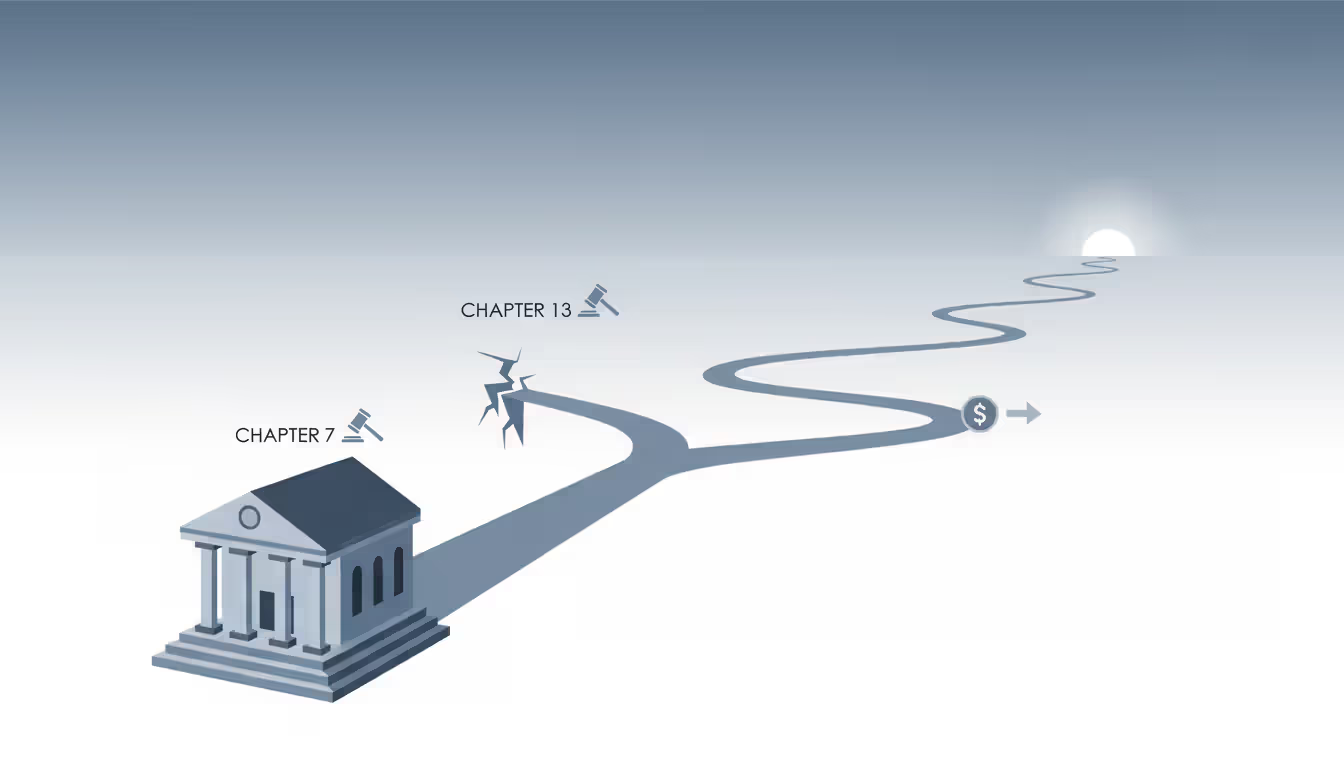
Your credit report displays bankruptcy records longer than you'd probably like. File Chapter 7? That liquidation sits there for a full decade. Go the Chapter 13 route instead? You're looking at seven years of visibility.
Here's what trips people up: most assume they're completely locked out until that entire period expires. Wrong. That bankruptcy mark hits hardest right after your case closes, then loses its sting gradually as you demonstrate months of solid financial decisions.
Waiting Periods Vary by Loan Type
Government-backed mortgages come with non-negotiable timelines written into their program requirements—no exceptions, no matter how spectacular your recovery looks on paper.
Take VA loans for veterans. Chapter 7 filers wait 24 months minimum from discharge date. File Chapter 13 instead? Only 12 months, but you'll need court records proving you've hit every payment deadline perfectly. FHA programs mirror this pattern—two years for liquidation cases, one year for reorganization assuming flawless payment compliance documentation.
Personal loans work completely differently. No federal agency dictates approval timelines. Big national banks often copy those mortgage waiting periods because their underwriting departments already know those numbers. Smaller lenders focused on damaged credit? I've seen approvals four months after discharge. You'll get hammered with 31-34% rates, but they'll actually process your paperwork.
Chapter 7 vs. Chapter 13: Different Impacts
Chapter 7 wipes out qualifying debts in roughly four to six months after liquidating whatever non-exempt assets you own. You finish debt-free, but lenders interpret this as walking away completely instead of attempting repayment.
Chapter 13 runs three to five years through court-supervised payment plans, where you repay portions based on disposable income formulas. Some lenders actually prefer this on your record. Their reasoning? Thirty-six consecutive court-ordered payments prove you can handle ongoing debt responsibilities. A few specialized lenders even approve new credit while you're still making Chapter 13 payments, though you'll need written bankruptcy court approval first.
Author: Victor Langston;
Source: dynamicrangemetering.com
When evaluating your application, lenders dig into multiple factors beyond that bankruptcy notation. Time elapsed since discharge matters tremendously. Your current score carries weight. They scrutinize debt-to-income calculations. Employment history gets verified. Most importantly, they want evidence you're rebuilding—even minimal activity like eight straight on-time payments on a $300 secured card shows creditworthiness.
Someone 24 months past discharge with a 680 score, steady job, and reasonable monthly obligations beats a borrower six months out with a 550 score every time.
Types of Loans Available After Bankruptcy
Different loan products treat bankruptcy survivors with wildly varying levels of suspicion. Knowing which options fit your timeline prevents burning hard inquiries on guaranteed rejections.
Secured vs. Unsecured Personal Loans
Secured borrowing requires collateral backing—your car, savings, investments, or other valuable property lenders can legally claim if you default. This setup shifts default risk off the lender's books onto your personal assets, explaining why they'll approve post-bankruptcy applications.
Here's an underused tactic: use your own savings as collateral. Drop $2,000 in a certificate of deposit, then borrow against it. You're essentially borrowing your own cash, but the lender reports each payment to all three bureaus. Rates for savings-backed arrangements typically land between 6-18%, varying with your overall profile and what you're pledging.
Unsecured borrowing eliminates collateral completely. Your vehicle title stays yours. Your savings remain accessible. Lenders rely exclusively on income and whatever credit reputation survived bankruptcy. Approval within your first two years post-discharge? Exceptionally tough. When you find willing lenders, APRs typically fall between 18-36%.
The fundamental trade-off: secured products bring better terms but risk losing assets. Unsecured products protect your property while punishing you through expensive interest.
Credit-Builder Loans
These flip traditional lending completely backward. Instead of depositing money in your account, lenders lock your loan amount—usually $300-$1,000—in a savings account you can't touch. You make monthly payments over 6-24 months. After completing every payment successfully, they release the full amount to you, sometimes with modest interest earnings.
Lenders report your activity to all three bureaus throughout. Each on-time payment progressively strengthens your file. Think forced savings that simultaneously reconstructs your credit history.
Credit unions dominate this space. Their approval standards stay minimal since they're holding your money anyway. Rates generally span 6-16%. The obvious drawback? When you need $800 for immediate car repairs, this product provides zero help. Your funds stay locked until you've made that final payment. For pure credit reconstruction following bankruptcy, though, few products deliver better results with lower risk.
Author: Victor Langston;
Source: dynamicrangemetering.com
VA Loans and Special Programs
Military service opens lending doors civilians can't access. VA-backed programs enforce more forgiving bankruptcy policies—those two-year Chapter 7 and one-year Chapter 13 waits beat conventional mortgage timelines substantially. While VA loans mainly fund home purchases, similar principles extend to other VA-backed financial products.
Credit unions and community development financial institutions sometimes run "fresh start" programs specifically targeting bankruptcy filers. These institutions balance social mission goals against staying financially sustainable. They'll approve loans at reasonable rates—typically 12-24%—without the predatory features you'd find with payday lenders and title loan shops.
Several state housing finance agencies provide personal loans or credit development products for residents recovering from financial disasters. Each state writes its own eligibility criteria, but these programs usually combine lending access with mandatory financial education components.
Steps to Improve Your Approval Chances
Sitting around passively accomplishes nothing. Active credit rebuilding while time passes creates enormous differences. Strategic repair versus passive waiting can generate 100-point score improvements.
Rebuild Payment History Immediately
Secured credit cards provide your fastest route back to positive reporting. Put down $200-$500 as collateral deposit. Card issuers transmit your activity to all three bureaus monthly. Charge one small recurring expense monthly—your Netflix subscription, cell phone bill—then pay full balances before due dates. Within 12-18 months, expect 50-100 additional points on your post-bankruptcy score.
Here's a lesser-known technique: request authorized user status on a family member's established card with excellent payment history. You inherit their account age and payment record without ever possessing the physical card. Choose someone maintaining utilization below 30% who hasn't missed payments in 24+ months. Their decade-old account with spotless history transfers directly onto your profile.
Document Income Stability
Lenders desperately want assurance you can actually repay borrowed amounts. Two consecutive years with identical employers signals powerful stability. Recent job changes should be framed as career advancement rather than instability. Collect recent pay stubs. Retrieve your last two years of tax returns. Print bank statements showing regular, consistent income deposits.
Self-employment significantly complicates approval. You'll need two complete years of tax returns plus detailed profit-and-loss statements for recent months. Lenders scrutinize self-employed applicants more intensively because income volatility runs higher.
Side income strengthens applications when documented properly. Freelance writing work, rental property income, weekend rideshare driving—everything counts toward debt-to-income calculations, provided you're reporting it on tax returns.
Time Your Application Strategically
Submitting applications the week after discharge practically guarantees rejection or terms so terrible they'd embarrass loan sharks. Wait at least six months while building positive payment records. The optimal approval window typically emerges around 18-24 months post-discharge, after demonstrating consistent financial discipline.
Multiple loan applications within compressed timeframes damage scores unnecessarily. Each hard inquiry removes a few points, and inquiry clusters signal desperation to underwriters reviewing applications. Research which lenders offer prequalification through soft pulls that leave scores untouched.
Author: Victor Langston;
Source: dynamicrangemetering.com
Choose the Right Lender
Banks where you held accounts before bankruptcy frequently maintain internal blacklists. Even with improved scores, they remember charge-offs from your bankruptcy schedules. Start fresh with completely new institutions.
Credit unions evaluate whole-person profiles rather than focusing exclusively on credit scores. Your existing relationship, employment situation, and explanation for what went wrong all factor into approval decisions. Online lenders like Upstart or Avant incorporate alternative data in underwriting algorithms. They consider education credentials, employment history, and cash flow patterns. Your bankruptcy becomes one data point rather than automatic disqualification, though rates remain elevated.
Platforms connecting individual investors to borrowers offer another avenue. These investors accept elevated risk in exchange for elevated returns. Your bankruptcy becomes part of your narrative rather than a dealbreaker. Rates stay high, but evaluation extends beyond that three-digit score.
Comparing Lenders and Loan Terms
Finding willing lenders represents only half the challenge. Ensuring their terms won't sabotage financial recovery requires careful evaluation.
Loan Product
Annual Percentage Rate
Minimum Credit Score
Bankruptcy Discharge Wait Time
What You'll Pledge
Best Situation For
Savings-backed loan
6-18% typical range
Usually accepts 580+
Six to twelve months recommended
Vehicle title, bank accounts, investments
When collateral risk justifies lower costs
Standard personal loan
18-36% typical range
600 floor, prefers 640+
Twelve to twenty-four months ideal
No assets required
Emergency cash without assets to pledge
Credit-builder account
Typically 6-16%
No floor requirement
Available immediately after discharge
None (your funds held until completion)
Rebuilding credit matters more than accessing cash
Peer lending platform
15-30% typical range
Often approves 580+
Six to eighteen months average
No assets required
Steady income despite damaged history
Member credit union
10-24% typical range
580 frequently opens doors
Six to twelve months (institution-specific)
Depends on specific program
When relationship matters in underwriting
Understanding APR Beyond the Number
A 20% rate sounds insane initially. Context matters enormously. Borrow $3,000 at 20% over 24 months and total interest hits approximately $700. Compare that to payday lending's effective APR exceeding 400%. That identical $3,000 could cost thousands in fees over the same timeframe.
Origination fees typically consume 1-8% of total loan amounts. Request $5,000 with a 5% origination fee? You receive $4,750 deposited, but repayment obligations cover $5,000 plus all accruing interest. Factor these costs into shopping comparisons.
Prepayment penalties punish early loan payoff. Lenders impose these fees because profitability depends on keeping you in debt longer. Avoid any lender charging prepayment penalties under any circumstances.
Red Flags Signaling Predatory Lenders
"Guaranteed approval regardless of credit" actually means "unconscionable terms ahead." Legitimate lenders assess realistic repayment capacity. Upfront fees charged before loan funding typically indicate scams—real lenders deduct fees from loan proceeds. Pressure to sign immediately without document review protects lenders while exploiting borrowers.
Products demanding automatic bank account withdrawal access or direct paycheck deposit rights can trap you in endless renewal cycles. Title loans exchanging car titles for quick cash charge triple-digit interest rates and frequently end with vehicle repossession.
Online vs. Traditional Lenders
Online lenders process applications incredibly quickly. Applications take minutes. Funding arrives within days. Their algorithms weigh factors beyond traditional credit scores, potentially approving borrowers conventional banks would reject immediately. The downside? Zero face-to-face interaction means zero negotiating leverage. You cannot explain bankruptcy circumstances to algorithms.
Traditional banks and credit unions process applications slowly by comparison. Human interaction creates negotiation opportunities. Loan officers might approve borderline applications after reviewing banking relationships, verifying employment directly, or hearing compelling explanations of financial turnaround.
Credit unions consistently beat banks on rates for comparable borrower profiles. Membership sometimes requires just $5 deposits. Other credit unions restrict membership by employer, geographic location, or organizational affiliation.
Common Mistakes When Applying for Loans Post-Bankruptcy
Desperation creates vulnerability to decisions undermining fresh starts.
Applying Too Soon
Filing bankruptcy Monday then applying for personal loans Friday signals to lenders you haven't learned anything. You clearly haven't addressed financial behaviors creating the original crisis. Lenders perceive dramatically elevated default risk.
More importantly, you haven't rebuilt sufficient credit history to qualify for anything beyond predatory products designed to trap struggling borrowers in debt cycles.
Wait six months minimum. Use that time establishing positive payment patterns. Build emergency funds reducing future borrowing frequency.
Ignoring Credit Repair Fundamentals
Personal loans won't magically resurrect credit scores. Borrowing money without first addressing credit utilization percentages, payment timeliness, and account diversity usually creates another debt spiral. Someone with a 580 score taking a 32% APR consolidation loan rarely improves their situation. They've merely moved the problem around.
Prioritize secured cards initially. Request authorized user status on someone else's account. Take credit-builder loans. Once scores climb into mid-600s, personal loan terms improve dramatically—potentially saving thousands in interest charges.
Falling for Predatory Lenders
Storefront operations in strip malls advertising "bankruptcy okay!" typically sell title loans, payday advances, or installment loans with effective APRs exceeding 100%. These products trap borrowers in renewal cycles where payments barely cover interest, never reducing principal balances.
Consider the mathematics on a $1,500 payday loan charging $225 in fees due within two weeks. That's a 391% effective APR. Roll it over for three months and you'll owe several times the original borrowed amount.
Author: Victor Langston;
Source: dynamicrangemetering.com
Taking On Too Much Debt
Lender approval for $10,000 doesn't mean borrowing $10,000 makes sense. Calculate actual needs precisely. Borrow 10-20% less when circumstances permit. Smaller loan balances mean smaller monthly payments, faster payoff timelines, and significantly less interest paid over loan lifespans.
Your debt-to-income ratio affects every future borrowing opportunity. Keep total monthly debt obligations below 30% of gross monthly income. This leaves room for housing, transportation, and unexpected emergency expenses.
Not Reading Terms Carefully
Variable interest rates can spike payments without warning. Loans starting at 18% might climb to 28% based on market index changes. Fixed rates provide payment certainty and budgeting predictability.
Automatic payment enrollment sometimes offers small rate discounts—typically 0.25-0.50%—but grants lenders direct bank account access. Ensure sufficient funds exist on payment dates to avoid overdraft fees compounding costs.
Personal loan terms extending beyond three years usually signal you're borrowing more than realistically affordable. Lower monthly payments look attractive initially, but you'll pay substantially more interest over loan lifespans.
The biggest mistake I see clients make after bankruptcy is rushing to borrow again without addressing the habits that created their financial crisis. A personal loan isn't a credit repair tool—it's a responsibility that can either support your recovery or trigger another collapse. Focus first on building emergency savings and establishing consistent payment patterns on small secured accounts. When you do borrow, choose terms you could still afford if your income dropped 20%. That's how you protect the fresh start bankruptcy provided
— Jennifer Martinez
Frequently Asked Questions
How long after bankruptcy can I apply for a personal loan?
Nobody legally prevents you from applying the day after discharge, though approval odds and available terms improve substantially when you wait six to twelve months. Most mainstream lenders strongly prefer seeing twelve to twenty-four months of post-bankruptcy credit rebuilding before approving applications. Specialized damaged-credit lenders might approve applications sooner, though expect APRs exceeding 30%. VA loan waiting periods follow specific timelines: twenty-four months following Chapter 7 discharge, twelve months following Chapter 13 discharge with documented satisfactory payment performance on repayment plans.
What credit score do I need to get a personal loan after bankruptcy?
Expect scores dropping into the 500-550 range immediately following bankruptcy discharge. Most mainstream lenders set minimum approval thresholds between 580-600 for personal loans, though you'll face elevated interest rates at those levels. Scores climbing above 640 unlock significantly better terms and expanded lender options. Rebuilding into this range typically requires twelve to eighteen months of consistent positive payment activity on secured cards or credit-builder products. Some credit unions and specialty lenders consider applications with scores between 550-580, particularly when you demonstrate strong income and stable employment.
Can I get an unsecured loan immediately after bankruptcy discharge?
Traditional lenders rarely approve loans without collateral requirements immediately following discharge. When available, terms typically venture into predatory territory. Most banks and credit unions enforce internal waiting periods spanning twelve to twenty-four months. Online lenders specializing in damaged credit might approve applications within six months of discharge, though expect APRs between 25-36%. Loans backed by collateral provide more realistic borrowing paths during your first year after bankruptcy, typically offering rates ten to fifteen percentage points lower than comparable options without collateral requirements.
Should I use a cosigner for a loan after bankruptcy?
Adding cosigners with solid credit dramatically improves approval odds and secures substantially lower interest rates. But understand the risk you're transferring to that person. Your default damages their credit and makes them legally responsible for your debt. This arrangement strains relationships and requires careful consideration. When someone agrees to cosign, treat this obligation as seriously as bankruptcy discharge obligations—any missed payment harms both credit profiles. Many financial advisors recommend building credit independently through cards backed by deposits and credit-builder loans rather than risking valued personal relationships.
What's the difference between secured and unsecured loans after bankruptcy?
Loans requiring collateral demand you pledge assets—savings accounts, vehicles, or other valuable property—that lenders can legally seize upon default. This risk reduction allows lenders to offer substantially lower interest rates and approve applications sooner after bankruptcy discharge. Products without collateral requirements demand no asset pledges, making them significantly harder to obtain and considerably more expensive following bankruptcy. Loans backed by collateral might charge 8-15% APR while products without collateral for identical borrowers cost 20-35%. The trade-off centers on risk—defaulting on collateral-backed loans means losing pledged assets, while defaulting on products without collateral inflicts additional credit damage only.
Are there alternatives to personal loans for rebuilding credit after bankruptcy?
Several alternatives rebuild credit without high-interest personal loans. Cards requiring cash deposits consistently report activity to credit bureaus, building positive history with minimal financial risk. Credit-builder products lock loan proceeds in savings accounts while you make payments, releasing funds once you've completed all payments. Requesting authorized user status on someone else's established card adds their positive payment history to your credit report. Rent reporting services like RentTrack add housing payments to credit files. These methods cost substantially less than personal loan interest while achieving identical credit-building objectives.
Getting approved for personal loans after bankruptcy demands patience, strategic credit rebuilding, and realistic expectations about available terms and rates. Your timeline varies based on which bankruptcy chapter you filed, which lender type you're targeting, and how aggressively you've pursued financial recovery. Most borrowers see meaningful improvement twelve to twenty-four months after discharge.
Loans backed by collateral and credit-builder products offer the most accessible entry points for recent bankruptcy filers. Products without collateral requirements become realistic options once credit scores climb above 640. Resist temptation to borrow from predatory lenders promising guaranteed approval—their terms frequently create new financial emergencies rather than solving existing ones.
Master fundamentals first. Rebuild payment history through cards requiring deposits. Maintain stable employment. Keep debt-to-income ratios manageable. Save emergency funds reducing future borrowing needs. When you finally apply for personal loans, compare multiple lenders thoroughly. Understand total costs including all fees. Borrow only what you genuinely need for specific purposes.
Bankruptcy represented a financial low point, but it also eliminated crushing debt holding you back. The loans you choose during recovery either support your fresh start or undermine it completely. Choose wisely. Borrow responsibly. Prioritize long-term financial health over short-term credit access. Your future financial self will thank you for the discipline you're practicing today.
Bankruptcy represents a legal process allowing individuals to eliminate or restructure unmanageable debt under federal court protection. Understanding what it means personally—from credit impacts to employment concerns—helps remove fear from this financial decision and clarifies the path forward
Filing for bankruptcy doesn't permanently block you from renting. Discover practical strategies for securing housing after bankruptcy, from understanding landlord screening to strengthening applications with compensating factors. Learn which housing options work best and common mistakes to avoid
Bankruptcy damages your credit, but recovery is faster than most people expect. This guide covers secured credit cards, realistic recovery timelines, and step-by-step strategies to rebuild your credit score after Chapter 7 or Chapter 13 bankruptcy, including common mistakes to avoid
Filing for bankruptcy doesn't automatically mean losing your home. Most filers keep their houses if equity falls within state homestead exemptions and mortgage payments remain current. Learn how Chapter 7 and Chapter 13 affect your home differently and what protections exist
The content on this website is provided for general informational and educational purposes only. It is intended to explain concepts related to bankruptcy, debt relief, credit rebuilding, and related legal processes.
All information on this website, including articles, guides, and examples, is presented for general educational purposes. Bankruptcy outcomes and procedures may vary depending on jurisdiction, personal circumstances, and applicable laws.
This website does not provide legal, financial, or credit advice, and the information presented should not be used as a substitute for consultation with qualified attorneys or financial advisors.
The website and its authors are not responsible for any errors or omissions, or for any outcomes resulting from decisions made based on the information provided on this website.