So you've filed bankruptcy and now you're apartment hunting. If you're nervous about whether anyone will rent to you, I get it—that's what most people think about when they realize their bankruptcy shows up on background checks. Here's something that might surprise you: landlords reject applications for lots of reasons, and bankruptcy is just one factor they consider. Sure, it makes things harder, but it doesn't slam every door in your face. You'll need some strategy, though. Let me walk you through exactly what works when you're trying to secure housing with a bankruptcy on your record.
Can You Rent an Apartment After Bankruptcy?
Here's the straight answer: yes, but you'll face more scrutiny than applicants with clean credit. There's no law stopping you from renting, but landlords can legally use your bankruptcy as grounds for rejection. What actually happens depends on when you apply, which bankruptcy chapter you filed, and—most importantly—where you look for housing.
Chapter 7 wipes out most unsecured debts in about three to four months. You walk away debt-free relatively fast. Chapter 13 works differently—you enter a court-approved repayment plan lasting between three and five years, making monthly payments to a trustee who distributes funds to creditors. Some landlords actually respect Chapter 13 because it shows you're working to repay obligations. Others prefer Chapter 7 since it's done and dusted quickly.
When you apply matters enormously. Submit applications right after your discharge date and you'll struggle. Your credit score sits in the basement, you might lack recent rental history, and you haven't had time to prove financial stability. Most housing counselors suggest waiting at least six months—ideally closer to a year. Use that time to land steady work, accumulate some savings, and maybe open a secured credit card that you pay religiously every month.
Your Chapter 7 filing stays visible on credit reports for a full decade. Chapter 13 drops off after seven years (counted from when you initially filed, not when you completed payments). But here's the thing: the damage fades significantly after two or three years if you've been rebuilding responsibly. Early years are tough. Later years? Much easier.
How Landlords Check Bankruptcy History
Most rental applications trigger a three-part investigation: credit reports, criminal records, and eviction history. Your bankruptcy pops up in two places—credit reports and public court databases.
Credit bureaus (Equifax, TransUnion, Experian) maintain a public records section where bankruptcy filings appear. You'll see the filing date, which chapter you filed, and when the court discharged your case. The filing also tanks your credit score, which many landlords use as a quick filter. Property managers at big complexes often auto-reject anyone under 600 or 620.
Large apartment communities almost always hire third-party screening companies. These services pull comprehensive reports that include federal bankruptcy court records. The screening criteria tend to be rigid—you need a minimum score, no bankruptcies filed within the past three years (or sometimes five), and monthly income at least three times the rent. Fail any test and the system spits out a denial.
Smaller, independent landlords operate differently. Some run basic online background checks or just Google your name. Others skip the credit check entirely, especially if they're renting a single property and care more about gut feel after meeting you. One landlord might pull a full report; another might just call your employer and previous landlord. This inconsistency actually works in your favor—you can seek out the flexible ones.
One warning: screening reports sometimes show incorrect information. I've seen bankruptcies listed as "pending" years after discharge, or debts that were included in bankruptcy appearing as unpaid. Always pull your own credit report before you start applying so you can dispute errors with the credit bureaus. Landlords won't give you the benefit of the doubt if their report shows wrong information.
Author: Ethan Calloway;
Source: dynamicrangemetering.com
Housing Options After Bankruptcy
When big apartment complexes keep rejecting you, shift strategies. Multiple paths lead to housing—you just need to explore beyond the obvious choices.
Private individuals who own one or two rental houses give you your best shot. They make decisions subjectively, often caring more about whether they trust you than what your credit score is. Look for listings that say "owner-managed" or provide a personal phone number rather than a property management company contact. Craigslist, Facebook Marketplace, and neighborhood rental groups are goldmines for these opportunities.
Smaller complexes with maybe 10 or 15 units sometimes use looser screening. They might not pay for expensive tenant screening services, instead relying on your rental references and paystubs.
Ever considered rent-to-own agreements? These arrangements let you rent now with an option to purchase later. Sellers often care more about your down payment and monthly payment capability than your credit history, especially if they're motivated to move a property that's been sitting.
Getting a co-signer transforms your application. When someone with solid credit and income co-signs your lease, they're telling the landlord "I'll pay if this person can't." That assurance overcomes most bankruptcy concerns. You'll need to find someone willing to take that legal risk, which usually means family or very close friends.
Offering two or three months' security deposit instead of the standard one month shows you're serious and gives landlords financial cushion. I've seen landlords who initially said no change their minds when applicants offered triple deposits (check your state laws first—some cap security deposit amounts).
Subletting from an existing tenant bypasses landlord screening entirely. You're dealing with the current tenant, who probably won't run credit checks. Same goes for roommate situations where you're added to an existing lease.
Some cities offer transitional housing programs through nonprofits or government agencies. These provide temporary or affordable housing with relaxed credit requirements for people facing housing challenges.
Renting from Private Landlords vs. Property Management Companies
This distinction shapes your entire strategy. Management companies run standardized operations—automated screening, fixed policies, zero exceptions. They manage dozens or hundreds of units and can't manually evaluate every applicant's circumstances. Your application feeds into software that outputs approval or denial based on hard criteria.
Private landlords have discretion. Mrs. Johnson renting out her deceased mother's house can decide that your stable job and honest explanation matter more than a bankruptcy filing from two years ago. She makes a judgment call.
With private landlords, call before applying. Explain your situation on the phone. Build a personal connection. Many will tell you right away whether they'll consider your application, saving you the application fee. Management companies rarely offer this—you submit online and wait for the automated decision.
Using a Co-Signer or Guarantor
A co-signer adds their name to your lease and accepts equal legal responsibility for rent payments. If you stop paying, the landlord can pursue them for the full amount, and missed payments damage their credit too.
Landlords love co-signers because it doubles their security. Even though your bankruptcy raises red flags, your co-signer's 720 credit score and $75,000 income provide reassurance. Properties that would flatly reject you alone will often approve you with a qualified co-signer.
Most landlords want co-signers with credit scores above 650, steady income (usually 3-4 times the monthly rent), and sometimes require them to live in-state. Expect to provide their tax returns, bank statements, and employment verification.
Obviously, this is a big ask of your co-signer. Their credit takes a hit if you screw up. One missed payment shows on their credit report. Be completely transparent about your recovery progress and don't take their help lightly.
Author: Ethan Calloway;
Source: dynamicrangemetering.com
Tips for Finding Housing After Bankruptcy
Smart tactics dramatically improve your approval rate. Here's what actually moves the needle:
Wait until you've got your feet under you. Don't apply the week after discharge when you're barely employed and have $300 in savings. Give yourself several months to establish consistent income, build an emergency fund, and demonstrate financial responsibility. That gap matters to landlords—it shows forward progress.
Tell them before they find out. Hiding your bankruptcy guarantees rejection once the background check reveals it (and it will). Address it head-on in your application or cover letter. Write something like: "My application will show a Chapter 7 bankruptcy filed in June 2023 following unexpected medical expenses. I've since maintained steady employment at [company] for 18 months and rebuilt savings." Simple, factual, brief.
Draft a one-page explanation letter. Describe what caused the bankruptcy (job loss, medical crisis, divorce—not overspending habits), what you learned from it, and how you've stabilized since. Skip the emotional appeals. Just facts: "I filed Chapter 7 in March 2023 after losing my job and exhausting savings during a six-month unemployment period. I secured full-time employment in May 2023 earning $52,000 annually and have maintained consistent income since." Include this with every application.
Line up killer references. Previous landlords who can confirm you paid rent on time carry enormous weight. Ask them to write detailed letters mentioning specific timeframes and payment history: "John rented from me from January 2020 to December 2022, paying $1,200 monthly rent. He never missed or was late with a payment." That directly addresses landlords' core concern.
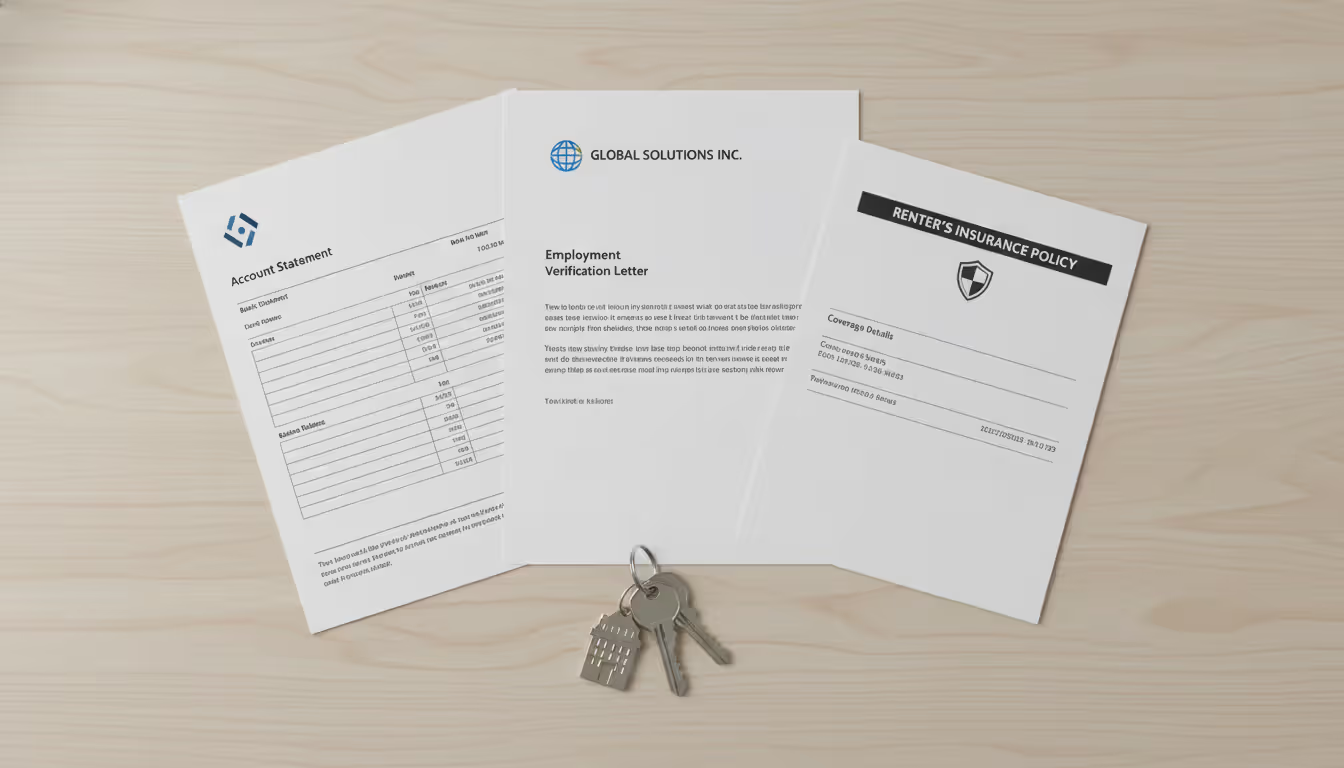
Bring financial documentation. Show up with recent paystubs, three months of bank statements showing consistent deposits and healthy balances, and an employment verification letter. Prove you earn three to four times the rent and have reserves. Numbers speak louder than credit scores.
Find specialist rental agents. Some brokers focus specifically on helping people with credit problems find housing. They know which landlords accept bankruptcies and can advocate for you. You'll pay a fee (usually one month's rent), but the service often justifies the cost.
Widen your geographic search. Competitive urban markets with low vacancy rates let landlords cherry-pick perfect applicants. Suburban areas or less desirable neighborhoods have more flexible landlords desperate to fill vacancies. Lower rent also helps—it's easier to prove you can afford $900 monthly than $1,800.
Suggest a short-term lease first. Some landlords hesitate to commit to 12 months with a bankruptcy-holder but will try a month-to-month or six-month lease. Once you've proven yourself by paying on time for several months, they'll often convert to a standard lease.
How to Strengthen Your Rental Application with Bankruptcy on Record
Author: Ethan Calloway;
Source: dynamicrangemetering.com
Think of your application as building a case for why you're low-risk despite past financial troubles. You need compensating factors that outweigh the bankruptcy.
Employment stability counts heavily. Get a letter from your employer on company letterhead confirming your position, salary, and hire date. If you've been there over a year, emphasize that tenure. "I've worked as an accountant at Smith & Associates since January 2022 earning $58,000 annually" beats a bare paystub.
Bank statements demonstrate current habits. Print three to six months showing consistent deposits, no overdrafts, and ideally a balance covering several months' rent. This proves you manage money well right now, which matters more than what happened years ago.
Previous landlord letters are gold. If you rented before bankruptcy and paid reliably, get a detailed reference. Include specific dates, rent amounts, and payment history: "Sarah rented my property from March 2019 to April 2023 at $1,100 monthly. She paid on time every single month, maintained the property well, and gave proper 30-day notice." This directly counters the biggest landlord fear.
Offer to prepay rent if you've saved. Can you pay three or six months upfront? That eliminates the landlord's near-term risk entirely. Private landlords especially respond to this—it puts cash in their pocket immediately and proves you have resources.
Show credit rebuilding efforts. Opened a secured credit card since bankruptcy and made on-time payments for six months? Include those statements. Enrolled in financial counseling? Mention it. These demonstrate you're actively recovering, not just hoping things work out.
Double or triple the security deposit. Offering two or three months' deposit (where legal—some states cap this) gives landlords extra protection. Many who'd reject you at one month's deposit reconsider at three.
Get renters insurance before applying. Purchase a policy and show proof with your application. This demonstrates responsibility and protects the landlord's property. Some require it anyway, but offering proactively scores points.
Common Mistakes When Renting After Bankruptcy
What landlords really want is confidence you'll pay rent consistently. Your bankruptcy from 24 months ago concerns them far less than whether you've held the same job for the past year and have references from previous landlords. I tell clients to stop fixating on the past credit event and start showcasing present-day stability. A strong employer reference letter and confirmation from your last landlord that you paid reliably for two years? That combination often matters more than any credit score
— Michael Torres
Certain moves sabotage your search. Avoid these pitfalls:
Concealing your bankruptcy. They'll discover it during screening. The dishonesty then becomes the main issue, not the bankruptcy itself. Always disclose upfront with context rather than letting them stumble onto it.
Applying too early after discharge. You're barely employed, have minimal savings, no recent credit history. Everything screams "unstable." Wait several months to rebuild some financial foundation before subjecting yourself to repeated rejections.
Leaving the bankruptcy unexplained. A bare bankruptcy filing tells landlords nothing except "money problems." Without context, they assume the worst. Your brief explanation shifts the narrative from "irresponsible person" to "responsible person who faced hardship."
Targeting unrealistic properties. That luxury downtown high-rise with a six-month waiting list has zero incentive to gamble on your application when 40 people with perfect credit are competing. Start with modest properties in less competitive markets.
Quitting after three rejections. You'll hear "no" repeatedly. That's expected. Each rejection teaches you which landlord types are workable and which aren't. Persistence is required—you only need one approval.
Skipping your own credit check. Mistakes appear constantly. Bankruptcies showing as pending when they're closed. Debts included in bankruptcy appearing unpaid. Dispute errors before applying so landlords see accurate information.
Author: Ethan Calloway;
Source: dynamicrangemetering.com
Spray-and-pray applications. Every application costs $30-$75 plus time. Research first—call properties and ask about bankruptcy policies before applying. Target the most promising opportunities rather than applying everywhere and hoping.
Ignoring small-time landlords. Big complexes have ironclad policies. Someone renting their single basement apartment makes personal decisions. Don't overlook "For Rent" signs in residential neighborhoods—those often lead to flexible landlords.
Chapter 7 vs. Chapter 13: Impact on Rental Applications
Factor
Chapter 7
Chapter 13
Credit report duration
Remains visible for 10 years after you filed
Removed after 7 years from your filing date
How quickly it resolves
Usually wraps up in 3-4 months after filing
Takes 3-5 years since you're making plan payments
How landlords view it
Split opinions—some see fresh start, others see complete financial collapse
Often perceived more positively since you're repaying debts
Optimal application timing
Wait 6-12 months post-discharge to demonstrate stability
Can apply during plan if you show consistent on-time payments, or after completion
What documentation helps
Discharge papers, recent paystubs, explanation of circumstances
Trustee payment records, proof you're current on plan, trustee's contact information
Frequently Asked Questions About Renting After Bankruptcy
How long does bankruptcy stay on my rental background check?
Chapter 7 remains visible for ten years from your filing date. Chapter 13 comes off after seven years, also counted from when you filed (not when you finished payments). That said, most landlords care less about older bankruptcies—after two or three years, the impact drops significantly if you've been rebuilding your credit and maintaining stable income. Some landlords only look at bankruptcies from the past two years. Others consider the full reporting period. Your mileage varies by property.
Do all landlords reject tenants with bankruptcy?
Not even close. Large property management firms usually enforce strict screening rules that automatically disqualify recent bankruptcies. But private landlords and smaller complexes evaluate applications individually. Many approve tenants with bankruptcy when other factors look solid—stable job, good references, reasonable explanation. Your approval odds depend heavily on where you apply. Cast a wide net and you'll find someone willing to rent to you.
Should I mention my bankruptcy on a rental application?
Absolutely yes. Landlords run background checks that reveal bankruptcies, so hiding it only destroys credibility. Address it proactively in your cover letter or application comments: "My credit report shows a Chapter 7 bankruptcy filed in April 2023 due to medical expenses following an accident. I've since maintained steady employment earning $48,000 annually and rebuilt emergency savings." This honesty demonstrates integrity and lets you control the narrative instead of letting landlords draw their own conclusions.
Can I rent immediately after bankruptcy discharge?
Legally, nothing stops you. Practically, you'll struggle. Your credit score bottoms out right after discharge, you probably lack recent rental references, and you haven't had time to demonstrate financial recovery. Most housing counselors recommend waiting six months minimum—closer to a year is better. Use that time to establish consistent employment, accumulate savings, and possibly improve your credit score by opening a secured credit card and paying it religiously. Those months make an enormous difference in how landlords perceive you.
Will a Chapter 7 or Chapter 13 bankruptcy affect my rental chances differently?
Chapter 13 can appear more responsible since you're repaying debts through a structured plan. However, you remain technically in bankruptcy for three to five years, which worries some landlords. Chapter 7 discharges everything quickly but represents total debt elimination, which some view as worse. Honestly, the chapter type matters less than how long ago you filed and what your current financial picture looks like. Focus on demonstrating present stability rather than worrying about which chapter looks better.
What if I'm denied housing because of bankruptcy?
Request written explanation of the denial—landlords must provide this if they reject you based on credit or background information. Review the report they used and dispute any errors with the credit bureaus. Then shift your strategy: apply to different property types (especially private landlords), use a co-signer if possible, offer larger deposits, or seek landlords who don't emphasize credit checks. Each rejection teaches you something about what works and what doesn't in your market.
Renting after bankruptcy takes strategy, patience, and honesty. Your bankruptcy doesn't permanently disqualify you—it just means you need to approach housing differently than someone with perfect credit. Focus on demonstrating current financial stability: steady job, savings buffer, strong rental references. Those factors outweigh past problems.
Target private landlords and smaller properties where decision-makers have flexibility. Tell them about your bankruptcy upfront while emphasizing what you've learned and how you've rebuilt. Strengthen weak areas in your application with co-signers, larger deposits, or prepaid rent when possible.
Expect rejections—they're part of the process. Don't let them discourage you. Each "no" narrows your focus toward landlords who evaluate the whole person rather than just a credit score. With the strategies I've outlined and genuine persistence, you'll secure housing that works for your needs and budget. Your bankruptcy is one chapter in your financial story, not the ending.
Bankruptcy represents a legal process allowing individuals to eliminate or restructure unmanageable debt under federal court protection. Understanding what it means personally—from credit impacts to employment concerns—helps remove fear from this financial decision and clarifies the path forward
Bankruptcy damages your credit, but recovery is faster than most people expect. This guide covers secured credit cards, realistic recovery timelines, and step-by-step strategies to rebuild your credit score after Chapter 7 or Chapter 13 bankruptcy, including common mistakes to avoid
Bankruptcy doesn't permanently block access to personal loans, but it requires strategic timing and realistic expectations. Discover which loan types approve post-bankruptcy borrowers fastest, how long to wait for better terms, and which lenders to avoid during financial recovery
Filing for bankruptcy doesn't automatically mean losing your home. Most filers keep their houses if equity falls within state homestead exemptions and mortgage payments remain current. Learn how Chapter 7 and Chapter 13 affect your home differently and what protections exist
The content on this website is provided for general informational and educational purposes only. It is intended to explain concepts related to bankruptcy, debt relief, credit rebuilding, and related legal processes.
All information on this website, including articles, guides, and examples, is presented for general educational purposes. Bankruptcy outcomes and procedures may vary depending on jurisdiction, personal circumstances, and applicable laws.
This website does not provide legal, financial, or credit advice, and the information presented should not be used as a substitute for consultation with qualified attorneys or financial advisors.
The website and its authors are not responsible for any errors or omissions, or for any outcomes resulting from decisions made based on the information provided on this website.