Here's what most people don't realize: bankruptcy doesn't permanently disqualify you from homeownership. Each year, roughly 800,000 Americans go through bankruptcy proceedings, and many of these individuals successfully purchase homes afterward—some qualify within 24 months, while others face longer timelines. Your path forward involves navigating mandatory waiting requirements, strengthening your financial foundation, and selecting the mortgage program that fits your circumstances.
Your timeline depends on which bankruptcy chapter you filed and which loan type you're pursuing. Certain borrowers receive approval just 12 months after their filing. Others won't meet qualification standards until four years have passed or more. We'll explain exactly what shapes your timeline and how to maximize your approval chances.
Understanding Bankruptcy and Your Home-Buying Eligibility
Bankruptcy eliminates debt and provides financial breathing room. But mortgage lenders view your filing history as a major warning signal that you struggled with previous financial commitments.
A Chapter 7 filing remains visible on your credit reports for ten complete years. Chapter 13 filings disappear after seven years of reporting. Either type typically causes your credit score to plummet—most filers see drops between 130 and 240 points immediately after filing.
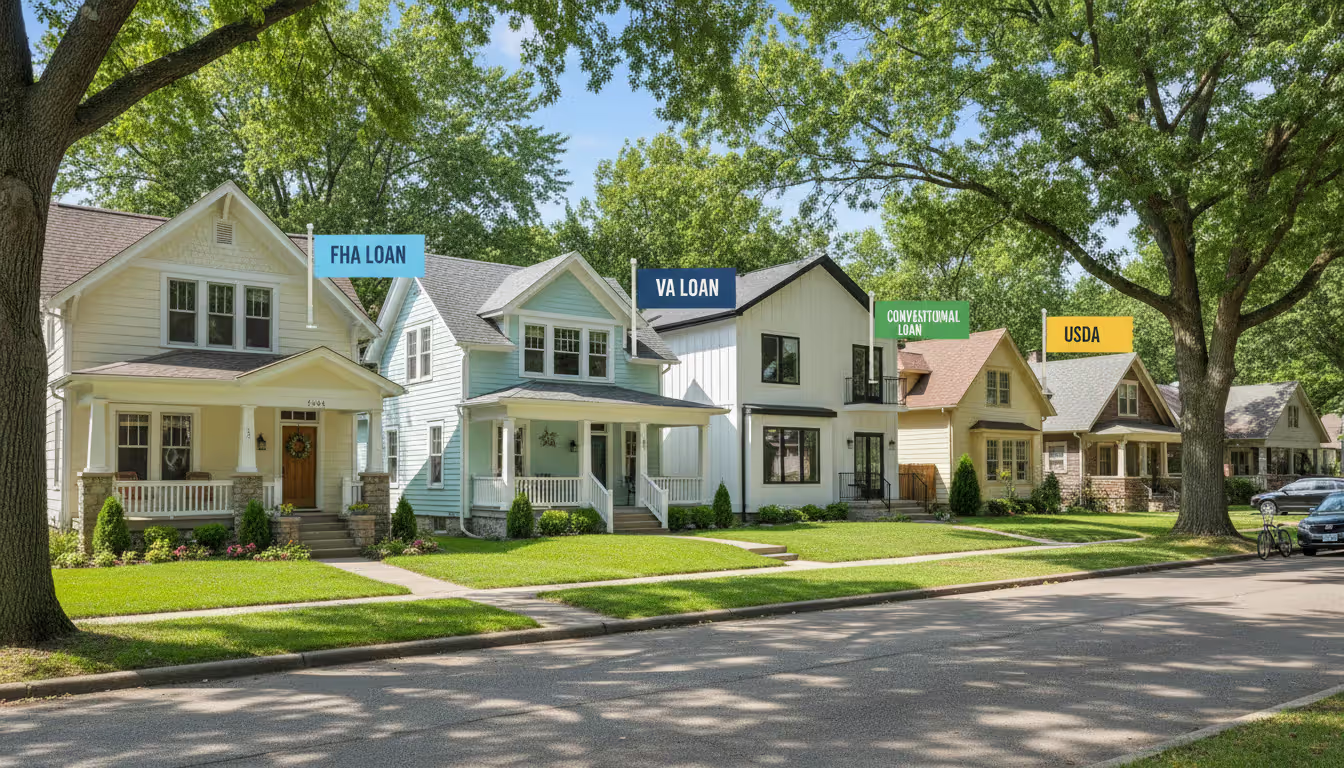
Is homeownership still achievable after filing? Absolutely. However, no shortcuts exist that let you bypass mandatory waiting requirements. FHA, VA, conventional, and USDA programs all impose waiting periods spanning one to four years before you can submit applications.
These waiting periods begin from your official discharge date rather than your initial filing date. Your discharge occurs when the bankruptcy court formally relieves you from debt obligations. Chapter 7 filers typically receive discharge 3-4 months following their filing. Chapter 13 filers receive discharge after completing their full 3-5 year repayment program (though certain programs permit earlier applications, which we'll detail).
Lenders enforce these waiting requirements for clear reasons: they need evidence you've achieved financial stability. Simply completing bankruptcy proceedings doesn't prove you've modified your money management habits. They require 12-48 months demonstrating consistent on-time payments, stable employment, and responsible credit behavior before approving mortgages worth hundreds of thousands.
What happens if you file bankruptcy while actively pursuing a home purchase? Your loan application terminates immediately. You'll face a choice: complete your home purchase before filing, or wait until you've fulfilled the complete waiting period following discharge. Filing during the application process benefits nobody.
Post-bankruptcy approval still requires meeting standard qualifications—adequate income, acceptable debt-to-income ratios, sufficient down payment—plus you'll face heightened scrutiny because of the bankruptcy appearing on your record.
Waiting Periods by Bankruptcy Type and Loan Program
Your qualification timeline depends on two critical factors: which bankruptcy chapter you filed and which mortgage program you're pursuing.
Government-backed loan programs (FHA, VA, USDA) typically impose shorter waiting requirements compared to conventional mortgages. This positioning makes them the preferred choice for most individuals recovering from bankruptcy.
Loan Type
Chapter 7 Timeline
Chapter 13 Timeline
Down Payment
Notable Requirements
FHA
24 months post-discharge
12 months into active repayment (requires court approval)
3.5% minimum
Must demonstrate credit rebuilding; thorough payment history review
VA
24 months post-discharge
12 months into active repayment (requires trustee authorization)
$0 with full entitlement
Valid Certificate of Eligibility required; service qualifications apply
12 months into active repayment (requires court permission)
$0
Income restrictions enforced; property must qualify as rural
Chapter 7 Bankruptcy Waiting Periods
Chapter 7 proceedings liquidate your assets and eliminate qualifying debts within 3-4 months. Your mandatory waiting period begins the day your discharge becomes official—not your original filing date.
FHA financing becomes accessible exactly 24 months following your discharge. This represents your quickest mainstream option unless you qualify for military benefits (VA) or are purchasing in approved rural locations (USDA). The two-year FHA requirement makes it the standard choice for most bankruptcy filers.
Conventional mortgages following Fannie Mae or Freddie Mac standards? You'll wait a complete four years from discharge. That doubles the FHA waiting period. The advantage: if you've rebuilt your credit score above 720 by that timeframe, you might secure superior interest rates and potentially lower-cost mortgage insurance compared to FHA products.
Certain portfolio lenders—banks retaining loans in their own portfolios rather than selling them—will approve mortgages sooner. Expect to pay significantly for this privilege. Interest rates typically run 2-4 percentage points above market rates, and you'll likely need 20-25% down payments. For most borrowers, this calculation doesn't make financial sense.
Author: Olivia Stratton;
Source: dynamicrangemetering.com
Chapter 13 Bankruptcy Waiting Periods
Chapter 13 proceedings don't provide immediate debt discharge. Instead, you enter court-supervised repayment programs lasting 3-5 years. This arrangement creates a distinct opportunity: you can potentially secure mortgage approval while still making trustee payments.
FHA, VA, and USDA programs will review your application after completing just 12 months of flawless plan payments. Essential requirements: you must obtain written authorization from your bankruptcy trustee, and your payment record must be perfect. Trustee approval is mandatory because adding mortgage obligations affects your existing court-ordered payment structure.
Conventional loans demand 24 months following your Chapter 13 discharge. Since Chapter 13 programs run 3-5 years before discharge occurs, you're facing 5-7 years total from your initial filing. That's a substantial timeline.
The benefit? Successfully completing a Chapter 13 program means you've demonstrated 3-5 years of court-monitored financial responsibility. Underwriters occasionally view this more favorably than Chapter 7, where debts simply vanished without repayment.
Mortgage Options Available After Bankruptcy
Securing approval means selecting the appropriate loan program—one that accepts your application soonest while providing reasonable terms.
FHA Loans provide the most accessible path for most post-bankruptcy borrowers. Federal Housing Administration insurance on these loans allows lenders to approve higher-risk applicants. You can qualify with credit scores as low as 580 when making 3.5% down payments, or scores between 500-579 with 10% down payments. The drawback? FHA mandates mortgage insurance premiums for the loan's entire life when down payments fall below 10%. That adds $100-200+ monthly to your payments.
VA Loans serve exclusively veterans, active-duty military, and eligible surviving spouses. The VA doesn't establish minimum credit score requirements, though individual lenders commonly prefer 620 or higher. The outstanding benefit: zero down payment requirements. That's invaluable when rebuilding savings after bankruptcy. VA loans assess a one-time funding fee (waived for service-connected disabled veterans) rather than monthly mortgage insurance, creating long-term savings.
Conventional Loans operate under Fannie Mae and Freddie Mac standards. You'll face longer waiting periods, but if you've rebuilt your credit above 720, conventional financing frequently costs less across the loan's lifetime. Official requirements begin at 5% down, but realistically anticipate lenders wanting 10-20% from bankruptcy filers. Once you're 4+ years beyond discharge with solid credit, conventional loans deliver the best rates and permit mortgage insurance cancellation once you achieve 20% equity.
Author: Olivia Stratton;
Source: dynamicrangemetering.com
USDA Loans finance properties in approved rural and suburban locations for low-to-moderate income purchasers. Like VA, USDA provides zero-down financing. However, you must satisfy income caps (typically 115% of area median income) and purchase in approved zones—approximately 97% of U.S. land qualifies, though densely populated areas don't. USDA assesses an upfront guarantee fee plus annual fees similar to FHA mortgage insurance.
Beyond these mainstream choices, you'll find portfolio lenders, credit unions, and subprime specialists willing to approve you earlier. They'll charge premium rates—sometimes 9-12% when FHA rates sit at 6.5%. That percentage difference costs hundreds extra monthly on typical $300,000 mortgages.
Superior rates with rebuilt credit; mortgage insurance removable at 20% equity
Filers with 700+ credit scores who can wait 48 months
USDA
640 typical lender requirement
$0
Zero down payment in approved locations
Rural/suburban property buyers meeting income limits
Steps to Prepare for a Mortgage After Bankruptcy
Simply waiting until your mandatory period expires won't guarantee approval. You must actively rebuild your financial profile.
Rebuild Credit Strategically: Apply for secured credit cards within 30-60 days following discharge. Put recurring bills like streaming services or phone payments on them. Pay complete balances monthly—never just minimums. After six months, add credit-builder loans from local credit unions (these typically range $500-1,500 and report to all three bureaus). These small accounts demonstrate you can manage credit responsibly. Target 620 credit score minimums before applying, though 640-660 will dramatically improve your approval odds and rates.
Save Aggressively for Down Payment: FHA technically permits 3.5% down, but contributing 5-10% significantly strengthens your application after bankruptcy. On $250,000 purchases, that's $12,500 to $25,000. Establish automatic transfers to dedicated savings accounts every payday. If waiting an additional six months enables you to increase your down payment from 3.5% to 7%, that cushion frequently determines the difference between approval and rejection for bankruptcy filers.
Document Everything: Underwriters will examine your application intensely. Compile comprehensive documentation: all income sources, two years' tax returns, 60+ days of bank statements, complete payment histories. If your bankruptcy resulted from specific events—medical crisis costing $150,000, job loss during COVID, divorce—gather supporting evidence. You'll compose a letter of explanation describing circumstances, and concrete proof substantially strengthens your credibility.
Author: Olivia Stratton;
Source: dynamicrangemetering.com
Find Experienced Lenders: Not all mortgage lenders competently handle post-bankruptcy applications. Some impose "overlays"—restrictions exceeding program minimums—that extend waiting periods or demand larger down payments. Seek lenders who regularly process FHA or VA loans for bankruptcy survivors. Mortgage brokers accessing multiple lenders can identify which institutions will treat your application most favorably. One lender might decline you while another approves—experience matters significantly.
Stabilize Employment and Income: Underwriters prefer predictable income streams. Avoid changing jobs during the 12 months preceding your application if possible. If job changes become necessary, remaining in the same industry while maintaining or increasing income helps tremendously. Self-employed applicants face tougher scrutiny—plan on providing two complete years of tax returns demonstrating steady or growing earnings.
Maintain Low Debt-to-Income Ratio: Your debt-to-income ratio (DTI) divides monthly debt obligations by gross monthly income. Most lenders cap DTI at 43-50% for post-bankruptcy borrowers, with lower ratios preferred. If you earn $5,000 monthly, your total debts—including the new mortgage payment, property taxes, insurance, car loans, student loans, credit cards—shouldn't exceed $2,150-$2,500. Pay down existing obligations before applying for mortgages.
Borrowers who actively work on financial rebuilding during mandatory waiting periods consistently qualify for superior loan products at competitive rates. I've watched clients boost credit scores by 175 points within 24 months through disciplined secured card usage and small installment loans. That effort literally saves them thousands in cumulative interest across 30-year mortgages
— Jennifer Martinez
Common Mistakes to Avoid When Buying a Home Post-Bankruptcy
Even well-informed buyers make preventable mistakes that derail home purchase plans.
Applying Too Early: Some borrowers calculate from filing dates instead of discharge dates, applying months before actual eligibility. Others believe "one year into Chapter 13" means automatic eligibility, not understanding they need trustee approval. Double-check your exact discharge date and calculate waiting periods carefully. Premature applications waste time and generate hard credit inquiries that temporarily damage your score.
Ignoring Credit Report Errors: Bankruptcy should eliminate discharged debts from your credit reports, though the bankruptcy notation itself persists. Sometimes creditors fail to update accounts correctly, displaying discharged debts as active collections. Pull reports from Equifax, Experian, and TransUnion at least six months before applying. Dispute inaccuracies immediately—resolution requires 30-90 days.
Choosing the Wrong Loan Type: Veterans eligible for VA benefits who select FHA loans instead pay unnecessary mortgage insurance. Borrowers in rural areas qualifying for USDA who pursue conventional financing wait years longer than necessary. Research all available programs to identify the optimal combination of waiting period, down payment, and lifetime cost for your specific situation.
Failing to Explain Bankruptcy Circumstances: Underwriters don't merely check boxes—they evaluate context. Someone who filed bankruptcy following a $200,000 medical emergency from cancer treatment appears completely different than someone who accumulated $80,000 in credit card debt purchasing luxury items. Your letter of explanation should be honest, specific, and demonstrate concrete changes preventing future financial trouble. Generic explanations damage your application.
Accumulating New Debt During Waiting Period: Financing vehicles six months before mortgage applications raises your DTI and sends warning signals to underwriters. They'll question whether you're returning to spending patterns that caused your bankruptcy. Minimize new credit during waiting periods. If you absolutely need vehicle financing, complete it at least 12 months before planned mortgage applications.
Skipping Pre-Approval: Some buyers start house-hunting based on online calculators without securing pre-approval. Post-bankruptcy borrowers especially need pre-approval before making offers. Your qualification might differ significantly from standard guidelines. You need lender commitment before negotiating with sellers. Sellers and their agents frequently hesitate accepting offers from bankruptcy filers without solid pre-approval documentation proving you can actually close.
Author: Olivia Stratton;
Source: dynamicrangemetering.com
Frequently Asked Questions About Buying a House After Bankruptcy
Can I buy a house immediately after bankruptcy discharge?
No. Every major loan program mandates waiting periods ranging from one to four years minimum. Your fastest route involves FHA, VA, or USDA financing—24 months for Chapter 7 filers or 12 months into Chapter 13 repayment plans with trustee approval. Portfolio lenders occasionally approve earlier, but anticipate interest rates 3-4 points above market rates plus 20-25% down payment demands. For most people, waiting for conventional program eligibility makes more financial sense.
Will I need a larger down payment after bankruptcy?
Not necessarily. FHA still permits 3.5% down payments. VA and USDA still provide zero-down options regardless of bankruptcy history. However, conventional lenders may effectively demand 10-20% down from post-bankruptcy applicants despite official 5% minimums. Larger down payments strengthen any application and can unlock superior interest rates that offset lender concerns about your bankruptcy. The more you contribute, the less risk the lender assumes.
Does Chapter 7 or Chapter 13 bankruptcy make it easier to buy a home?
Chapter 13 provides faster timelines for FHA, VA, or USDA loans since you can apply after just 12 months of plan payments versus 24 months post-Chapter 7 discharge. But Chapter 13 demands trustee approval for mortgages, and you'll manage plan payments alongside new mortgage payments, complicating debt-to-income calculations. For conventional financing, Chapter 7 wins—48 months from discharge versus 24 months after Chapter 13 discharge, which occurs after your 3-5 year plan completes. Select bankruptcy chapter based on your overall financial situation, not exclusively mortgage timing.
Can I get an FHA loan after bankruptcy with bad credit?
FHA establishes 580 as minimum credit score for 3.5% down, or 500-579 with 10% down. Reality check: individual FHA lenders frequently impose stricter standards, often demanding 620+ minimums, especially for bankruptcy applicants. Finding financing with sub-600 scores proves difficult. Focus on rebuilding credit throughout your waiting period instead of applying at bare minimums. Reaching 640+ opens far more lender options and delivers substantially superior interest rates.
How can I rebuild my credit faster after bankruptcy?
Obtain secured credit cards within weeks following discharge. Use them for small recurring expenses, then pay complete balances monthly—never carry balances. Add credit-builder loans after six months. Consider becoming an authorized user on a responsible family member's credit card if possible. Pay every single bill punctually without exception—one 30-day late payment can devastate your rebuilding score. Keep credit utilization below 10% on all cards. Don't apply for multiple credit accounts simultaneously. These disciplined habits can boost your score 100-175 points within 18-24 months.
Do all lenders offer mortgages to people with past bankruptcies?
Definitely not. Some banks and credit unions maintain overlays that extend waiting periods beyond program minimums or completely exclude bankruptcy filers. Large national banks frequently enforce stricter policies than smaller community banks or mortgage brokers. VA-approved lenders must honor VA guidelines and FHA-approved lenders must follow FHA standards, but they can add restrictions on top. Shop multiple lenders and specifically ask about their post-bankruptcy policies. Working with mortgage brokers accessing numerous lenders typically yields superior results than applying directly with one bank.
Bankruptcy provides a financial reset, not a permanent homeownership ban. Mandatory waiting periods protect both lenders and you—rushing into mortgages before achieving financial stability risks repeating the cycle that initially caused your bankruptcy.
Treat waiting periods as preparation time. Rebuild credit systematically, save aggressively, and stabilize your income. When you finally apply, you'll compete more effectively and qualify for superior terms compared to applying at the earliest possible moment with minimal preparation.
Consider this: a borrower who waits exactly 24 months with a 590 credit score and 3.5% down versus someone who waits 30 months with a 680 score and 7% down might save $40,000-60,000 in cumulative interest across the loan term, plus they'll experience a smoother approval process.
Start planning now. Calculate your exact eligibility date. Set credit score milestones. Define your down payment savings goal. Research which loan program aligns best with your situation. Connect with experienced lenders 4-6 months before you plan to apply so you understand exactly what they'll require from your specific financial profile.
Homeownership after bankruptcy is absolutely achievable for borrowers who understand requirements and prepare accordingly. Your bankruptcy eventually disappears from your credit reports entirely, but long before that happens, you can be building equity in your own home.
Bankruptcy represents a legal process allowing individuals to eliminate or restructure unmanageable debt under federal court protection. Understanding what it means personally—from credit impacts to employment concerns—helps remove fear from this financial decision and clarifies the path forward
Filing for bankruptcy doesn't permanently block you from renting. Discover practical strategies for securing housing after bankruptcy, from understanding landlord screening to strengthening applications with compensating factors. Learn which housing options work best and common mistakes to avoid
Bankruptcy damages your credit, but recovery is faster than most people expect. This guide covers secured credit cards, realistic recovery timelines, and step-by-step strategies to rebuild your credit score after Chapter 7 or Chapter 13 bankruptcy, including common mistakes to avoid
Bankruptcy doesn't permanently block access to personal loans, but it requires strategic timing and realistic expectations. Discover which loan types approve post-bankruptcy borrowers fastest, how long to wait for better terms, and which lenders to avoid during financial recovery
The content on this website is provided for general informational and educational purposes only. It is intended to explain concepts related to bankruptcy, debt relief, credit rebuilding, and related legal processes.
All information on this website, including articles, guides, and examples, is presented for general educational purposes. Bankruptcy outcomes and procedures may vary depending on jurisdiction, personal circumstances, and applicable laws.
This website does not provide legal, financial, or credit advice, and the information presented should not be used as a substitute for consultation with qualified attorneys or financial advisors.
The website and its authors are not responsible for any errors or omissions, or for any outcomes resulting from decisions made based on the information provided on this website.