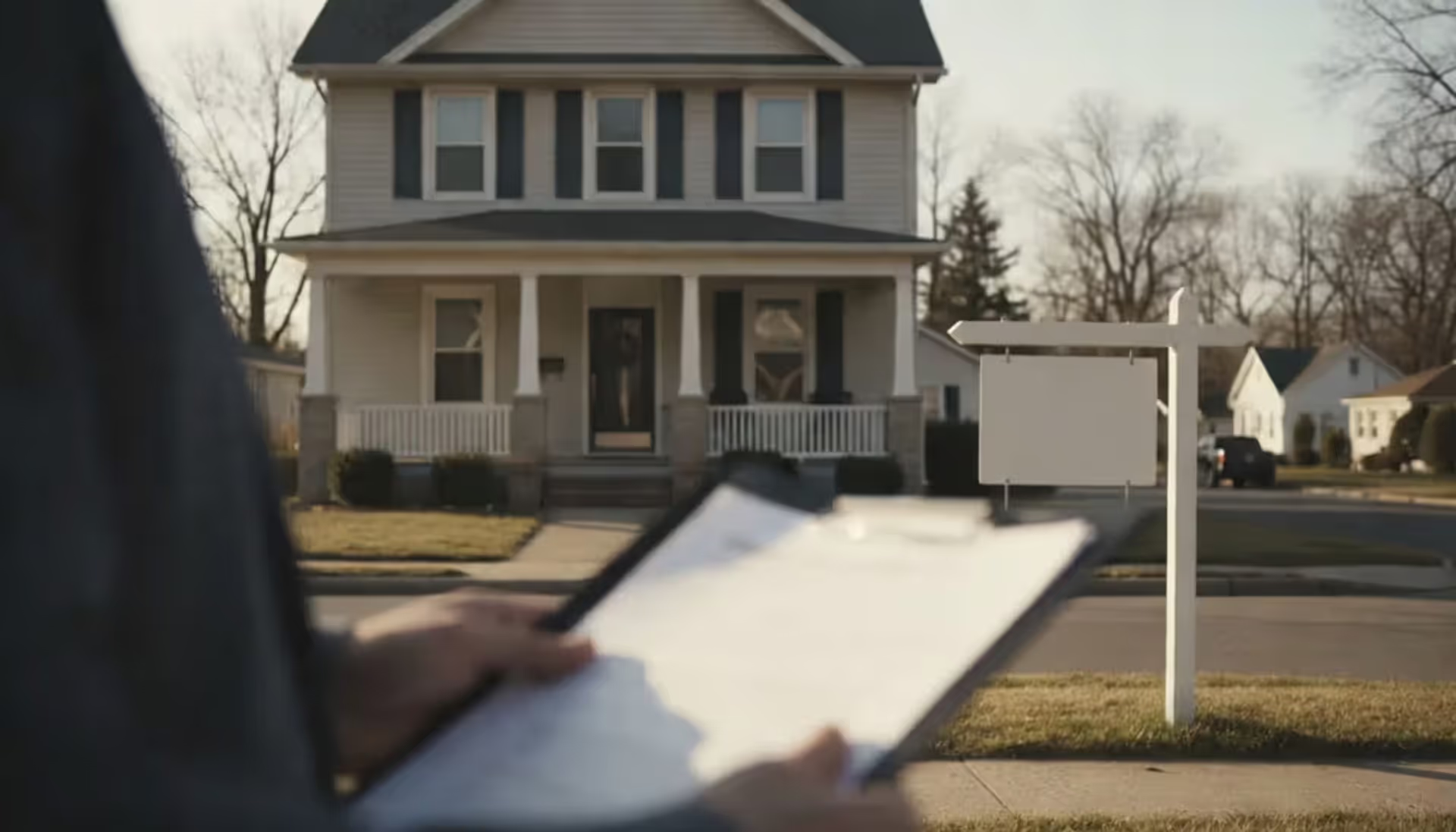
Missing three mortgage payments put Sarah's family in foreclosure limbo. The bank's auction notice listed her Chicago duplex for sale on October 12th at the county courthouse steps. Her attorney filed Chapter 13 bankruptcy on October 11th at 2:30 PM—twenty hours before the scheduled sale. The auction never happened.
That's bankruptcy's immediate power against foreclosure. Courts enforce protection the instant your paperwork enters their system, no exceptions. Your mortgage company receives zero say in the matter. The automatic stay isn't a polite request—it's a federal court order with teeth.
Most families miss this crucial detail: which bankruptcy type you choose makes all the difference. File Chapter 7 and you'll get maybe 100 days of breathing room. Choose Chapter 13 instead, and you could spread those missed payments across five full years while keeping your house. The wrong choice means wasting bankruptcy's protection when you need it most.
Your monthly income matters. So does how many payments you've missed. Can you actually afford your mortgage if other debts disappeared? These questions determine whether bankruptcy saves your home or just delays the inevitable.
How Bankruptcy Immediately Halts Foreclosure Proceedings
Imagine the county clerk scheduled your home's auction for Tuesday at 10 AM. Your lawyer submits bankruptcy documents Monday at 4:47 PM. That Tuesday auction gets canceled—no discussion, no negotiation.
The automatic stay activates instantly upon filing. It doesn't wait for judge approval or creditor notification. One second your foreclosure proceeds normally; the next second federal law prohibits any further collection activity. Mortgage lawsuits freeze mid-trial. Published auction notices become legally meaningless. Even the sheriff preparing to sell your property must stop immediately or risk contempt charges.
Author: Ethan Calloway;
Source: dynamicrangemetering.com
Your lender doesn't need advance warning for the stay to take effect. They'll receive official court notification within days, but protection exists whether they know about your filing or not. Banks occasionally proceed with sales after bankruptcy filings through administrative mix-ups—they end up reversing those transactions and sometimes facing court sanctions for violating the stay.
Protection duration depends entirely on which bankruptcy chapter you file. Chapter 7 automatic stays typically last 90-120 days, ending when the court discharges your debts. Chapter 13 stays extend much longer—potentially covering all 36-60 months of your repayment period, assuming you follow program requirements.
Several situations weaken or eliminate stay protection entirely. Multiple bankruptcy filings within twelve months raise judicial red flags. Filing bankruptcy a second time within one year? Your stay expires automatically after 30 days unless you petition for extension and convince a skeptical judge you're reorganizing finances genuinely, not manipulating the system. Attempting a third filing within twelve months? You receive zero automatic stay—it won't activate at all unless you file a motion proving legitimate reorganization intent.
Mortgage companies also petition courts to lift the automatic stay during active bankruptcy cases. They frequently win these "relief from stay" motions when homeowners demonstrate no equity in their property or miss post-filing mortgage payments. Judges grant these requests routinely—particularly when debtors lack realistic strategies for catching up on arrears.
Serial filers who repeatedly use bankruptcy purely to postpone foreclosure without genuine reorganization eventually lose all protection. Courts recognize this pattern and shut it down aggressively. File and dismiss three cases within eighteen months? No judge will grant automatic stay protection for your fourth attempt.
The automatic stay represents bankruptcy's most immediate foreclosure benefit, but homeowners misunderstand its limitations.It's a shield providing time to reorganize finances, not a permanent solution. Without realistic plans addressing mortgage arrears, the stay merely postpones foreclosure rather than preventing it
— Jennifer Martinez
Chapter 7 vs Chapter 13 Bankruptcy for Foreclosure Protection
These two bankruptcy chapters work completely differently for homeowners trying to save houses. Chapter 7 offers brief relief; Chapter 13 provides structured five-year rescue plans.
Chapter 7 Bankruptcy and Foreclosure Timeline
Chapter 7—often called "straight bankruptcy" or "liquidation"—delivers instant foreclosure relief that rarely translates into permanently saving your home. Filing Chapter 7 activates automatic stay protection immediately, but that protection disappears once your case concludes, usually within 100-120 days.
Here's the fundamental problem: Chapter 7 offers no mechanism for gradually repaying missed mortgage payments. Let's say you're $18,000 behind when filing. Four months later when receiving your discharge, you still owe that entire $18,000 arrearage. Your lender can immediately restart foreclosure unless you've somehow paid everything during those four months or successfully negotiated a modification.
This chapter works beautifully for homeowners current on mortgages but drowning in credit card debt, medical bills, and personal loans. Eliminate $40,000 in unsecured debt through Chapter 7, and suddenly your budget accommodates that $1,800 monthly mortgage payment. Without arrearage to cure, Chapter 7 actually solves your foreclosure problem rather than postponing it.
The mechanics involve discharging personal liability versus eliminating property liens. Bankruptcy erases the personal debt—banks can't sue you personally or pursue deficiency judgments if your home eventually sells for less than you owe. But their mortgage lien remains attached to the physical property. They maintain full foreclosure rights if you stop making payments.
Think of it this way: Chapter 7 lets you walk away from houses without owing anything afterward, but it won't help you stay unless you're already current or can catch up quickly.
Author: Ethan Calloway;
Source: dynamicrangemetering.com
Chapter 13 Bankruptcy and Long-Term Foreclosure Solutions
Chapter 13—reorganization bankruptcy—offers dramatically different foreclosure solutions designed specifically for homeowners wanting to keep properties despite falling behind. Unlike Chapter 7's temporary freeze, Chapter 13 lets you cure mortgage arrears gradually across 36-60 months while simultaneously making current payments.
Automatic stay protection continues throughout your entire multi-year repayment plan, provided you maintain compliance. This extended shield gives you three to five years catching up on missed payments instead of three to four months. Your mortgage company cannot foreclose during this period as long as you're making both regular monthly mortgage payments directly to them and plan payments to the bankruptcy trustee.
Chapter 13 fundamentally restructures mortgage obligations. Your court-approved repayment plan divides home loans into two separate claims: ongoing monthly payments (paid directly to lenders going forward) and pre-filing arrears (repaid through monthly trustee payments over several years). This structure transforms impossible $24,000 lump sums into manageable $400 monthly catch-up payments spread over five years.
Beyond halting foreclosure, Chapter 13 delivers additional homeowner benefits. You can eliminate completely underwater junior mortgages through lien stripping—if you owe $300,000 on your first mortgage but your home's worth only $280,000, that second mortgage or HELOC gets reclassified as unsecured debt and potentially discharged. You can also cure defaults on vehicle loans and other secured debts while paying unsecured creditors potentially pennies per dollar owed.
Qualifying for Chapter 13 requires demonstrating regular income and staying within debt limits. Current thresholds cap unsecured debts at $465,275 and secured debts at $1,395,875 as of 2026. You'll also need current tax filings and must complete mandatory credit counseling before filing.
Feature
Chapter 7 Bankruptcy
Chapter 13 Bankruptcy
Protection Duration
90-120 days until debt discharge
36-60 months throughout entire plan
Handling Missed Payments
No cure mechanism; must pay arrears immediately or lose home
Spread arrearage repayment across 3-5 year structured plan
Qualification Standards
Pass means test; possible liquidation of non-exempt assets
Demonstrate steady income; must stay within debt ceilings
Typical Attorney Fees
$1,500-$3,500
$3,500-$6,000
Long-Term Home Retention
Unlikely unless already current on payments
Strong possibility with consistent plan compliance
Debt Discharge Timing
90-120 days after filing
36-60 months after successfully completing plan
How Chapter 13 Repayment Plans Address Mortgage Arrears
Chapter 13's mortgage arrearage cure structure makes it the superior foreclosure-fighting tool. When filing Chapter 13, your attorney drafts a repayment plan the court must eventually confirm. This plan specifies exactly how you'll repay creditors across the next several years, including a precise roadmap for curing your mortgage default.
Your plan separates mortgages into two distinct obligations: ongoing regular payments and pre-filing arrearages. You continue paying your normal monthly mortgage amount directly to your lender for any installments coming due after your filing date. These post-petition payments keep you current going forward and prevent accumulating new arrears.
Simultaneously, you send monthly payments to your Chapter 13 trustee, who distributes funds to creditors following your confirmed plan. The trustee designates portions of each payment toward your pre-filing mortgage arrears. Say you entered bankruptcy owing $15,000 in missed payments and proposed a 60-month plan—approximately $250 monthly (plus trustee administrative fees) goes toward eliminating that arrearage.
Payment calculations incorporate your actual income, legitimate necessary expenses, and total debt obligations. You must prove you can realistically afford both your regular mortgage payment and your trustee payment. Courts scrutinize budgets carefully—homeowners unable to maintain both payments see their plans rejected or dismissed.
Bankruptcy trustees serve crucial oversight functions. You send plan payments to trustees monthly, and they ensure funds reach your mortgage servicer and other creditors according to confirmed plans. Trustees also monitor compliance, verifying you're making direct mortgage payments and staying current on property taxes and homeowner's insurance.
Missing payments during your Chapter 13 plan creates immediate jeopardy. Fall behind on either direct mortgage payments or trustee payments, and your lender can file motions for relief from automatic stay. Courts may authorize foreclosure to proceed if you cannot quickly cure new delinquencies. Most trustees and judges tolerate very limited payment lapses—perhaps one or two missed payments with solid justification, but chronic non-payment results in case dismissal.
Your plan must also cover property taxes and insurance. If your mortgage payment includes escrow covering these expenses, you simply continue paying as normal. If you handle taxes and insurance separately, your Chapter 13 plan must guarantee these obligations get met. Delinquent property taxes or lapsed homeowner's insurance trigger mortgage default provisions and threaten your bankruptcy protection.
Step-by-Step Process to Stop Foreclosure Using Bankruptcy
Stopping foreclosure through bankruptcy demands precise timing and flawless execution. Here's the actual process from start to finish.
Step 1: Consult a bankruptcy attorney immediately. The moment you receive foreclosure documents, the clock starts racing. Most bankruptcy attorneys provide free initial consultations where they'll analyze your finances, assess whether bankruptcy makes sense, and recommend which chapter fits your situation. Bring current mortgage statements, foreclosure notices, recent pay stubs, last two years' tax returns, and comprehensive lists of debts and assets.
Step 2: Complete mandatory pre-filing credit counseling. Federal law requires completing approved credit counseling sessions within 180 days before filing. This usually takes 60-90 minutes via online platform or phone and costs $25-50. You absolutely cannot file without the completion certificate.
Step 3: Assemble all required financial documentation. Your attorney needs extensive records: six months of pay stubs, two years of tax returns, recent bank statements, complete mortgage documentation, property tax records, homeowner's insurance declarations, and detailed information about every debt you owe. Incomplete documentation delays filing and potentially allows foreclosure to proceed.
Step 4: Determine optimal filing timing. Once the foreclosure auction gavel drops, you've permanently lost your property—filing one day after the auction means the property already belongs to someone else. But rushing to file with sloppy preparation risks case dismissal. Your attorney balances urgency against the need for complete, accurate paperwork.
Step 5: File your bankruptcy petition. Your attorney electronically submits your petition to bankruptcy court. The exact filing timestamp matters enormously—automatic stay protection activates at that precise moment. Foreclosure sale scheduled for 10:00 AM? Petition filed at 9:45 AM? The sale gets cancelled.
Author: Ethan Calloway;
Source: dynamicrangemetering.com
Step 6: Immediately notify your mortgage lender. Though bankruptcy courts officially notify all creditors, your attorney should immediately contact your mortgage company by phone and follow up via email confirming you've filed bankruptcy and providing your case number. This prevents communication breakdowns that might delay cancelling foreclosure sales.
Step 7: Begin making post-filing mortgage payments on time. Starting from your filing date, you must make regular monthly mortgage payments on schedule. In Chapter 13, you simultaneously begin making plan payments to trustees. Missing these payments destroys your bankruptcy protection.
Step 8: Attend your 341 meeting of creditors. Approximately 30-40 days post-filing, you'll attend meetings where trustees question you about your finances under oath. Your mortgage lender might attend but typically doesn't. Answer questions truthfully and bring required photo identification and Social Security card.
Step 9: Obtain confirmation of your Chapter 13 plan (if applicable). In Chapter 13 cases, courts schedule confirmation hearings to approve repayment plans. Creditors can object if they believe your plan treats them unfairly or seems financially unrealistic. Once confirmed, plans become legally binding, and you must adhere to them precisely for the next three to five years.
Common mistakes include submitting incomplete paperwork (leading to dismissal); skipping post-filing mortgage payments (giving lenders grounds to lift automatic stays); and failing to maintain regular contact with your attorney (resulting in missed deadlines or unmet requirements).
How Long Bankruptcy Delays Foreclosure
Foreclosure delay duration depends on which bankruptcy chapter you file, whether you comply with requirements, and how aggressively your lender responds.
Chapter 7 bankruptcy typically postpones foreclosure approximately three to four months—the timeframe from filing to discharge. Once you receive discharge, automatic stay protection terminates, and your lender can resume foreclosure if you haven't cured arrears. This brief window helps homeowners who need time for loan modification negotiations, arranging short sales, or securing alternative housing.
Chapter 13 bankruptcy can delay foreclosure anywhere from three to five years—the complete duration of repayment plans. As long as you make plan payments and maintain current mortgage payments, automatic stays remain active. Successfully completing your plan discharges arrears you've repaid, and you emerge with current, non-defaulted mortgages.
Understanding temporary versus permanent relief proves critical. Chapter 7 delivers temporary relief—a pause providing breathing room but not solving underlying problems of unpaid arrears. Chapter 13 offers permanent relief if completed successfully—you cure defaults entirely and retain your home long-term.
Outcomes after discharge or dismissal differ dramatically. Complete Chapter 13 and receive discharge? You've cured your mortgage default and your home's no longer threatened. Case dismissed because you couldn't maintain payments? Automatic stay protection immediately evaporates and foreclosure resumes exactly where bankruptcy interrupted it. Your lender doesn't restart from scratch—they continue from the point where your filing paused proceedings.
Lenders can petition courts to lift automatic stays during active bankruptcy cases. Courts approve these "relief from stay" motions when homeowners lack property equity, haven't made post-filing payments, or clearly cannot complete reorganization. Once stays lift, foreclosure proceeds despite your ongoing bankruptcy.
Repeat filings create progressively briefer delays. Your second bankruptcy within one year provides only 30 days of automatic stay unless extended by court order. A third filing within one year provides zero automatic protection unless you obtain court permission—requiring proof your new filing involves good faith reorganization rather than delay tactics.
When Bankruptcy Won't Stop Foreclosure
Bankruptcy wields substantial power but faces definite limits. Several situations prevent bankruptcy from stopping foreclosure or render it ineffective.
Previous bankruptcy filings impose significant restrictions. Dismissed a bankruptcy case within the past year? Your new filing receives reduced automatic stay protection. Courts assume bad faith with repeat filers, requiring you to prove legitimate reasons for new cases. Serial filers who repeatedly file and dismiss cases solely to postpone foreclosure eventually find courts refusing any stay protection whatsoever.
Insufficient equity in your home undermines bankruptcy protection. Owe more than your property's worth? Your lender can argue you have no meaningful financial interest deserving protection. Courts frequently grant relief from automatic stays in negative equity situations, permitting foreclosure to proceed during bankruptcy. Your mortgage lender holds secured claims in the property itself—without equity, bankruptcy provides minimal benefit.
Inability to afford ongoing mortgage payments makes Chapter 13 non-viable. Courts demand realistic budgets proving you can handle both regular mortgage payments and plan payments. Income insufficient for both obligations? The court won't confirm your plan. Without plan confirmation, automatic stay protection disappears.
Fraud or misrepresentation in bankruptcy filings triggers case dismissal and foreclosure resumption. Conceal assets, understate income, or provide false information? The court may dismiss your case with prejudice, potentially prohibiting refiling. Lenders discovering fraud typically request immediate stay relief.
Properties already sold at foreclosure cannot be recovered through subsequent bankruptcy filing. Automatic stays only halt pending foreclosure actions. Foreclosure completed and property transferred to new owners before you filed? That sale stands. Filing bankruptcy the day after a foreclosure auction doesn't reverse the transaction.
Certain junior liens survive bankruptcy protection. While Chapter 13 permits lien stripping for completely underwater junior mortgages, this requires your home's value falling below your first mortgage balance. Any equity beyond the first mortgage? Junior liens cannot be stripped and must be addressed through your repayment plan or paid separately.
Author: Ethan Calloway;
Source: dynamicrangemetering.com
Frequently Asked Questions About Bankruptcy and Foreclosure
Does filing bankruptcy stop foreclosure immediately?
Yes—bankruptcy filing triggers automatic stay protection instantly, halting foreclosure the moment your petition enters court systems. Foreclosure scheduled for the same day as your filing? Submit your petition before the sale and it gets canceled. This immediate protection remains temporary though, lasting only while your bankruptcy case stays active and the automatic stay remains in place. Your lender can petition courts to lift stays if you cannot afford ongoing payments or lack property equity.
Will Chapter 7 bankruptcy eliminate my mortgage debt?
Chapter 7 discharges your personal responsibility for mortgage debt—lenders cannot pursue you for deficiencies if homes eventually sell for less than outstanding balances. The mortgage secured by your house remains enforceable, however. Want to keep your home? You must continue making payments after bankruptcy. Chapter 7 eliminates personal liability without removing the security interest in your property, so foreclosure remains possible if you stop paying. Most homeowners behind on payments who want keeping their property find Chapter 13 more effective than Chapter 7.
Can I keep my home after filing Chapter 13 bankruptcy?
Absolutely—Chapter 13 is specifically structured helping homeowners retain properties while curing mortgage arrears over time. If you can afford regular monthly mortgage payments plus trustee plan payments, you can spread past-due amounts across three to five years. Successfully completing your Chapter 13 plan cures mortgage defaults entirely and lets you keep your home permanently. You must maintain both payments throughout plan periods though—falling behind jeopardizes your home and can result in dismissal and resumed foreclosure.
How many times can I use bankruptcy to stop foreclosure?
No absolute limit exists on bankruptcy filings, but repeat filings within short timeframes receive dramatically reduced protection. Dismissed a bankruptcy within the past twelve months? Your new case receives only 30 days of automatic stay unless you convince courts to extend it. Two or more filings within a year? Automatic stays don't activate at all unless you obtain court permission. Courts view serial filings with suspicion and often deny protection to homeowners repeatedly using bankruptcy purely to delay foreclosure without genuine reorganization attempts.
What happens if I miss payments during Chapter 13?
Missing payments during Chapter 13 triggers serious consequences. Miss plan payments to trustees? Your case may be dismissed, ending automatic stay protection and allowing foreclosure to resume. Miss direct mortgage payments to lenders? They can request relief from automatic stays to proceed with foreclosure. Most courts tolerate one or two missed payments if you can quickly cure defaults with valid justification, but chronic payment delinquency results in case dismissal. Maintaining all payments throughout your three-to-five-year plan is absolutely essential for keeping your home.
Will bankruptcy erase foreclosure records from my credit history?
Bankruptcy doesn't remove accurate foreclosure information from credit reports. Foreclosure proceedings occurring before bankruptcy filing remain on credit reports for seven years from initial delinquency dates. Bankruptcy filings themselves appear on credit reports for seven years (Chapter 13) or ten years (Chapter 7) from filing dates. Successfully completing Chapter 13 and keeping your home prevents completed foreclosures from appearing on credit reports, which damages credit scores far more severely than bankruptcy alone. While bankruptcy impacts credit, it's often less harmful than foreclosure and provides clearer paths toward financial recovery.
Bankruptcy grants homeowners facing foreclosure powerful legal protections and practical solutions. Automatic stay protection immediately freezes foreclosure proceedings, providing time to evaluate options and develop strategy. Chapter 7 offers temporary relief and debt elimination, while Chapter 13 provides structured mechanisms to cure mortgage arrears across three to five years while retaining your home.
Successfully using bankruptcy to stop foreclosure requires understanding which chapter suits your situation, acting quickly when foreclosure threatens, and maintaining all payments throughout the process. Chapter 13 works best for homeowners with regular income who want long-term home retention, while Chapter 7 suits those current on mortgages but overwhelmed by other debts.
Timing proves critical—filing even one day after foreclosure sales means losing properties, while filing too hastily without proper documentation risks case dismissal. Working with experienced bankruptcy attorneys ensures correct filing, appropriate chapter selection, and maximum chances of saving your home.
Bankruptcy isn't magic making mortgage problems vanish, but it's a legitimate legal tool that can halt foreclosure and provide breathing room for financial reorganization. Whether bankruptcy delivers temporary delay or permanent relief depends on your specific circumstances, your commitment to maintaining payments, and your realistic ability to afford your home going forward.
Bankruptcy represents a legal process allowing individuals to eliminate or restructure unmanageable debt under federal court protection. Understanding what it means personally—from credit impacts to employment concerns—helps remove fear from this financial decision and clarifies the path forward
Filing for bankruptcy doesn't permanently block you from renting. Discover practical strategies for securing housing after bankruptcy, from understanding landlord screening to strengthening applications with compensating factors. Learn which housing options work best and common mistakes to avoid
Bankruptcy damages your credit, but recovery is faster than most people expect. This guide covers secured credit cards, realistic recovery timelines, and step-by-step strategies to rebuild your credit score after Chapter 7 or Chapter 13 bankruptcy, including common mistakes to avoid
Bankruptcy doesn't permanently block access to personal loans, but it requires strategic timing and realistic expectations. Discover which loan types approve post-bankruptcy borrowers fastest, how long to wait for better terms, and which lenders to avoid during financial recovery
The content on this website is provided for general informational and educational purposes only. It is intended to explain concepts related to bankruptcy, debt relief, credit rebuilding, and related legal processes.
All information on this website, including articles, guides, and examples, is presented for general educational purposes. Bankruptcy outcomes and procedures may vary depending on jurisdiction, personal circumstances, and applicable laws.
This website does not provide legal, financial, or credit advice, and the information presented should not be used as a substitute for consultation with qualified attorneys or financial advisors.
The website and its authors are not responsible for any errors or omissions, or for any outcomes resulting from decisions made based on the information provided on this website.