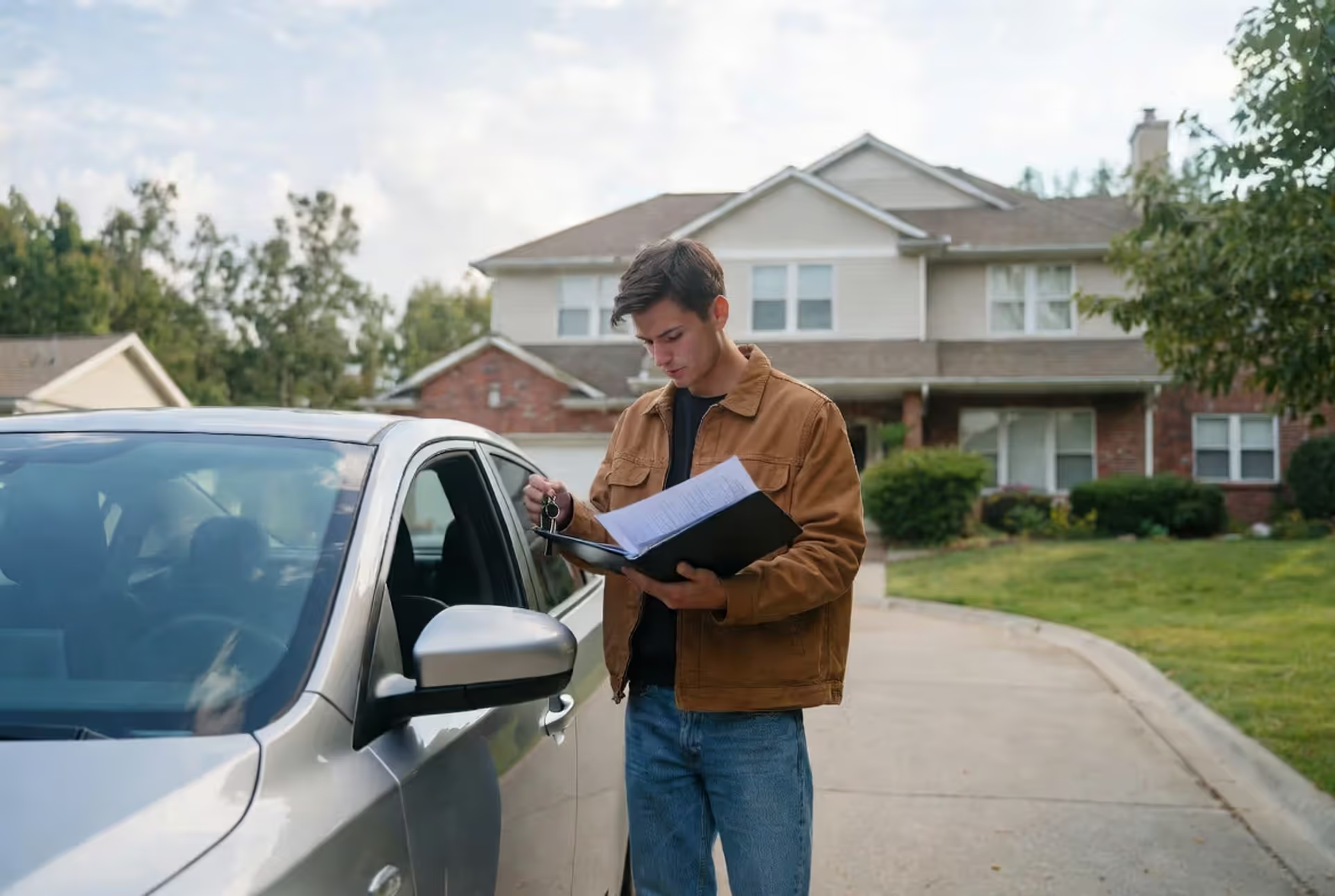
When financial hardship forces you to consider bankruptcy, one of your biggest worries is likely whether you'll lose your vehicle. The good news: bankruptcy law includes several mechanisms specifically designed to help you maintain access to transportation. Whether you're making payments on a $15,000 sedan or own your truck outright, you have legal pathways to protect your car while eliminating overwhelming debt.
Your specific approach hinges on which bankruptcy chapter you file, the amount of value you hold beyond what you owe, your current payment status, and whether your monthly car expense fits realistically into your post-filing budget. Many filers emerge from the process with their original vehicle and loan intact. Others successfully restructure their financing terms entirely. Some discover that letting the car go provides the cleanest path to financial recovery.
When you understand these protection strategies before initiating your filing, you maintain decision-making power instead of leaving your primary transportation method up to legal chance.
Understanding Your Car Ownership Rights in Bankruptcy
The moment you file, your vehicle becomes property within your bankruptcy estate—a temporary legal container that holds everything you own. A trustee assigned to your case examines the vehicle to determine whether it contains unprotected value that could generate cash for your creditors.
The value you actually own is calculated by taking what your car would sell for today and subtracting any outstanding loan balance. Picture a vehicle with a $12,000 market price and a $14,000 remaining loan—you're underwater by $2,000, meaning you hold no ownership value. Flip that scenario: same $12,000 vehicle with only $6,000 owed creates $6,000 in value that you genuinely own.
Exemption laws shield a specific dollar amount of ownership value from creditor claims. The federal system protects up to $4,450 in vehicle value as of 2026, with periodic inflation adjustments. Individual states maintain their own exemption frameworks—some significantly more protective, others more restrictive. California presents filers with two separate exemption systems to evaluate. Texas shields one vehicle per licensed household member without any dollar limit.
When your ownership value stays within your available exemption coverage, the trustee lacks authority to liquidate your vehicle. When your value surpasses the exemption threshold, you face several choices: pay the trustee the difference in cash, apply a general "wildcard" exemption to cover the excess, or potentially lose the car.
Whether you hold the title free and clear also shapes your options. Full ownership with no outstanding loan means you only navigate exemption rules. Active financing creates a secured creditor—your lender maintains a legal claim against your title. That creditor holds rights independent of bankruptcy proceedings, requiring you to address their claim through reaffirmation, redemption, or a structured payment arrangement.
Protecting Your Vehicle Under Chapter 7 Bankruptcy
Chapter 7 proceedings convert non-exempt property into cash for creditor distribution, then erase most remaining obligations. Most cases reach completion within four to six months. Your vehicle protection strategy typically follows one of three paths: exemption coverage, reaffirmation contracts, or redemption purchases.
What catches most of my clients off guard is learning they're not backed into a corner with their vehicle.The real work happens before filing—analyzing what you actually own in the vehicle versus what you owe, then asking yourself honestly whether that monthly payment works with your realistic budget going forward. I've watched too many people cling to car payments they truly can't sustain and wind up in crisis mode again within half a year
— Jennifer Harmon
Using Bankruptcy Exemptions to Keep Your Car
When exemptions fully cover your vehicle—either because you own nothing beyond your loan balance or your ownership value falls within exemption boundaries—you can retain it without additional legal maneuvers, assuming you maintain timely payments.
Here's a typical situation: Your outstanding loan sits at $18,000 while your car's worth has dropped to $16,000. You're underwater by $2,000, making exemptions unnecessary. Most lenders permit you to continue driving as long as monthly payments arrive on schedule, despite the bankruptcy erasing your personal obligation to repay.
This arrangement creates an interesting legal position. Following your Chapter 7 discharge, the lender loses the ability to pursue you personally for the debt—they cannot file a lawsuit seeking any remaining balance if you eventually default. However, their security interest in the physical vehicle remains intact. Stop paying and they'll reclaim the car itself, but they cannot chase you for whatever money remains unpaid.
Some filers maintain this "ride-through" setup indefinitely, continuing payments without ever formalizing the debt. Not every lender accepts this arrangement, and certain court jurisdictions don't recognize it as valid practice, making local verification essential.
Author: Samantha Crowley;
Source: dynamicrangemetering.com
The Reaffirmation Agreement Process
Reaffirmation creates a fresh contract with your lender that bankruptcy cannot eliminate. You commit to maintaining personal responsibility for the auto loan in exchange for guaranteed vehicle retention.
This contract must reach the bankruptcy court before your discharge becomes final. When you're represented by counsel, your attorney must verify in writing that the payment fits your budget without creating financial strain. Pro se filers (those without attorneys) face a court hearing where the judge evaluates whether reaffirmation serves your interests.
This path makes practical sense when you genuinely need the transportation, the payment works within your budget, and the financing terms are fair. It becomes a problematic choice when you're already stretched thin by the payment or facing predatory interest rates. Once reaffirmation is complete, you've restored full liability—defaulting later allows the lender to both reclaim the vehicle and pursue you for any unpaid balance.
Lenders frequently apply pressure to reaffirm by suggesting repossession as the alternative, but they cannot seize your car solely because you filed bankruptcy, provided your payments stay current. Carefully consider whether reaffirmation actually benefits your situation or merely safeguards the lender's position.
Redemption as an Alternative Option
Redemption empowers you to purchase your vehicle from the lender for its present market worth, regardless of your remaining loan amount. This mechanism only functions within Chapter 7 cases and exclusively for vehicles used personally rather than commercially.
Picture this scenario: Your loan balance shows $15,000 while your car's actual value registers at $9,000. Redemption allows you to deliver $9,000 as a single payment to the lender and take full ownership. The leftover $6,000 joins your other unsecured obligations heading for discharge.
The obstacle: assembling $9,000 either from available cash or through specialized redemption financing. Multiple niche lenders provide redemption loans, though interest rates frequently reach 18% to 24% since you're emerging from bankruptcy. Calculate carefully here. Redemption financing at 22% annually might ultimately cost more than maintaining your existing 8% loan.
This strategy delivers the strongest results when you're significantly underwater and can access reasonably-priced financing. It rarely proves practical for people in acute financial distress lacking access to lump-sum funding.
Keeping Your Car Through Chapter 13 Bankruptcy
Chapter 13 proceedings establish a three-to-five-year repayment structure that reorganizes rather than eliminates debts. Rather than selling assets, you deliver monthly payments to a trustee who allocates funds among creditors according to your approved plan.
Your vehicle financing becomes integrated into this plan. Current on payments? You can maintain direct payments to your lender under original loan terms. Behind on payments? Chapter 13 provides years to eliminate the arrears while protecting your car.
The significant benefit emerges through "cramdown" provisions. When your vehicle purchase occurred more than 910 days before filing (approximately 2.5 years), you can reduce your loan obligation to the car's present market value and potentially secure a lower interest rate.
Consider this example: Three years ago you purchased a car with $22,000 still owed, but current value has dropped to $13,000. Cramdown restructures your secured obligation to $13,000 at a court-determined interest rate (frequently 5% to 7% in 2026). The excess $9,000 shifts to unsecured status, receiving minimal payment through your plan—often 0% to 10% depending on your available income.
This restructuring can dramatically transform your monthly obligation. A $22,000 loan at 12% interest might demand a $500 monthly payment. Crammed down to $13,000 at 6% could reduce that to $250, creating genuine affordability.
The 910-day purchase rule prevents cramdown on recent vehicle loans. For newer financing, you'll repay the complete balance through your plan, though you may still achieve a reduced interest rate.
Chapter 13 also immediately halts repossession through the automatic stay while providing years to remedy any default. Three months behind? You can distribute those missed payments across 36 to 60 months while maintaining possession.
Author: Samantha Crowley;
Source: dynamicrangemetering.com
What Happens When You Surrender Your Vehicle
Vehicle surrender means willingly returning it to your lender as part of bankruptcy proceedings. The lender liquidates the car, applies sale proceeds against your loan balance, and bankruptcy discharges whatever remains unpaid along with your other obligations.
This approach proves beneficial when your monthly payment exceeds affordability, you're severely underwater on financing, or you genuinely don't require the vehicle. Surrendering within bankruptcy proceedings creates a cleaner outcome than outside repossession, which would leave you liable for the deficiency.
The mechanics are straightforward. Your bankruptcy documentation indicates surrender intent. The lender coordinates vehicle pickup or designates a return location. Once surrendered, all obligations end.
Credit reporting will display the car loan as "included in bankruptcy" or "discharged," which carries less damage than standalone repossession. Both impact your credit score negatively, but bankruptcy discharge prevents the lender from reporting continuing delinquencies or transferring the debt to collection agencies.
Timing considerations matter. Surrendering before filing might leave you holding the deficiency debt, requiring inclusion in your bankruptcy papers. Surrendering after filing brings immediate automatic stay protection against deficiency claims.
Financial logic favors surrender when you're paying $600 monthly for a vehicle worth half your remaining balance, and you can secure reliable $3,000 used transportation with cash following bankruptcy. Emotionally, this decision proves harder—many people form strong attachments to vehicles or maintain them for identity purposes beyond pure transportation value.
Preventing Car Repossession Before and During Bankruptcy
The automatic stay activates at your filing moment, immediately blocking all collection efforts including vehicle repossession. When a lender has already seized your car but hasn't yet sold it, bankruptcy filing can sometimes reverse the repossession.
Before filing, maintain communication with your lender when payments fall behind. Some offer temporary relief programs or restructured payment schedules, creating breathing room while you evaluate bankruptcy options. Never disregard repossession warnings—once the lender secures a court order or exercises contractual repossession rights, they can move swiftly.
Following your filing, automatic stay protection continues throughout your active bankruptcy case, provided you meet court requirements. Falling behind on Chapter 13 payments allows the lender to request stay relief, seeking court authorization for repossession. Chapter 7 filers who neither reaffirm nor redeem might also face stay relief requests, though this occurs less frequently when payments remain current.
Author: Samantha Crowley;
Source: dynamicrangemetering.com
The stay doesn't provide unlimited protection when payments cease. Courts lift the stay when you're clearly not paying and lack any realistic catch-up plan. The stay exists to provide reorganization or liquidation breathing room, not to enable indefinite free vehicle use.
During active repossession proceedings, filing an emergency bankruptcy petition can stop a scheduled seizure—even with the tow truck actively en route. You'll need to complete the full filing rapidly (typically within 14 days), but the initial petition alone triggers stay protection.
Comparing Your Options: Which Path Is Right for You
Your optimal strategy depends on your ownership value position, payment affordability, bankruptcy chapter selection, and long-term financial objectives.
Strategy
Works Best For
Advantages
Disadvantages
Credit Implications
Reaffirmation (Ch. 7)
Borrowers current on payments with reasonable terms who can sustain the payment
Retains vehicle and payment schedule; rebuilds credit with timely payments
Restores personal liability; eliminates future discharge possibility
Loan reporting continues; helps credit with payments, damages it with default
Redemption (Ch. 7)
Significant underwater loans with access to lump-sum funding or redemption financing
Payment based on actual vehicle value; achieves full ownership
Requires cash or expensive redemption loan; Chapter 7 exclusive
Loan receives discharge; vehicle drops from credit reporting
Surrender
Unmanageable payments, severe underwater financing, unnecessary vehicle
Eliminates both debt and payment obligation; provides clean break
Requires alternative transportation; lose the vehicle
Debt discharged; less harmful than non-bankruptcy repossession
Chapter 13 Plan
Behind on payments, vehicle purchased 910+ days prior, affordable reduced payment possible
Catches up arrears; cramdown lowers balance and rate; retains vehicle
Requires 3-5 year plan commitment and completion
Bankruptcy appears on record; vehicle loan satisfied through plan
When you hold $2,000 in ownership value and your state shields $5,000, exemptions protect your Chapter 7 vehicle without further action. When you owe $20,000 on a vehicle worth $12,000 purchased four years ago, Chapter 13 cramdown could preserve thousands. When you're paying $550 monthly but can realistically afford only $350, surrendering and securing cheaper transportation might represent your smartest decision.
Calculate with complete honesty. Bankruptcy attorneys can model each scenario using your specific numbers, but you understand your true budget. Don't reaffirm a $480 payment out of vehicle attachment when your actual monthly surplus is $200. That creates conditions for post-bankruptcy repossession and financial regression.
Frequently Asked Questions About Bankruptcy and Car Ownership
Can I keep a financed car in Chapter 7 bankruptcy?
Yes, most situations allow this. When payments are current and your ownership value stays within exemption boundaries, you maintain the car by continuing payments, executing a reaffirmation contract, or redeeming the vehicle. Even with underwater financing, numerous lenders permit continued payments without formal reaffirmation, though this "ride-through" arrangement isn't recognized in every jurisdiction. Stop paying and the lender can repossess regardless of bankruptcy status, but they cannot pursue you for unpaid balances after Chapter 7 discharge unless you signed reaffirmation papers.
What is a reaffirmation agreement and do I have to sign one?
Reaffirmation creates a fresh contract establishing personal liability for your vehicle loan that survives bankruptcy discharge. Signing is completely optional, not mandatory. Many bankruptcy lawyers counsel against reaffirmation unless you're absolutely certain about long-term payment affordability. Without reaffirmation, you can frequently maintain payments and vehicle possession while avoiding personal liability for future default—the lender can repossess but cannot sue for remaining balances. Lenders sometimes employ repossession threats to pressure reaffirmation, but these threats often lack substance when payments remain current.
How much car equity can I protect with exemptions?
Federal bankruptcy exemptions shield up to $4,450 in vehicle ownership value as of 2026, with regular inflation adjustments. State exemption systems vary dramatically. States like Florida and Texas provide generous vehicle protection, while others offer minimal coverage. You generally choose between federal and state exemptions (unless your state prohibits federal exemption use). When ownership value exceeds exemption limits, you might apply wildcard exemptions to cover the difference, pay the trustee the unprotected amount, or face potential vehicle loss. Underwater financing eliminates exemption concerns entirely.
Will my car payment change in Chapter 13?
It varies based on circumstances. Current on a vehicle loan for a car purchased within 910 days of filing typically means unchanged payments—delivered directly to the lender or through your Chapter 13 plan. Vehicle purchases exceeding 910 days before filing enable cramdown, reducing loan obligations to current market value and potentially lowering interest rates, frequently producing substantially reduced monthly payments. Behind on payments? Chapter 13 distributes the arrears across your plan duration while maintaining regular payments, though the total monthly amount (regular payment plus arrearage) initially increases.
What happens if I'm already behind on car payments when I file?
Chapter 7 eliminates your personal debt obligation, but the lender retains repossession rights without arrearage resolution. Some people negotiate lender agreements to cure defaults and reaffirm, though this reestablishes personal liability. Chapter 13 typically provides superior solutions for arrears—spreading the past-due amount over three to five years while maintaining vehicle possession and stopping repossession through automatic stay protection. You must immediately resume regular payments while the plan addresses arrears. Unable to afford catch-up payments? Surrendering discharges the complete debt including any deficiency balance.
Can the lender repossess my car after I file bankruptcy?
Not without obtaining court permission first. Automatic stay protection blocks all collection activity including repossession from your filing moment forward. The stay remains active throughout your bankruptcy case provided you satisfy court obligations. Falling behind during bankruptcy allows lenders to file stay relief motions, requesting court authorization for repossession. Courts generally approve these requests when payments have stopped and no realistic recovery plan exists. After case closure, when you haven't reaffirmed or incorporated the vehicle into a Chapter 13 plan, lenders can repossess for non-payment, but they cannot pursue deficiency claims if discharge eliminated the debt.
Retaining your vehicle through bankruptcy typically proves achievable, but demands honest financial evaluation and strategic application of bankruptcy protections. The most damaging outcome involves keeping an unaffordable car, only to face repossession six months post-bankruptcy after exhausting your financial fresh start.
Assess your ownership value, calculate your genuine monthly budget capacity, and consider your intended vehicle retention timeframe. A vehicle showing 140,000 miles requiring $2,000 in repairs might not justify $400 monthly reaffirmation. Reliable transportation with reasonable payments that enables work commuting might warrant Chapter 13 cramdown protection.
Consult bankruptcy counsel before filing to model each scenario with your actual financial data. Most provide complimentary consultations and can demonstrate exactly how each option affects your monthly budget and long-term financial trajectory. Your vehicle likely ranks among your most critical assets—ensure your bankruptcy strategy protects it when genuinely serving your interests, or releases it when that creates superior financial outcomes.
Bankruptcy represents a legal process allowing individuals to eliminate or restructure unmanageable debt under federal court protection. Understanding what it means personally—from credit impacts to employment concerns—helps remove fear from this financial decision and clarifies the path forward
Filing for bankruptcy doesn't permanently block you from renting. Discover practical strategies for securing housing after bankruptcy, from understanding landlord screening to strengthening applications with compensating factors. Learn which housing options work best and common mistakes to avoid
Bankruptcy damages your credit, but recovery is faster than most people expect. This guide covers secured credit cards, realistic recovery timelines, and step-by-step strategies to rebuild your credit score after Chapter 7 or Chapter 13 bankruptcy, including common mistakes to avoid
Bankruptcy doesn't permanently block access to personal loans, but it requires strategic timing and realistic expectations. Discover which loan types approve post-bankruptcy borrowers fastest, how long to wait for better terms, and which lenders to avoid during financial recovery
The content on this website is provided for general informational and educational purposes only. It is intended to explain concepts related to bankruptcy, debt relief, credit rebuilding, and related legal processes.
All information on this website, including articles, guides, and examples, is presented for general educational purposes. Bankruptcy outcomes and procedures may vary depending on jurisdiction, personal circumstances, and applicable laws.
This website does not provide legal, financial, or credit advice, and the information presented should not be used as a substitute for consultation with qualified attorneys or financial advisors.
The website and its authors are not responsible for any errors or omissions, or for any outcomes resulting from decisions made based on the information provided on this website.