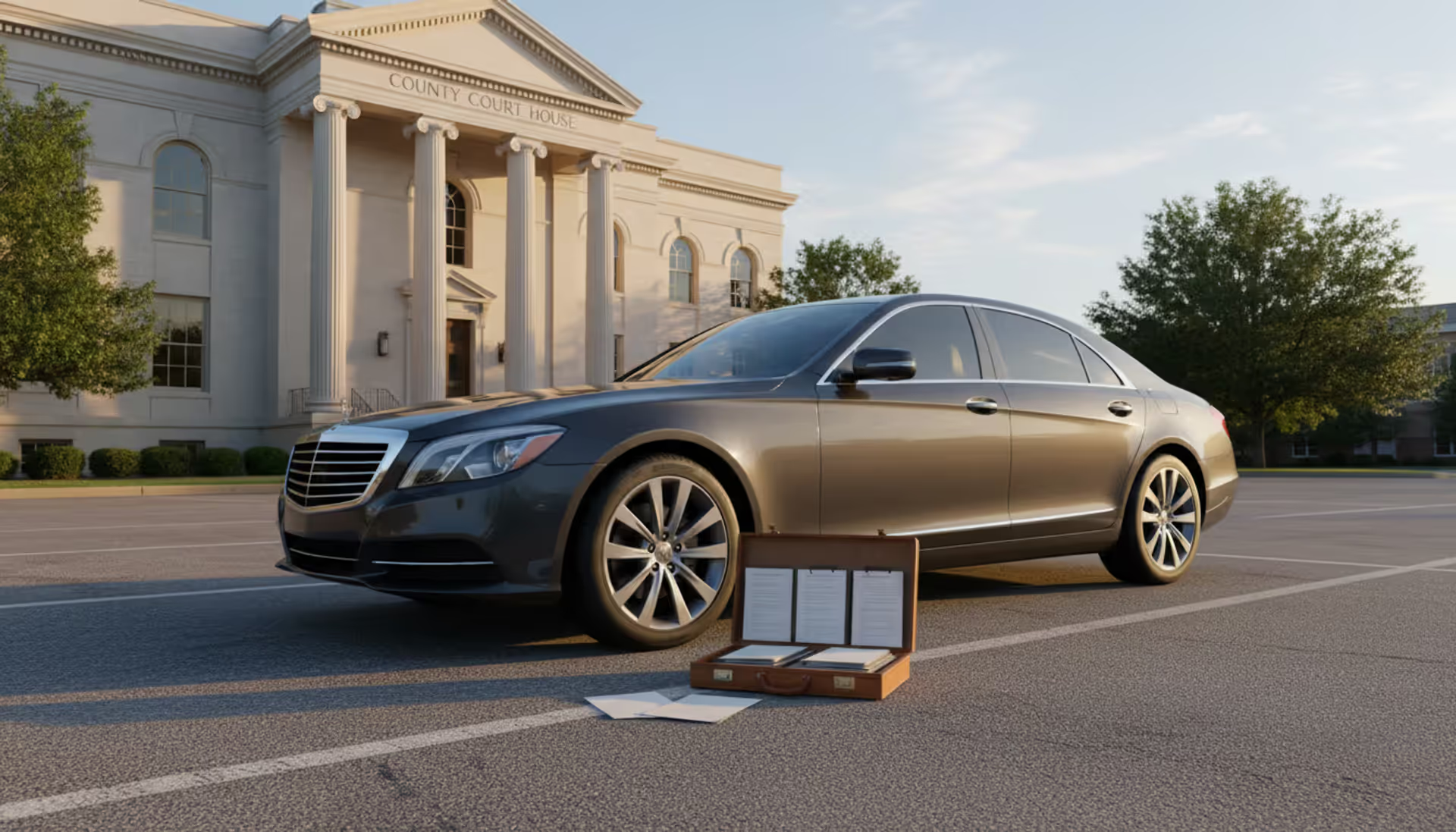
When bankruptcy becomes necessary, one of your first worries is likely whether you'll lose your vehicle. Here's what typically happens: the overwhelming majority of bankruptcy filers drive away in the same car they had before filing. Your situation depends on several critical factors—the bankruptcy chapter you select, how much your vehicle is worth compared to what you owe, your payment history, and which state's laws apply to your case.
Getting these details right before you file prevents unwanted surprises and helps protect your transportation. Trustees don't automatically confiscate every vehicle in a bankruptcy case—they must follow established guidelines about which assets receive protection.
How Bankruptcy Affects Vehicle Ownership
Once your bankruptcy petition is filed, the court considers all your property part of the bankruptcy estate temporarily, and that includes your car. A trustee assigned to your case examines each asset to determine what qualifies for exemption protection—these are legal shields that prevent creditors from taking specific types of property.
Vehicle exemptions typically cover a certain amount of ownership value. This ownership value, or equity, represents the difference between what your car could sell for today and any outstanding loan balance. Consider a 2023 Honda Civic with a $22,000 fair market value and $15,000 remaining on the loan—you hold $7,000 in equity. When your state allows a $7,500 vehicle exemption, you've fully protected that equity.
What happens to your car in bankruptcy depends heavily on these vehicle exemption in bankruptcy rules, which change dramatically from one state to another. Certain states cap protection at $3,000, while others permit $15,000 or higher. Federal bankruptcy exemptions provide another choice in states where you can select between federal and state protection systems.
Your payment status creates another major variable. Someone who hasn't missed a car payment faces completely different circumstances than someone who's three months behind. Whether you file Chapter 7 or Chapter 13 bankruptcy fundamentally changes how the court handles your vehicle throughout your case.
What Happens to Your Car in Chapter 7 Bankruptcy
Chapter 7 works by selling unprotected assets and distributing proceeds to creditors, with most cases finishing in four to six months. Despite being called "liquidation bankruptcy," the vast majority of people who file Chapter 7 retain their vehicles by correctly claiming available exemptions.
Vehicle Exemptions and Equity Limits
If you file for bankruptcy what happens to your car starts with whether your ownership value stays inside exemption boundaries. The trustee determines your vehicle's fair market value—this isn't the dealer sticker price or what you originally paid, but rather what an average buyer would realistically pay in a private sale.
Check resources like Kelley Blue Book or Edmunds for realistic estimates, selecting "fair" condition unless your car is either immaculate or significantly damaged. Trustees generally accept reasonable valuations when you provide supporting documentation.
Equity exceeding the exemption puts you at risk of the trustee selling your vehicle, paying off any existing loan, returning the exemption amount to you, and distributing what's left to creditors. However, trustees often decline to sell vehicles with minimal unprotected equity because the actual costs of selling—storage fees, auction commissions, title transfers—eat up the proceeds.
Take this scenario: you have $9,000 in equity with a $6,000 exemption, leaving $3,000 exposed. The bankruptcy estate might spend $1,500 on selling costs, netting only $1,500 for creditors—hardly worth the administrative burden. Many trustees will negotiate, letting you pay them the unprotected amount directly instead of forcing a sale.
Author: Olivia Stratton;
Source: dynamicrangemetering.com
Options When You Own Your Car Outright
Owning outright simplifies your analysis considerably. When your car's value stays below exemption limits, you keep it without taking any additional steps. A 2018 Toyota Corolla valued at $11,000 in a state with $15,000 of vehicle protection remains completely safe.
Complications emerge when your paid-off vehicle substantially exceeds what exemptions cover. A 2024 truck worth $45,000 with only $5,000 in exemption protection leaves $40,000 vulnerable—the trustee will almost certainly liquidate it. You might explore selling the vehicle before filing and using those funds for legitimate exempt purposes (not concealing money, but genuinely paying for necessities or applying toward other exemptions), though timing requires careful legal guidance.
Certain states feature "wildcard" exemptions—flexible protection you can assign to any property type, including extra vehicle equity. When your state grants a $3,000 wildcard alongside a $6,000 vehicle exemption, you could shield $9,000 total in car equity.
Options When You Have a Car Loan
Car in bankruptcy chapter 7 options multiply in complexity once secured debt enters the picture. Your lender maintains a lien against the vehicle, granting them specific rights that survive bankruptcy. You need to choose one path: reaffirm the debt, redeem the vehicle, or surrender it.
Reaffirmation involves executing a fresh agreement that keeps you personally responsible for the car loan even though bankruptcy discharges other debts. Payments continue on schedule, and the lender cannot repossess provided you stay current. This debt survives your discharge—defaulting later means you'll owe whatever deficiency remains after they repossess and sell the car.
Redemption lets you purchase the vehicle for its current market value in one lump sum, regardless of the loan balance. When your car is worth $14,000 but you owe $19,000, redemption requires only a $14,000 payment to own it free and clear. Most people lack available cash, though specialized redemption financing companies exist.
Surrender simply means giving the vehicle back to your lender. The bankruptcy discharges the loan completely, eliminating any further obligation even when the car sells for less than you owed. This approach makes sense when payments exceed your budget or when the vehicle requires costly repairs you cannot afford.
Some filers attempt "ride-through"—maintaining payments without reaffirming. This strategy lacks official recognition in many jurisdictions, though certain lenders accept ongoing payments without repossessing provided you stay current, effectively letting you use the car without post-bankruptcy liability. Be aware that lenders can demand reaffirmation or pursue repossession in most situations.
Author: Olivia Stratton;
Source: dynamicrangemetering.com
What Happens to Your Car in Chapter 13 Bankruptcy
Chapter 13 establishes a three-to-five-year payment plan that lets you address debts gradually while preserving assets. This chapter delivers substantial benefits for vehicle owners, particularly those who've fallen behind on payments.
Car in bankruptcy chapter 13 options emphasize restructuring over liquidation. You submit a plan showing how your disposable income will repay creditors. Vehicle loans receive priority status as secured debts, and your plan can incorporate past-due amounts while you maintain regular ongoing payments simultaneously.
When you're three months behind on car payments at filing, Chapter 13 lets you cure that default across the plan's entire length. Rather than immediately producing $1,800 in arrears, you might contribute $50 monthly across 36 months while keeping current payments flowing. The automatic stay blocks repossession while you catch up.
Chapter 13 also enables "cramdowns" for vehicles purchased over 910 days before filing (approximately 2.5 years). Cramdowns reduce your loan balance to the vehicle's actual current value, with any remaining balance reclassified as unsecured debt. Owing $16,000 on a car now worth $11,000 that you bought three years ago means the secured claim becomes $11,000 at potentially reduced interest rates. The $5,000 difference joins general unsecured debts, recovering only pennies per dollar through the plan.
Recently purchased vehicles—those bought within 910 days before filing—cannot be crammed down and must be repaid completely to retain them. This prevents strategic purchases of expensive vehicles immediately before bankruptcy followed by immediate debt reduction.
If you file bankruptcy what happens to your car loan in Chapter 13 also hinges on whether the court confirms your repayment plan as feasible. The court must verify you have adequate income to cover plan payments plus continuing car payments. Falling behind during your Chapter 13 case risks dismissal, stripping away bankruptcy protection and exposing you to immediate repossession.
Author: Olivia Stratton;
Source: dynamicrangemetering.com
Can You Keep Your Car If You File Bankruptcy
Can i keep my car if i file bankruptcy? Absolutely, in the majority of circumstances, when you plan properly and understand available strategies. Success comes from aligning your specific situation with the appropriate approach.
Understanding Reaffirmation Agreements
A reaffirmation agreement car bankruptcy strategy officially removes the vehicle debt from your discharge. You execute a court-approved contract committing to remain liable under the original terms or sometimes modified conditions.
Lenders prefer reaffirmation because it guarantees ongoing payment responsibility. Defaulting after bankruptcy allows them to both repossess your car and pursue you legally for any deficiency—identical rights to pre-bankruptcy.
Courts examine reaffirmation agreements carefully, mandating they satisfy specific requirements. The contract cannot create undue hardship, and your demonstrated budget must support the payments. Judges occasionally reject reaffirmation when payments consume disproportionate income percentages, shielding you from agreements that could trigger future financial crisis.
Reaffirmation benefits include certainty about keeping your vehicle and possible credit improvements as you make post-bankruptcy payments (when lenders report them). Disadvantages include restored personal liability—bankruptcy cannot help if you later cannot afford payments.
Nothing requires you to reaffirm. Some bankruptcy lawyers recommend avoiding it unless absolutely mandatory, since it reintroduces dischargeable obligations. When your lender permits ride-through or you're confident about maintaining payments, skipping reaffirmation preserves your discharge protection.
Redemption as an Alternative
Redemption performs best when you're substantially underwater on a loan and can secure lump-sum financing. Specialty finance companies provide redemption loans, though expect elevated interest rates (10-25% APR).
Run the numbers to verify redemption makes economic sense. Financing $13,000 at 18% interest for a car valued at $13,000 still beats financing $20,000 at 8% for that same vehicle, despite the steeper rate. You're borrowing significantly less principal.
Redemption requires court approval. You submit a motion, potentially negotiate with the lender (they may contest your valuation), and secure a court order. After approval, you pay the determined amount and the lender releases their lien.
This choice attracts people with valuable vehicles and inflated loan balances but constrained ongoing income. Redemption eliminates the original obligation entirely, substituting a new loan based on realistic value.
Surrender and Its Consequences
Surrendering your vehicle eliminates payment responsibilities but removes your transportation. This becomes the right choice when:
Monthly obligations exceed the car's practical value to you
Major repairs are looming
Alternative transportation exists
The vehicle doesn't fit your actual needs
Surrender within bankruptcy differs substantially from voluntary repossession outside bankruptcy. During bankruptcy, the deficiency balance gets discharged—you won't owe the gap between sale proceeds and loan balance. Outside bankruptcy, lenders aggressively pursue deficiency judgments that can result in wage garnishment.
Following surrender, transportation becomes your challenge. Some people buy inexpensive vehicles before filing using exempt funds. Others temporarily depend on public transportation, rideshares, or family help while rebuilding savings for a replacement. Reestablishing credit post-bankruptcy to finance a car takes patience but remains achievable—subprime lenders actively finance recent bankruptcy filers, albeit at premium rates.
How Car Loans Are Handled During Bankruptcy
Bankruptcy car loan options overview starts with your payment status at filing. Current borrowers face straightforward decisions: reaffirm, redeem, surrender, or try ride-through. Behind borrowers confront urgent repossession threats without bankruptcy protection.
The automatic stay instantly stops all collection activities, including repossession. When your lender has already repossessed your vehicle but hasn't yet sold it, filing bankruptcy might recover it by bringing payments current through your bankruptcy plan.
Lenders can petition for relief from the automatic stay, requesting court permission to repossess despite bankruptcy. They must demonstrate you're missing payments or that the vehicle is depreciating without proper insurance protection. Courts grant relief when debtors cannot maintain payments or when equity fails to support the loan adequately.
Negotiating with lenders during bankruptcy occasionally produces improved terms. Some lenders reduce interest rates or extend loan durations in reaffirmation contracts, dropping monthly obligations. They prefer modified agreements over potential losses through surrender or cramdown.
Chapter 13 cramdowns warrant emphasis for their capacity to restructure underwater loans dramatically. Beyond principal reduction, you can decrease interest rates to prime-plus or prevailing market rates, often substantially below subprime auto loan rates. A 22% interest rate could fall to 6%, dramatically cutting total repayment amounts.
Timing affects car loans significantly. Acquiring a vehicle shortly before bankruptcy raises fraud concerns if you never genuinely intended repayment. Courts and trustees scrutinize recent major purchases closely, potentially denying discharge or challenging exemptions. Allow several months minimum between significant purchases and bankruptcy filing, documenting legitimate necessity rather than luxury desire.
Author: Olivia Stratton;
Source: dynamicrangemetering.com
State-Specific Vehicle Exemption Rules
Vehicle exemption in bankruptcy rules fluctuates dramatically across states, determining whether you retain your car. Some states provide generous protections; others deliver minimal coverage.
Sample State Vehicle Exemptions (2026):
State
Vehicle Exemption Amount
Notes
California (System 1)
$3,325
Additional $1,700 available through wildcard exemption
California (System 2)
$6,000
Alternative framework; choose one system only
Texas
Unlimited
No equity cap for one vehicle per licensed household driver
Florida
$1,000
Minimal protection; many filers choose federal exemptions
New York
$4,825
Per vehicle; households can protect multiple vehicles
Illinois
$2,400
Additional $400 wildcard available for use
Michigan
$3,775
Periodic inflation adjustments
Pennsylvania
No specific exemption
Must utilize wildcard ($300) or federal exemptions
Ohio
$4,450
Inflation-adjusted every three years
Massachusetts
$15,000
Among the nation's most generous state exemptions
Arizona
$6,000
Additional $6,000 wildcard when not used elsewhere
Oregon
$3,000
Doubles for joint filers
Certain states let you select between state exemptions and federal bankruptcy exemptions. Federal exemptions (current as of 2026) include roughly $4,450 for vehicles plus approximately $14,000 in wildcard exemption applicable to any property, including additional vehicle equity. This flexibility protects vehicles exceeding state exemption values.
Community property states impose special considerations for married couples. In Texas, each spouse can protect unlimited equity in one vehicle when filing jointly. California's dual exemption frameworks demand strategic selection between System 1 (lower vehicle exemption, higher homestead) and System 2 (higher vehicle exemption, lower homestead).
Exemption amounts receive periodic inflation adjustments every few years. Verify current figures when filing—relying on outdated information could sacrifice thousands in unprotected equity.
Some states protect only "motor vehicles," while others specify "automobiles," potentially excluding motorcycles, RVs, or watercraft. Review your state's exemption statutes thoroughly or engage a bankruptcy attorney to clarify what qualifies.
The vast majority of my clients are genuinely surprised to discover they can protect their vehicles through bankruptcy. Success hinges on understanding your available exemptions and maintaining realistic expectations about affordability. I've guided clients through successfully protecting vehicles valued at $30,000 or more by strategically combining federal exemptions with wildcard provisions. The most costly mistake people make is inadequate planning before filing—once your case opens, your available options narrow considerably
— Jennifer Martinez
Frequently Asked Questions About Cars and Bankruptcy
What happens if my car is worth more than the exemption amount?
When vehicle equity surpasses exemption limits, the trustee gains authority to sell it, though multiple factors influence this decision. Trustees evaluate sale expenses, including auction commissions, storage charges, and administrative overhead. When these expenses consume most unprotected equity, selling delivers no practical benefit to creditors.
You can propose paying the trustee the unprotected amount in cash, preserving your car. With $4,000 in vulnerable equity, offering $4,000 (or sometimes a negotiated reduced amount) allows the trustee to distribute funds without sale complications. Some trustees accommodate payment plans extending across several months.
Additional strategies include applying wildcard exemptions or converting unprotected equity to exempt property before filing. Prepaying insurance premiums, purchasing necessary household items, or addressing deferred exempt expenses can reduce available cash while serving legitimate needs. Never conceal assets or execute fraudulent transfers—these actions trigger bankruptcy denial and potential criminal prosecution.
Can the bankruptcy trustee take my leased car?
Leased vehicles operate differently from owned vehicles because you hold no equity—you're essentially renting with a potential purchase option at lease conclusion. Trustees rarely pursue interest in leases since no liquidatable asset exists.
You must choose whether to assume or reject your lease. Assumption means continuing payments and retaining the vehicle. Rejection means returning it to the leasing company, with any deficiency eliminated through bankruptcy discharge.
When you're current on lease obligations and wish to keep the vehicle, you'll likely execute an assumption agreement (similar to reaffirmation) continuing the lease. When payments exceed affordability or lease terms are disadvantageous, rejection lets you exit without owing early termination penalties or excess mileage charges.
Some lease contracts incorporate gap insurance covering deficiency balances. Examine your lease agreement to understand return consequences and whether you might owe anything beyond bankruptcy discharge.
What if I'm behind on my car payments when I file?
Filing bankruptcy while carrying payment arrears activates the automatic stay, immediately halting repossession proceedings. However, you must move quickly to remedy the default.
In Chapter 7, you'll need to eliminate arrears rapidly or negotiate arrangements with the lender. Some lenders consent to incorporating past-due amounts into reaffirmation agreements, extending the loan duration. Others insist on immediate arrears payment as their condition for not repossessing.
Chapter 13 delivers superior options for addressing arrears. Your repayment plan can distribute past-due payments across three to five years while you simultaneously maintain current ongoing obligations. This cure period preserves the vehicle without immediately producing thousands in back payments.
When you're only one or two payments behind, consider catching up before filing bankruptcy if financially feasible. This simplifies your case and expands flexibility in choosing between Chapter 7 and Chapter 13.
How does a reaffirmation agreement affect my bankruptcy discharge?
Reaffirmation agreements carve specific debts out from your bankruptcy discharge, maintaining their legal enforceability despite bankruptcy. While other obligations disappear, reaffirmed debts remain your personal responsibility.
This impacts your financial fresh start significantly. Reaffirming a $15,000 car loan then defaulting later allows the lender to repossess your vehicle and pursue you legally for any deficiency balance. You cannot file bankruptcy again for several years (eight years for Chapter 7, generally), leaving you exposed to collection actions.
Courts must approve reaffirmation agreements and evaluate whether they impose undue hardship. Judges sometimes reject agreements when car payments absorb excessive income portions, protecting you from unsustainable commitments.
Some bankruptcy lawyers counsel against reaffirmation unless lenders absolutely demand it. When you can sustain payments through ride-through or informal arrangements, you retain the vehicle without reintroducing dischargeable debt. This tactic works best when lenders accept payments without formal reaffirmation—practices differ by lender and jurisdiction.
Can I buy a car during bankruptcy?
Acquiring a vehicle during bankruptcy remains possible but demands court approval in Chapter 13 and careful evaluation in Chapter 7. You'll need to establish that the purchase is necessary—your existing vehicle is unreliable or you lack work transportation.
In Chapter 13, you submit a motion seeking permission to incur new debt. The court evaluates whether you can afford payments while satisfying your plan commitments. When approved, you can finance a vehicle, though expect elevated interest rates given bankruptcy status.
Chapter 7 cases progress quickly, making major purchases during the case less frequent. However, when your case is pending and you require a vehicle, consult your attorney before proceeding. Timing critically matters—purchases immediately before filing raise fraud concerns, while purchases during the active case require disclosure and possibly trustee approval.
Following bankruptcy discharge, car purchases become more accessible. Numerous subprime lenders specialize in post-bankruptcy auto financing. Anticipate higher interest rates (12-25% APR) and potentially larger down payment requirements. Your rates improve gradually as you reconstruct credit over time.
What happens to my car insurance during bankruptcy?
Car insurance continues unaffected by bankruptcy filing. You must maintain legally required coverage, especially with an outstanding car loan—lenders mandate comprehensive and collision coverage protecting their collateral.
Some insurance carriers examine credit scores when calculating rates, and bankruptcy damages credit substantially. However, insurers cannot cancel existing policies because of bankruptcy. When your policy comes up for renewal, you might experience rate increases reflecting credit changes.
Compare quotes if your rates jump significantly. Some insurers weigh credit less substantially or focus on customers facing credit challenges. Maintaining continuous coverage helps, as coverage gaps trigger higher rates independent of bankruptcy status.
When surrendering your vehicle in bankruptcy, cancel insurance once you no longer own or possess it. Don't cancel beforehand, as you remain liable for accidents or damage while the car stays in your possession.
Filing bankruptcy doesn't automatically strip you of your vehicle. The overwhelming majority of bankruptcy filers retain their vehicles by correctly claiming available exemptions, maintaining payment schedules, or leveraging Chapter 13 to address arrears. Your outcome hinges on your equity position, loan status, selected bankruptcy chapter, and applicable state exemption laws.
Chapter 7 performs well when you hold limited equity within exemption boundaries and maintain current payment status. Chapter 13 delivers powerful mechanisms for addressing payment defaults and reducing principal on underwater loans for older vehicles. Both chapters create pathways to preserving your car while securing debt relief.
Before filing, evaluate your vehicle's market value, calculate your equity position, research your state's exemption framework, and honestly assess whether continuing payments fits your budget. Consulting a bankruptcy attorney guides you through complex regulations and identifies strategies protecting your transportation while maximizing your financial reset.
Your car represents far more than simple transportation—it's frequently essential for employment, family responsibilities, and daily survival. Bankruptcy law acknowledges this reality by establishing strong protections for vehicle owners. With appropriate planning and comprehensive understanding of available options, you can complete bankruptcy with both debt relief and the vehicle your life requires.
Bankruptcy represents a legal process allowing individuals to eliminate or restructure unmanageable debt under federal court protection. Understanding what it means personally—from credit impacts to employment concerns—helps remove fear from this financial decision and clarifies the path forward
Filing for bankruptcy doesn't permanently block you from renting. Discover practical strategies for securing housing after bankruptcy, from understanding landlord screening to strengthening applications with compensating factors. Learn which housing options work best and common mistakes to avoid
Bankruptcy damages your credit, but recovery is faster than most people expect. This guide covers secured credit cards, realistic recovery timelines, and step-by-step strategies to rebuild your credit score after Chapter 7 or Chapter 13 bankruptcy, including common mistakes to avoid
Bankruptcy doesn't permanently block access to personal loans, but it requires strategic timing and realistic expectations. Discover which loan types approve post-bankruptcy borrowers fastest, how long to wait for better terms, and which lenders to avoid during financial recovery
The content on this website is provided for general informational and educational purposes only. It is intended to explain concepts related to bankruptcy, debt relief, credit rebuilding, and related legal processes.
All information on this website, including articles, guides, and examples, is presented for general educational purposes. Bankruptcy outcomes and procedures may vary depending on jurisdiction, personal circumstances, and applicable laws.
This website does not provide legal, financial, or credit advice, and the information presented should not be used as a substitute for consultation with qualified attorneys or financial advisors.
The website and its authors are not responsible for any errors or omissions, or for any outcomes resulting from decisions made based on the information provided on this website.